
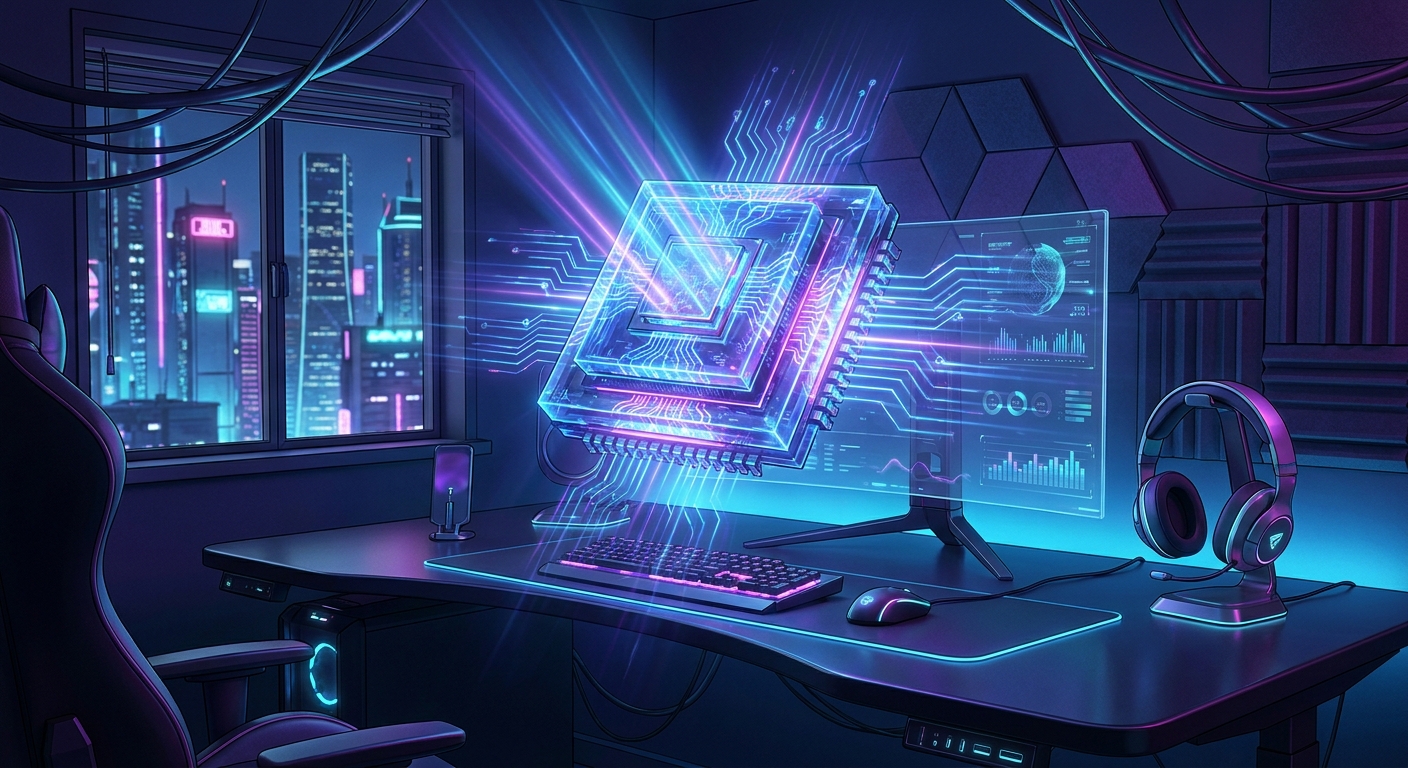
Why We Can’t Stop Talking About 2026 games
If you’ve been following the industry lately, you already know that 2026 games are completely rewriting the rules of digital entertainment, pushing boundaries we previously thought were hardcoded limits. Seriously, just the other day I was sitting in a cozy cyber-cafe right in the heart of Kyiv, sipping an espresso while a local esports team was testing out early, unreleased builds of the newest engine architecture. The leap in physics, lighting, and visual fidelity was so crazy, the whole place literally stopped what they were doing just to watch the monitors glow. The thesis here is incredibly simple: the current generation of software is ruthlessly pushing hardware limits, demanding significantly better cooling, smarter AI integration, and total, uncompromising immersion.
Since we are already mid-way through 2026, the sheer volume of high-quality releases hitting the market is completely overwhelming. Everyone assumed the big studio delays from a couple of years ago would inevitably cause a massive software drought. Instead, we got hit with a tidal wave of content. Indie studios from Eastern Europe, particularly a few amazing development teams right here in Ukraine, are stepping up alongside the AAA giants to deliver narrative experiences that genuinely make you rethink the entire concept of gaming. Whether you love hardcore, stat-heavy RPGs or fast-paced, white-knuckle tactical simulators, these titles are pulling absolutely no punches. Let me break down exactly why this specific year feels so drastically different from the past decade of interactive entertainment.
Let’s get right into the intricate nuts and bolts of what makes the current crop of titles so incredible and why they command your attention. The core value proposition here is heavily tied to AI-driven non-player characters and dynamically generating environments that react to player choices. For instance, in the latest massive open-world fantasy RPGs out of Warsaw and Kyiv, the weather system doesn’t just change visually with a simple skybox swap; it actively shifts the local economy of in-game towns. Rain means crop prices drop, while harsh winters cause fuel costs to skyrocket. Another prominent example is the new wave of hyper-realistic racing simulators, where track degradation happens in real-time strictly based on the specific tire compounds players use and the exact racing lines they take over a fifty-lap event. You aren’t just paying for prettier graphics; you are paying entry into an intricate ecosystem that genuinely reacts to your presence.
| Game Genre | Main Technical Innovation | Hardware Demand |
|---|---|---|
| Open World RPGs | AI-driven dynamic economies & schedules | High Core Count CPU & 32GB RAM |
| Sci-Fi Space Simulators | Ray-traced micro-physics & gravity rendering | Top-tier VRAM heavy GPU |
| Competitive Tactical Simulators | Sub-millisecond latency & anti-cheat tech | High Refresh Rate Monitors (360Hz+) |
If you genuinely want to fully experience these groundbreaking innovations, you need to deliberately prepare your desktop setup. You absolutely cannot just boot up an old rig from five years ago and expect a seamless, stutter-free experience. The harm of ignoring these modern hardware demands is constant micro-stuttering, massive frame drops during explosions, and completely ruining the delicate immersion the developers worked so tirelessly to build for you.
Here is how you actually get ready for the heavy hitters releasing this quarter:
- Audit your current rig completely: Check if your graphics card supports the absolute newest frame-generation technologies. If it doesn’t, you will be severely left behind in competitive lobbies where visual clarity equals reaction time.
- Aggressively upgrade your storage solutions: Top-tier titles now frequently exceed 150GB in file size. You absolutely need a Gen 4 or Gen 5 NVMe SSD just to handle the rapid asset streaming without seeing annoying textures popping in during cutscenes.
- Optimize your system cooling: Sustained, heavy loads on the processor from intense background AI calculations mean your liquid cooler or bulky air tower desperately needs fresh, high-quality thermal paste and high static pressure fans to maintain boost clocks.
Origins of the Next-Gen Shift
If we want to accurately trace back the foundational roots of the brilliant engine tech we are using right now, we have to look directly at the challenging pandemic era. Massive development studios were stuck working from home, quickly realizing that traditional motion-capture studios and manual asset creation pipelines were fundamentally too slow and restrictive. Out of sheer necessity, they started heavily investing millions into procedural generation algorithms and complex machine learning tools. Those early beta tools felt incredibly clunky and hard to manage, but they laid the absolute, unshakeable bedrock for everything we are playing today. Brilliant developers finally realized they couldn’t just keep mindlessly adding more polygons to character models; they had to purposefully make the digital worlds dramatically smarter and more reactive.
Evolution of Studio Pipelines
Fast forward a couple of highly experimental years, and the structural evolution became undeniable across the board. Rendering engines completely shifted away from static lighting baking to real-time, dynamic global illumination. Suddenly, small, passionate indie teams had immediate access to ultra-high-resolution mega-scans and AI-assisted animation tools that previously cost tens of millions of dollars to develop in-house. This massive shift beautifully democratized the entire industry. A dedicated team of twenty passionate developers working out of an office in Lviv could suddenly produce environmental detail rivaling a five-hundred-person legacy studio out in California. The daily workflows dramatically evolved to prioritize rapid, creative iteration over tedious, soul-crushing manual placement of grass textures.
The Modern State of Play
Now, take a good, hard look at the modern state of the industry. The massive, foundational software engines have completely matured, freely giving us breathtaking titles that entirely blur the rigid line between Hollywood cinema and interactive media. We are legitimately no longer talking about “next-gen” promises because we are actively, thrillingly living inside of it. The advanced rendering techniques are completely seamless, and cloud-assisted processing allows our local machines to safely offload some of the heaviest, most demanding AI tasks to external servers. It is absolutely wild to sit back and think about how incredibly fast we got here.
Understanding Path Tracing vs Traditional Ray Tracing
You keep casually hearing these intimidating technical terms thrown around on forums, so let me explain them without all the totally boring, gatekeeping jargon. Traditional ray tracing is exactly like sending out a handful of highly focused laser pointers from a virtual camera just to see exactly where they hit and bounce off surfaces. It makes puddles, metallic reflections, and dark shadows look undeniably great. Path tracing, however, is an entirely different beast. It is functionally like turning on a massive, stadium-sized floodlight and simulating every single microscopic particle of light continuously bouncing around the physical room multiple times until it finally hits your virtual eye. It is infinitely more computationally heavy but consistently gives a photorealistic, terrifyingly accurate result. That is exactly why the biggest, most ambitious titles this year are completely melting graphics cards—they are desperately trying to simulate physics exactly how light inherently behaves in the real, physical world.
The Unstoppable Neural Rendering Revolution
We absolutely cannot talk about modern, cutting-edge graphics without immediately bringing up the concept of neural rendering. Instead of aggressively asking the graphics card to manually draw every single pixel on a 4K display (which is completely exhausting and inefficient), the smart system draws a much lower-quality base image and uses a heavily trained AI brain to instantly guess what the high-quality, final version should look like. It seamlessly fills in the blank spaces in mere milliseconds.
Here are the hard, indisputable technical facts about this incredible tech:
- Advanced neural upscaling can effortlessly boost base frame rates by up to 120% without any noticeable loss in visual clarity to the naked human eye.
- Modern tensor cores embedded in graphics architecture execute literally trillions of complex mathematical operations per second, strictly dedicated to accurately predicting pixel color arrays.
- System memory bandwidth has increased dramatically across the board, with GDDR7 finally standardizing aggressive speeds well above 28 Gbps strictly to feed these ravenous AI algorithms.
- Hardware-accelerated direct asset streaming smartly bypasses the central processor entirely, furiously sending massive textures directly from the high-speed SSD straight to the GPU VRAM.
I know firsthand that staring down the massive, overwhelming backlog of amazing releases right now is incredibly intimidating. You log onto your digital storefront, and there are suddenly five massive RPGs demanding your immediate attention. To help you tackle this daunting library without totally burning out your dopamine receptors, here is my personal, foolproof 7-day blueprint for thoroughly digesting a massive new software release.
Day 1: The Initial Configuration and Benchmarking
Spend your entire first evening just quietly dialing in the intricate settings. Run the built-in benchmarking tools multiple times, carefully tweak the DLSS or FSR upscaling settings, and make absolutely sure your frame times are completely flat. A smooth, stutter-free 60fps experience permanently beats a choppy ultra-graphics slideshow any day of the week. Get your technical house in order first.
Day 2: System Mechanics Sandbox Testing
Do not rush blindly into the main story campaign. Spend your second day deliberately pushing the outer limits of the physics engine. Break things, test NPC combat reactions, and truly understand the core gameplay loop. This dedicated sandbox time actively builds the crucial muscle memory you will desperately need for late-game bosses.
Day 3: Deep Environmental Lore Immersion
Start paying close, dedicated attention to the subtle world-building. Read the optional flavor text on items, listen to the scattered audio logs, and really try to figure out exactly why the developers built the world this specific way. It completely changes your emotional attachment to the digital environment.
Day 4: Pushing the Main Narrative Campaign
Now you grind. Spend several hours focusing strictly on the primary, high-stakes narrative quests. You have your graphical settings right, you intuitively know the mechanics, so just sit back and fully enjoy the cinematic, meticulously crafted pacing the studio originally intended for you.
Day 5: The Essential Side Quest Detour
Take a much-needed breather from the heavy, dramatic story beats. Go help a random, struggling villager or actively hunt down that hidden, optional boss in the corner of the map. The side content in modern interactive media often holds the absolute best loot and the most creatively unhinged writing.
Day 6: Community Integration and Meta Strategy
Jump online and connect with the player base. Check out the dedicated subreddits, join the bustling Discord channels, and actively engage. See exactly what broken weapon builds other people are using, or quickly find out if you completely missed a secret, alternate ending. The community aspect is genuinely half the fun.
Day 7: The Final Completionist Sweep
Wrap up all the dangling, loose ends. Go back to starting zones for the rare collectibles you initially missed. Take some genuinely gorgeous, well-lit screenshots using the robust photo mode to permanently commemorate the long journey before you finally uninstall the massive files or patiently wait for the inevitable DLC drop.
Let’s take a moment to permanently clear up some absolute nonsense that keeps continuously circulating on social media regarding modern hardware and software.
Myth: You absolutely need to build a custom, water-cooled $3,000 PC to play literally anything releasing this year.
Reality: Thanks to insanely aggressive AI upscaling algorithms and smooth frame generation software, mid-range graphics cards from two complete hardware generations ago are flawlessly running high-end, demanding titles at a locked 60fps on 1080p monitors without breaking a single sweat.
Myth: Physical media is completely dead, gone, and never coming back to the mainstream market.
Reality: While digital downloads absolutely dominate sales charts, boutique indie publishers are genuinely thriving by releasing highly premium physical editions packed tightly with gorgeous art books, heavy steelbooks, and detailed cloth maps specifically targeting hardcore physical collectors.
Myth: Deep, single-player narratives are being rapidly replaced entirely by endless, exhausting live-service models.
Reality: The massive, record-breaking financial success of recent single-player fantasy RPGs definitively proved that gamers still desperately crave rich, isolated story experiences. Massive studios are actually hard-pivoting back toward deep solo campaigns after suffering several incredibly high-profile, catastrophic multiplayer live-service flops.
Are 2026 games significantly more expensive?
Standard base editions have mercifully stabilized in price, but premium, ultimate tiers packed with early access privileges definitely cost much more than before.
Do I strictly need a 4K monitor to enjoy them?
Not necessarily, but an ultrawide 1440p monitor undeniably offers an arguably better, more encompassing peripheral immersion factor.
Can I actually run these massive files on a portable handheld?
Yes, absolutely! Most modern PC handheld devices smartly utilize highly optimized visual presets to surprisingly run incredibly heavy, demanding titles quite well.
Is cloud streaming a genuinely viable option now?
If you possess a highly stable, hardwired fiber-optic internet connection, high-definition cloud gaming latency is finally nearly imperceptible to the average player.
Why are initial download sizes so ridiculously huge?
Massive, uncompressed 4K graphical textures and incredibly rich, uncompressed dynamic audio tracks inherently consume massive amounts of local drive storage.
Are community mods officially supported at launch?
Many smart development studios now intentionally release full, official modding tools on day one strictly to drastically boost the long-term longevity of their product.
Should I patiently wait for post-launch patches?
If you absolutely despise encountering minor visual bugs, patiently waiting a full month for the very first major stability patch is always a highly smart move.
The sheer, unprecedented scale and technical brilliance of the current library of software hitting digital shelves is absolutely staggering. We are genuinely experiencing a beautiful golden age of interactive storytelling and jaw-dropping, photorealistic engine tech. Don’t sit quietly waiting on the sidelines—grab a comfortable controller, aggressively upgrade your solid-state storage, and immediately share this comprehensive guide with your gaming squad so they can finally get their rigs completely ready too!




Leave a Reply