
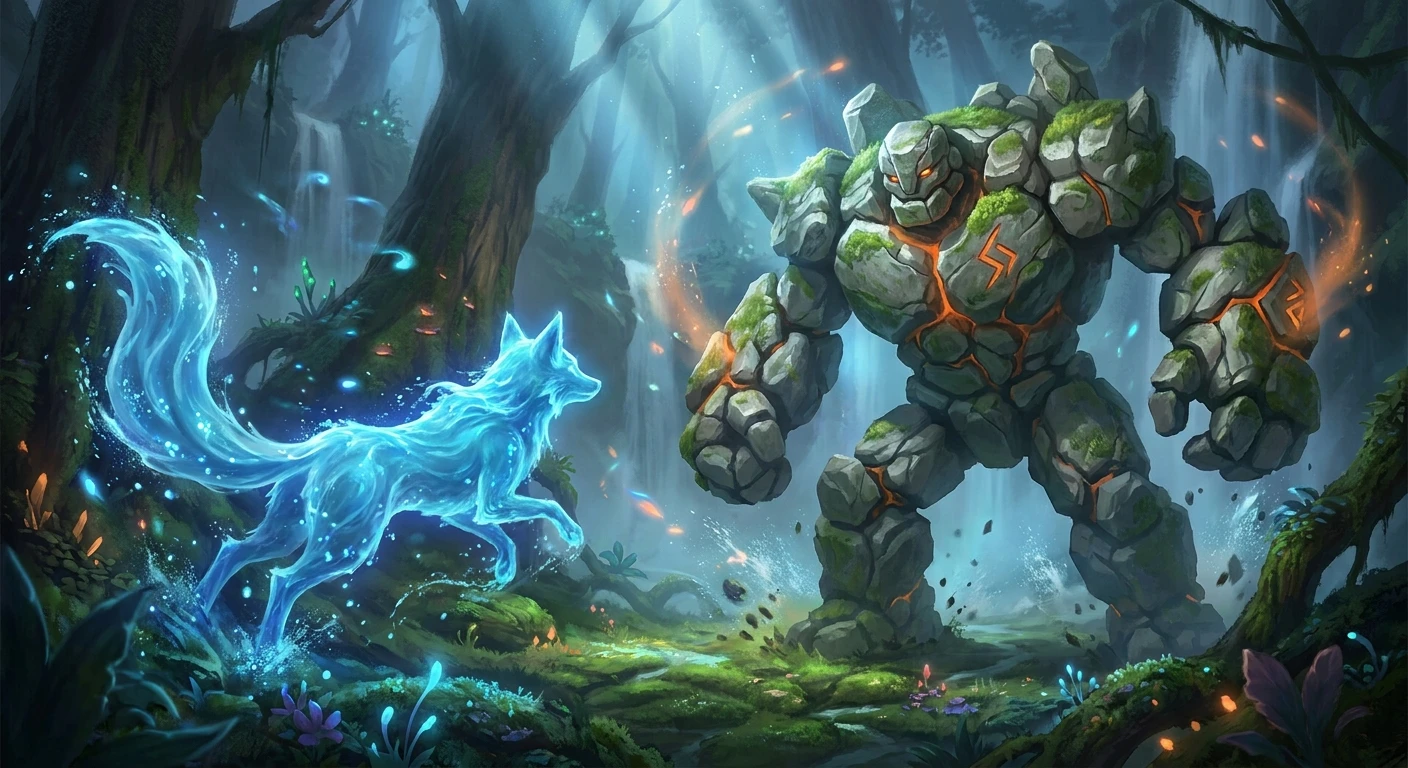
Mastering the Rock Pokemon Weakness for Competitive Play
Figuring out every single Rock Pokemon weakness is absolutely critical if you want to climb the competitive ladder or just crush your friends in casual matches. Look, we have all been there. You queue up for a battle, feeling pretty good about your team composition, and suddenly your opponent sends out a massive, impenetrable stone wall that just refuses to take damage. These rugged creatures are famous for having absurdly high physical defense and terrifying attack stats, making them a nightmare for anyone relying solely on basic physical strikes.
But do not stress out just yet. While they might look like unstoppable juggernauts on paper, they actually carry a heavy burden of vulnerabilities. Knowing exactly how to exploit these gaps in their armor changes the dynamic completely. By utilizing the correct elemental matchups, you can turn their strengths against them and clear the field in seconds. As we navigate the complex team-building landscapes of 2026, relying on brute force alone just does not cut it anymore. You need strategy, precision, and a deep understanding of typing charts. Let us break down exactly how you can tear through these defensive behemoths, control the pace of the battle, and secure your victories with ease.
Read also: The Ultimate sierra counters Guide; The best starter pokemon violet guide.
The Core Strategies: Exploiting Their Vulnerabilities
To truly understand how to counter these stony adversaries, you need to memorize their primary vulnerabilities. A pure Rock-type takes double damage from five different elements: Water, Grass, Fighting, Ground, and Steel. This means you have a massive toolbox of options for taking them out. The key is recognizing that many of these creatures are actually dual-typed, pairing their rocky exterior with Ground or Water. This creates situations where they might take four times the normal damage from a single well-placed attack. Hitting a Geodude or Rhyperior with a simple Water move is practically guaranteed to secure an instant knockout.
Understanding the value of exploiting a Rock Pokemon weakness gives you a massive tactical advantage. First, it completely shifts the momentum of the match. If your opponent relies on a defensive anchor like Garganacl to stall you out, blowing it away with a fast Special Attack opens up their entire team to a sweep. Second, it saves your resources. Instead of wasting five turns chipping away with resisted hits, you preserve your health and PP for the rest of their squad.
| Attacking Element | Damage Multiplier | Competitive Move Strategy |
|---|---|---|
| Water-Type Attacks | 2x (Often 4x on Dual Types) | Utilizing Hydro Pump or Surf completely bypasses their physical bulk. |
| Fighting-Type Attacks | 2x | Using Close Combat or Aura Sphere shatters their defenses instantly. |
| Grass-Type Attacks | 2x (Often 4x on Dual Types) | Giga Drain recovers your health while dealing massive super effective damage. |
| Ground-Type Attacks | 2x | Earthquake provides reliable, heavy-hitting coverage against almost anything. |
To consistently break through their defenses, keep these three essential strategies in mind:
- Use Special Attackers: Because these creatures typically have a heavily skewed stat distribution favoring physical defense, hitting them with Special Attacks targets their inherently lower Special Defense stat.
- Anticipate the Sandstorm: Be extremely careful if a Sandstorm is active. This weather condition magically grants these creatures a fifty percent boost to their Special Defense, turning them into mixed defensive nightmares.
- Target the Secondary Typing: Always look at the full picture. If you are facing a Rock/Flying type like Aerodactyl, hitting it with an Electric or Ice move might be safer and more effective than relying on a standard Ground attack which it completely ignores.
The Origins of Rock Type Mechanics
Taking a trip back to the very beginning, the mechanics surrounding these rugged defenders were originally established way back in Generation 1. If you started your journey in the Kanto region, your very first major hurdle was Brock, the Pewter City Gym Leader. Back then, things were incredibly confusing for players because almost every single creature of this element was also a Ground type. This led to a widespread misconception that these stony creatures were totally immune to Electric attacks. In reality, that immunity came entirely from the Ground typing. Pure stony monsters always took normal damage from electricity, but finding one to test that theory on was incredibly rare in the early days.
Evolution Through the Generations
As the franchise expanded, the developers introduced new ways to balance the game. Generation 2 introduced the Steel type, adding another layer of offensive pressure against them. However, it was Generation 4 that completely changed the landscape by formally splitting moves into Physical and Special categories based on the actual logic of the attack, rather than the elemental typing. This was both a blessing and a curse. It meant players could finally use Special Water or Grass attacks effectively, but the developers simultaneously introduced the mechanic where Sandstorm boosts their Special Defense, giving them a much-needed lifeline in competitive play.
The Modern State of Rock Pokemon
Fast forward to the competitive circuits of 2026, and the metagame has evolved dramatically. With advanced mechanics like Terastallization allowing creatures to completely change their elemental affinities on the fly, relying solely on basic typing charts requires a lot more prediction. Defensive staples are now running items like the Heavy-Duty Boots or Leftovers, making them incredibly difficult to wear down through passive damage. Modern players must actively draft teams that can handle sudden type shifts, bait out defensive Terastallizations, and still deliver crippling super effective blows when the stony exterior is finally exposed.
Stat Distribution and Type Synergy
To systematically dismantle these creatures, you need a fundamental grasp of their mathematical architecture. Most of these monsters follow a very strict stat distribution blueprint: massive Physical Attack, staggering Physical Defense, abysmal Speed, and severely lacking Special Defense. Their Base Stat Totals (BST) are heavily heavily invested in surviving physical brawls. If you try to punch a Tyranitar with a standard physical Normal-type move, you are basically throwing a pebble at a brick wall. However, hitting that same Tyranitar with a Special Fighting-type move like Focus Blast calculates the damage against its lowest defensive stat, creating a devastating multiplier effect.
The Sandstorm Special Defense Multiplier
We cannot discuss countering these elements without heavily emphasizing weather control. When a Sandstorm is raging on the battlefield, the game engine automatically applies a 1.5x multiplier to the Special Defense of any creature possessing this typing. This drastically alters the math of an engagement, allowing them to survive hits that would normally vaporize them. If you plan to use a Water-type sweeper, you absolutely must control the weather.
- Water and Grass attacks calculate damage using the defender’s special defense, entirely bypassing their legendary physical bulk.
- A 4x weakness results in 400% damage, essentially guaranteeing a one-hit knockout (OHKO) unless the target is holding a Focus Sash or possesses the Sturdy ability.
- The Sturdy ability acts as a hardcoded failsafe, leaving the defending Pokemon with exactly 1 HP instead of fainting from full health.
- Weather effects like Sandstorm override neutral battle conditions, meaning Rain Dance sweepers must actively reset the weather to maximize their Water-type damage output and strip away the enemy’s defensive buffs.
Step 1: Identify Target Threats
The very first thing you need to do when building a counter strategy is to properly scout the current competitive meta. You must identify exactly which stony threats are seeing the most play. Are you running into endless Garganacl users stalling you out with Salt Cure? Or are you facing hyper-offensive Tyranitars setting up Dragon Dance? Knowing exactly who you are hunting dictates the coverage moves you need to draft. Spend time analyzing popular rental teams so you are never caught off guard.
Step 2: Draft a Fast Water Sweeper
Once you know the threats, you need a dedicated executioner. A fast, Special-Attacking Water-type is generally the most reliable answer to any Rock Pokemon weakness. Creatures like Greninja, Iron Bundle, or Walking Wake possess the raw speed needed to strike first and the special attack stats necessary to ensure the knockout. You want something that hits hard, moves fast, and does not care about how high the opponent’s physical defense is.
Step 3: Integrate Fighting-Type Coverage
You cannot rely entirely on a single Water sweeper. You absolutely must spread your answers across your entire team. Integrating Fighting-type coverage moves on your physical attackers provides a vital safety net. Teaching Close Combat to your speedy offensive pivots or slapping Aura Sphere onto your special sweepers ensures that no matter who is currently on the field, you have a button to press that will deal massive, super effective damage to these defensive walls.
Step 4: Prepare for the Sturdy Ability
Nothing is more frustrating than perfectly executing a super effective strike, only to watch the opponent survive with 1 HP because of the Sturdy ability. To completely negate this mechanic, you need to establish entry hazards. Having your lead Pokemon set up Stealth Rock or Spikes guarantees that the moment the enemy switches their defender into the battle, they take a small chip of damage. That tiny bit of damage officially breaks their Sturdy, allowing your sweepers to secure the one-hit knockout as planned.
Step 5: Play Around Weather Control
Because the Sandstorm Special Defense boost is so ridiculously potent, you must bring a way to change the weather if you rely on Special Attacks. Drafting a Pokemon with the Drizzle ability automatically summons rain, overriding the sand and buffing your Water attacks simultaneously. Alternatively, using Snowscape can shift the field advantage to your side, completely stripping away the 1.5x defensive multiplier from your stony adversaries.
Step 6: Exploit Slow Speed Tiers
Speed control is practically handed to you in these matchups because most of these defensive behemoths are incredibly slow. You can heavily exploit this by utilizing priority moves. If their speed tier is low, but they are boosting their speed with Dragon Dance or Rock Polish, hitting them with an Aqua Jet, Mach Punch, or Vacuum Wave completely bypasses the speed check. Priority moves guarantee you strike first, easily finishing off a weakened giant before they can retaliate.
Step 7: Execute the Trap
The final step is purely psychological. Good opponents know their weaknesses and will actively try to protect their defensive walls. You need to bait them. Bring out a Flying-type or Fire-type Pokemon to entice them into switching in their stony defender. The moment they commit to the switch, you aggressively pivot into your dedicated counter. By predicting their movements and executing this trap flawlessly, you completely dismantle their defensive core and take total control of the match.
Common Myths vs The Reality of the Meta
Myth: These creatures are completely immune to Electric attacks.
Reality: This is perhaps the oldest misconception in the franchise. The immunity actually belongs exclusively to the Ground element. A pure stony creature takes completely normal, neutral damage from a Thunderbolt.
Myth: They always have huge, impenetrable Special Defense stats.
Reality: Quite the opposite! Most of them possess truly terrible Special Defense. Unless a Sandstorm is actively blowing on the field to grant them a buff, Special Attacks will easily melt right through their health bar.
Myth: You need a legendary or overpowered monster to break through a defensive wall.
Reality: You do not need overwhelming raw power. Because of the 4x multipliers common in these dual-typings, even a basic early-route Grass-type utilizing a simple move like Giga Drain will easily secure the knockout.
Myth: Their rugged nature makes them highly resistant to Fighting moves.
Reality: Fighting actually hits them for super effective damage. In fact, Fighting moves are some of the most reliable ways to completely shatter their defensive bulk.
Frequently Asked Questions
What is the biggest Rock Pokemon weakness?
Water and Grass are traditionally their biggest vulnerabilities, largely because so many of these creatures possess a secondary Ground typing, resulting in catastrophic four-times super effective damage from those elements.
Does Fighting beat Rock?
Yes, absolutely. Fighting-type attacks deal double damage to them, making fast martial-arts specialists a premiere counter to slow defensive walls.
Why do they take so much damage from Special moves?
The vast majority of their Base Stat Totals are heavily allocated toward Physical Attack and Physical Defense, leaving their Special Defense incredibly low and vulnerable to energy-based attacks.
Is Rock weak to Steel?
Yes, Steel-type moves are super effective against them. Hitting them with a Flash Cannon or Iron Head is a fantastic way to bypass their defenses.
Are they vulnerable to Ground-type attacks?
Yes, Ground moves like Earthquake hit them for super effective damage, which is ironic considering how often the two elements are paired together in dual-typings.
How does the Sturdy ability affect one-hit knockout attempts?
Sturdy acts as a guaranteed survival mechanic. If the Pokemon is at full health, it will magically survive any attack that would normally knock it out, remaining on the battlefield with exactly 1 HP.
Does Ice deal extra damage to them?
No, this is a very common mistake. They actually take normal damage from Ice, and their own attacks will hit Ice-types for super effective damage.
What elements naturally resist their attacks?
If you need to defend yourself against their offensive pressure, switching into Fighting, Ground, and Steel types is your best bet, as all three naturally resist these attacks.
Can I just ignore their weaknesses and use brute force?
You can try, but you will likely fail. Relying on neutral physical attacks against creatures designed to be physical sponges will quickly drain your team’s momentum and health.
Conclusion
Now that you are armed with this extensive knowledge, you hold the keys to shattering any defensive wall your opponent tries to throw at you. Memorizing every single Rock Pokemon weakness is not just about trivia; it is about taking absolute control of the battlefield. By bringing the right Special Attackers, managing the weather, and setting up hazards to break Sturdy, you turn their greatest strengths into massive liabilities. Stop letting these stony walls ruin your win streaks. Go redesign your team right now, slot in those Water and Fighting coverage moves, and start dominating the competitive ladder today!





Leave a Reply