
Tiny Tina’s Wonderlands Classes: Choose Your Ultimate Fatemaker
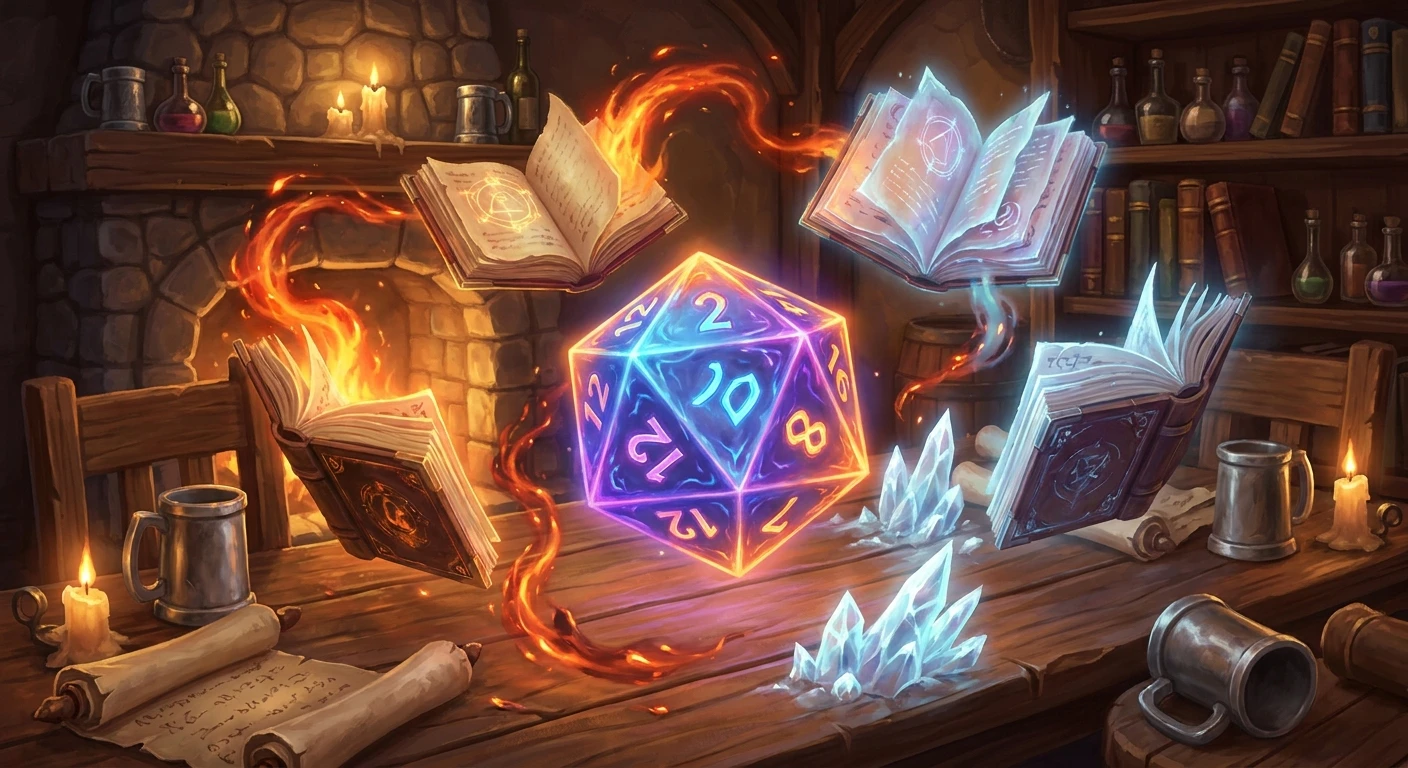
Are you ready to roll the dice and pick from the legendary Tiny Tina’s Wonderlands Classes for your next chaotic tabletop adventure? Building a Fatemaker that obliterates skeletons, wyverns, and giant mushrooms is all about synergy. The core system ditches traditional character mechanics in favor of a multiclassing format that fundamentally alters how you approach Bunkers & Badasses. When you start the campaign, you lock in a primary role, deciding your foundational skills, passive tree, and action skills. Later down the line, a secondary class slot opens up, turning the game into a massive theory-crafting sandbox. I want to break down exactly how these combinations dictate battlefield flow, elemental damage output, and survivability without bogging you down in confusing math. Whether you prefer throwing magical firebirds, swinging a massive ethereal hammer, or ordering a mushroom companion to launch toxic spores at bandits, the system accommodates massive customization. This guide explains the core mechanics, the intricate passive synergy, and the history behind how these RPG elements came together, ensuring you pick the optimal path for high Chaos Chamber runs. Your choice of class determines whether you survive the Dragon Lord’s onslaught or end up rolling a critical failure.
Core Benefits and Value of the Class System
Selecting your main Tiny Tina’s Wonderlands Classes requires a solid understanding of the base mechanics. The value proposition of this dual-class design means you are never locked out of hybrid playstyles. For example, if you build a Spellshot, your primary focus is spell weaving and gun damage. However, combining it with a Graveborn transforms you into a dark-magic-wielding vampire who trades health for absurd area-of-effect damage. Another excellent example is mixing the Spore Warden with the Clawbringer to create a beastmaster that commands both a toxic mushroom and a flying wyvern, giving you two distinct pets to draw enemy aggression. This flexibility means that if you get bored of pure melee combat, you can easily slot in a secondary magical class to start casting high-damage elemental spells while still utilizing your close-quarters passive buffs. Let us look at a breakdown of the primary options available at the start of your journey.
Read also: Scout or Fighter Stardew: The Ultimate Combat Guide; Ultimate Guide to Predator Core Palworld.
| Class Name | Primary Stat Focus | Core Mechanic or Pet Companion |
|---|---|---|
| Brr-Zerker | Frost Damage & Melee | Rage of the Ancients (Enrage) |
| Stabbomancer | Critical Hits & Speed | Dirty Fighting (Universal Crit) |
| Spellshot | Spell Cooldown & Gun Damage | Ambi-Hextrous (Dual Spells) |
| Clawbringer | Fire, Lightning & Ward | Wyvern Companion |
| Graveborn | Dark Magic & Health Sacrifice | Demi-Lich Companion |
| Spore Warden | Gun Damage & Poison | Mushroom Companion |
| Blightcaller (DLC) | Status Effects & Elemental Overlap | Bog Totem |
To maximize your combat efficiency, you need a solid strategy. Here is a numbered list of the core steps to synergize your build:
- Identify your primary damage vector. Decide early if you want to focus heavily on gun damage, melee attacks, or spell casting, as this dictates which secondary class you should eventually pick.
- Match your elemental damage types. If your primary tree buffs frost damage, picking a secondary class that also benefits from slowing and freezing enemies will multiply your overall damage output exponentially.
- Align your Hero Points intelligently. If you run two pet classes, dumping points into stats that keep your companions alive will yield much better returns than investing in raw melee damage.
Origins of the Fatemaker Concept
Back in the days of classic looter shooters, characters were extremely rigid. You picked a specific predefined protagonist, and that defined your entire playthrough for hundreds of hours. The concept of creating a completely blank slate emerged directly from the tabletop RPG influences of earlier expansions. The developers wanted players to feel like they were sitting around a table with character sheets, writing their own legends from scratch.
Evolution of the Multiclass System
The progression system did not appear out of thin air. It evolved naturally from earlier iterations of skill tree mechanics where players desperately wanted more overlapping abilities. By stripping away the named protagonists and allowing players to mix and match two completely different archetypes, the design team solved the longstanding issue of endgame staleness. You no longer have to roll an entirely new character just to experience a different magical ability or action skill.
Modern State of Build Diversity
Today, the landscape of builds is incredibly vast. Thanks to post-launch updates and the addition of the Blightcaller class via downloadable content, the permutations have expanded even further. Players spend hours calculating optimal enchantment rolls, testing new ring and amulet combinations, and pushing the boundaries of what these characters can achieve in the endgame randomized dungeons. The community actively shares complex spreadsheets mapping out exact damage variables, proving that the system has exceptional depth.
Mathematical Synergy in Skill Trees
It sounds like pure chaotic magic on the surface, but under the hood, the engine runs on complex math and precise damage brackets. Whenever you allocate a skill point, the game calculates base damage, additive bonuses, and multiplicative bonuses. Understanding the difference is crucial. Additive bonuses stack linearly, meaning they add a flat percentage to your base damage. Multiplicative bonuses multiply the total of your existing damage, resulting in massive spikes in numbers. When you choose two classes that both offer multiplicative bonuses for the same damage type, you break through standard damage ceilings easily.
Damage Formula Mechanics
The core of your character’s power relies heavily on how you distribute your base attributes. Let us look at the scientific facts governing the engine’s background calculations:
- Strength: Directly increases your overall Critical Hit Damage, making it mandatory for Stabbomancer hybrids.
- Dexterity: Boosts your base Critical Hit Chance, determining how often those massive damage spikes occur.
- Intelligence: Reduces your Spell Cooldown rate, which is the absolute lifeblood of any dedicated Spellshot build.
- Wisdom: Increases Status Effect Damage, heavily benefiting builds that rely on poison, fire, or dark magic over time.
- Constitution: Scales your Maximum Health and Maximum Ward, providing necessary survivability for close-range Brr-Zerkers.
- Attunement: Lowers your Action Skill Cooldown rate, ensuring you can use your most powerful abilities more frequently in frantic firefights.
Phase 1: Selecting the Primary Foundation
The moment you start your campaign, you must lock in your primary choice. This is a permanent decision for that specific character save file. Take your time to review the passive tree and ensure the core loop matches your preferred playstyle, whether that is sprinting with shotguns or casting spells from afar.
Phase 2: Allocating Early Hero Stats
As you level up, you gain Hero Points. Do not just spread them evenly. Focus heavily on two main stats that directly complement your primary class. If you chose a magic user, pour everything into Intelligence to keep your spell cooldowns as low as possible from the very beginning.
Phase 3: Unlocking the Action Skill
Around level seven, your action skills become available. Test both options provided by your primary class. Some abilities are excellent for clearing out rooms of weak goblins, while others are designed to deal massive single-target damage to bosses. Swap them out freely based on the mission context.
Phase 4: Reaching the Multiclass Milestone
Upon completing a specific main story quest early in the campaign, you unlock your secondary slot. This is the moment your build truly comes alive. Review all the available Tiny Tina’s Wonderlands Classes again and pick the one that fills the gaps in your primary foundation. If you lack survivability, add Graveborn. If you lack speed, add Stabbomancer.
Phase 5: Balancing the Dual Skill Trees
With two skill trees active, you must carefully budget your skill points. You cannot max out both trees completely. Find the synergy points. Look for tier-three or tier-four skills in the secondary tree that perfectly boost the capstone skill of your primary tree. Focused spending is always better than wide, shallow spending.
Phase 6: Enchantment Rerolling
Upon reaching the maximum level, gear enchantments become your top priority. Visit the blacksmith and reroll your weapons and spells to ensure their enchantments trigger upon using your specific class action skills. An enchantment that boosts frost damage after spell-casting is useless if you are running a purely melee-focused build.
Phase 7: Conquering the Chaos Chamber
Your fully realized multiclass build will be put to the ultimate test in the endgame dungeons. Here, enemies scale aggressively. Rely on the intricate synergies you have built, keep your companions healed, manage your spell cooldowns efficiently, and maintain constant movement to survive the randomized modifiers and brutal boss encounters.
Debunking Common Class Myths
Myth: You cannot reset your secondary class once you pick it.
Reality: After finishing the main story campaign, you can swap your secondary class at any Quick Change station in the hub city, allowing you to test entirely new playstyles without making a new character.
Myth: Pet builds fall off in the late game and become useless.
Reality: Companions scale directly off your primary stats and specific passive skills, making Spore Warden and Graveborn pets absolutely devastating even in the highest endgame difficulty tiers.
Myth: You must play a Spellshot to use magic effectively.
Reality: Any class can equip and cast powerful spells. The Spellshot simply gets specialized cooldown reductions and specific passive boosts dedicated to spell damage.
Myth: Melee combat is impossible against flying enemies.
Reality: Brr-Zerkers and Stabbomancers possess gap-closing abilities and elemental modifiers that make melee strikes completely viable, even against fast-moving aerial targets like wyverns.
Frequently Asked Questions
Which class is best for solo play?
The Graveborn is exceptionally strong for solo players due to its dark magic life-steal mechanics, keeping you constantly healed while dealing damage.
Can I change my primary class?
No, your primary choice is permanent for that specific character. You must start a new game to pick a different primary foundation.
Does the Clawbringer pet revive players?
No, the wyvern companion deals elemental damage from the air but does not have the ability to revive you if you fall into the Save Your Soul state.
How do Hero Points affect my class?
Hero Points provide underlying mathematical buffs like increased critical hit chance, shorter cooldowns, and larger health pools that multiply the effectiveness of your skill trees.
What is the highest damage combination?
While balance patches shift the meta, combining Spellshot with Graveborn or Stabbomancer traditionally yields some of the highest burst damage due to spell-weaving synergy.
Do companions trigger kill skills?
Yes, when your companions defeat an enemy, it counts as your kill, triggering any on-kill passive abilities you have unlocked in your skill trees.
Are the DLC classes worth playing?
Absolutely. The Blightcaller offers incredibly unique poison and status effect mechanics that pair beautifully with almost every base game class.
Final Thoughts
Mastering the diverse Tiny Tina’s Wonderlands Classes requires a bit of experimentation, but the payoff is an incredibly personalized, chaotic combat experience. By carefully selecting your primary and secondary roles, aligning your Hero Stats mathematically, and hunting down gear with the perfect enchantments, you can build a Fatemaker capable of crushing the toughest endgame challenges. Do not be afraid to reset your secondary skill tree and try completely wild combinations. Get out there, roll the dice, and start building your ultimate legendary hero right now!




Leave a Reply