
The Massive Impact of the GTA 6 Voice Actors
The anticipation surrounding the GTA 6 voice actors has reached unprecedented levels across the global gaming community. Whenever a new installment in the Grand Theft Auto franchise approaches, the conversation inevitably shifts toward the talent responsible for bringing the central protagonists to life. In the vast, sun-drenched, and chaotic landscape of the fictional state of Leonida, the characters of Lucia and Jason serve as the emotional and narrative anchors. The performers stepping into these roles carry an immense responsibility, as their voices, facial expressions, and physical movements dictate how millions of players experience the story.
Voice acting in interactive entertainment has evolved significantly from the days of simply reading dialogue into a static studio microphone. Modern game development requires performers to engage in full-body performance capture, essentially performing complex scenes as if they were acting in a high-budget theatrical film or television series. The sheer scale of the script for a project of this magnitude means that the chosen talent must possess incredible stamina, emotional range, and the ability to maintain character consistency over several years of rigorous production schedules. Understanding the casting process offers a fascinating glimpse into how interactive narratives are meticulously constructed from the ground up.
Read also: Fighter or Scout: Choosing Your Optimal Class; Guide to the life is strange reunion chloe.
The Core Strategy Behind Rockstar’s Casting Choices
Choosing the right talent for a flagship title requires a delicate balance between finding raw acting ability and ensuring the character remains the focal point of the experience. The studio behind this massive franchise has developed a highly specific approach to casting that prioritizes immersion over celebrity recognition. By casting relatively unknown talent, developers ensure that players see the character rather than the famous actor portraying them. This approach prevents pre-existing celebrity baggage from breaking the immersion of the fictional universe.
To understand the sheer scale and legacy of these casting decisions, we can observe the historical trajectory of the franchise’s main protagonists. The transition from massive Hollywood stars to dedicated, specialized performance capture artists marks a defining shift in how interactive stories are told.
| Character | Voice Actor | Franchise Era |
|---|---|---|
| Tommy Vercetti | Ray Liotta | Classic 3D Era |
| Michael De Santa | Ned Luke | HD Era |
| Arthur Morgan | Roger Clark | Modern Cinematic Era |
| Lucia | Subject to Strict NDA | Current Generation Era |
The value proposition of utilizing dedicated performance artists is clear. These actors provide unparalleled authenticity, allowing developers to craft distinct, believable personalities that resonate deeply with the audience. Consider the following crucial elements that define the casting framework for a project of this scale:
- Total Anonymity Requirements: Actors are required to sign incredibly strict Non-Disclosure Agreements (NDAs), often preventing them from updating their resumes or discussing their employment for years until official marketing materials are released.
- Full Performance Capture: Performers are not just providing vocal tracks; they must wear specialized suits to record their physical movements, ensuring the character walks, gestures, and interacts with the environment naturally.
- Long-Term Commitment: The production cycle for a massive open-world game can span five to ten years. Actors must be available for extensive reshoots, dialogue expansions, and post-launch content development throughout the entire period.
Origins of Celebrity Casting
During the early 2000s, the gaming industry was desperate for mainstream cultural validation. To achieve this, developers heavily relied on A-list Hollywood talent to market their titles. Iconic actors like Samuel L. Jackson, Ray Liotta, and James Woods were prominently featured on game boxes and in promotional materials. While this strategy successfully brought widespread attention to the medium, it also introduced significant logistical challenges. High-profile actors commanded astronomical salaries, possessed limited availability for recording sessions, and sometimes struggled to adapt to the highly nonlinear nature of video game scripts.
Evolution Toward Unknown Talent
As the medium matured, developers realized that recognizable voices could actually detract from the player’s connection to the game world. When a player heard a famous actor, they often pictured the actor rather than the character on screen. The shift toward utilizing lesser-known, highly skilled character actors began in earnest during the late 2000s. Performers like Michael Hollick, Steven Ogg, and Shawn Fonteno proved that unknown actors could deliver deeply compelling, award-winning performances that fully integrated into the game’s narrative fabric without any distracting real-world associations.
The Modern State of Gaming NDAs
The contemporary landscape of video game casting is defined by extreme secrecy. Production companies utilize complex codenames for projects and characters during the audition phase to prevent storyline leaks. Scripts are heavily redacted, and actors often perform scenes without knowing the full context of the game’s overarching plot. This intense level of confidentiality ensures that major narrative beats remain completely secure until the studio is ready to present them to the public.
The Technical Reality of Performance Capture
The Shift from Booth to Volume
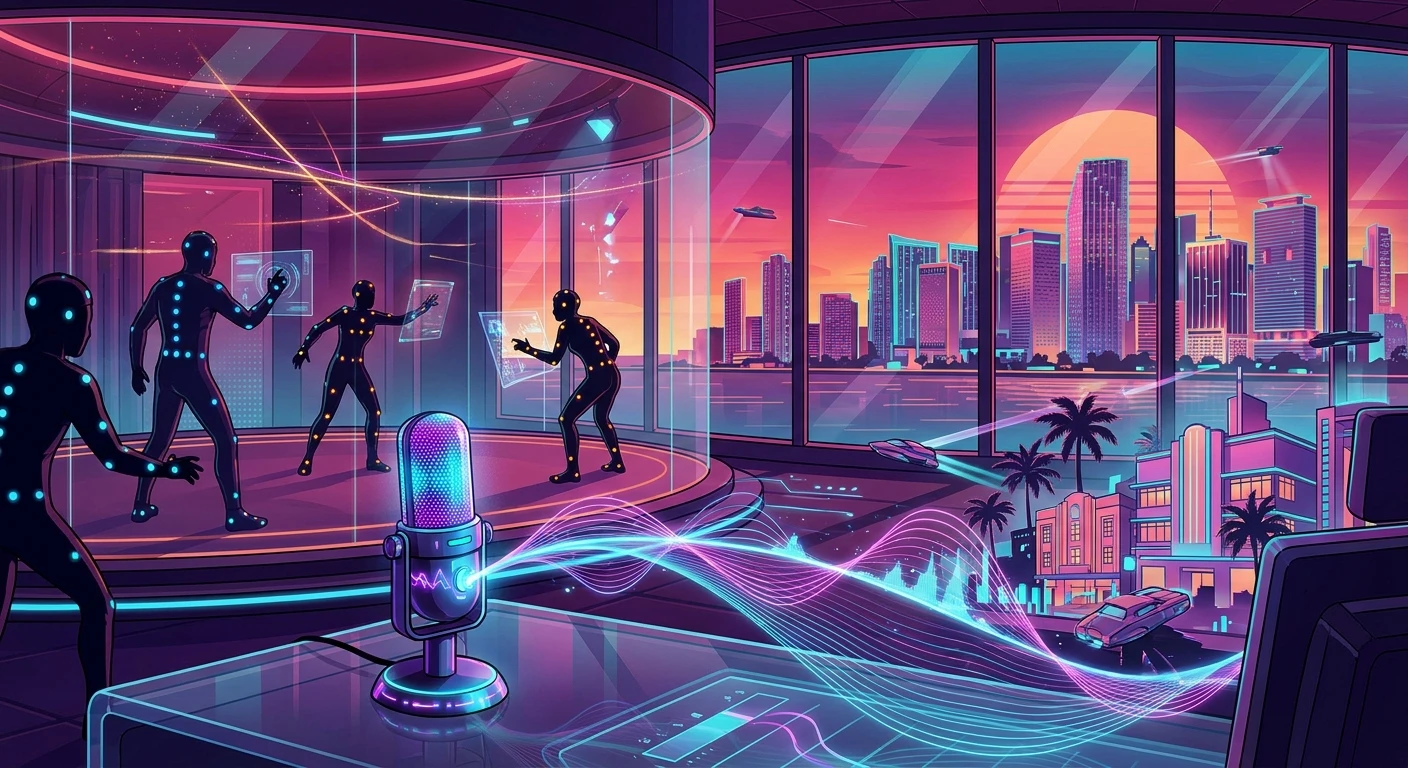
Traditional voice over work takes place in an isolated, soundproof booth where an actor stands stationary behind a microphone. The modern approach, known as performance capture, takes place in a specialized studio called a “volume.” This massive, warehouse-like space is lined with hundreds of specialized cameras. Actors wear form-fitting suits covered in reflective markers. As they move, act, and interact with physical props, the cameras track the markers in real-time, translating the actor’s physical performance directly onto a digital skeleton within the game engine.
Micro-Expressions and Facial Rigging
Capturing the subtle emotional nuances of a performance requires incredibly sophisticated technology. Actors are fitted with head-mounted cameras (HMCs) that feature lights and small lenses pointed directly at their faces. Every blink, sneer, and subtle twitch of the jaw is recorded and mapped onto the digital character’s facial rig. This ensures that the digital avatar perfectly mimics the actor’s emotional delivery.
- Vicon Optical Cameras: High-speed cameras placed around the volume capture movement at upwards of 120 frames per second, ensuring zero latency and perfectly fluid animation data.
- Facial Blendshapes: Developers use advanced algorithms to map human muscle movements to digital meshes, allowing for thousands of unique facial expressions.
- Inertial Measurement Units (IMUs): Specialized sensors are sometimes embedded directly into the actor’s suit to capture minute rotations and accelerations that optical cameras might miss during complex action sequences.
- Simultaneous Audio Routing: Lavaliere microphones attached to the head rigs capture clean audio tracks while the actor is engaging in strenuous physical activity, which is later blended with cleaner studio recordings.
The 7-Step Journey of a Video Game Actor
Step 1: The Initial Codename Audition
The journey begins with a casting call that actively disguises the true nature of the project. Actors receive scripts featuring fake character names and generic scenarios. Casting directors look for specific vocal tones, natural charisma, and the ability to improvise under pressure.
Step 2: Signing the Ironclad NDAs
Before proceeding to callbacks, candidates must sign extensive legal documentation. These non-disclosure agreements carry severe financial penalties for any breaches, ensuring that the talent understands the absolute necessity of discretion throughout the process.
Step 3: The Chemistry Read
Because interactive narratives often rely on complex interpersonal dynamics—such as the partnership between Lucia and Jason—shortlisted actors are brought together for chemistry reads. Directors observe how the performers interact, banter, and play off one another in real-time to ensure their dynamic feels authentic.
Step 4: Boot Camp and Movement Training
Once cast, performers undergo physical training. They must learn how to walk, run, hold imitation firearms, and perform stunt choreography in a way that translates clearly to the digital animators. Movement coaches help them develop specific physical tics that define their character’s personality.
Step 5: Entering the Mocap Volume
The core of the work takes place inside the capture volume. Actors spend long days performing intense emotional scenes while wearing uncomfortable suits and heavy headgear. They must use their imagination to visualize lush environments and dangerous scenarios while standing in an empty, gray room surrounded by scaffolding.
Step 6: Years of Iterative Recording
Unlike a film which wraps production in a few months, game development is highly iterative. Scripts change, missions are redesigned, and new content is added continuously. Actors are frequently called back to the studio over a span of several years to record new dialogue, grunt variations, and alternate storyline branches.
Step 7: ADR and Post-Production Syncing
The final phase involves Automated Dialogue Replacement (ADR). Actors return to a traditional sound booth to re-record specific lines of dialogue where the original on-set audio was compromised by physical exertion or suit noise. This phase ensures crystal-clear audio quality for the final product.
Myths vs. Reality in Game Casting
Myth: Voice acting is an easy job that just involves reading lines into a microphone for a few hours.
Reality: Modern interactive performances require immense physical stamina, theatrical training, and the ability to convey complex emotions while wearing heavy, restrictive technology.
Myth: Casting famous movie stars always results in better, more successful video games.
Reality: Famous voices can heavily disrupt player immersion. Highly trained, dedicated character actors consistently deliver more authentic and believable performances tailored specifically to the medium.
Myth: Actors in major blockbuster games receive massive royalty checks based on unit sales.
Reality: The vast majority of interactive media contracts operate on fixed day rates or flat buyout fees negotiated by labor unions, meaning actors rarely see direct royalties from a game’s retail success.
Myth: Internet rumors and early leaks always accurately identify the final cast.
Reality: The industry is filled with deliberate misinformation, placeholder data, and vocal sound-alikes that easily confuse data miners and eager fans.
Frequently Asked Questions
Who are the confirmed GTA 6 voice actors?
Due to extremely strict non-disclosure agreements, the identities of the main performers are heavily guarded by the studio. While the community heavily speculates on specific names based on trailer analysis and vocal matching, official confirmation typically only arrives alongside the game’s final release marketing push.
Who is the rumored voice of Lucia?
Several actresses have been suggested by the community, with intense focus placed on various rising television and film stars who match the character’s physical appearance and vocal tone. However, the studio maintains complete silence on these rumors.
Is Troy Baker voicing Jason?
Despite rampant online speculation following early trailer releases, veteran voice actor Troy Baker explicitly denied involvement in the project, stating that the role belongs to another talented performer.
Do the actors provide their physical likeness?
Yes, modern game development heavily relies on capturing both the vocal performance and the physical likeness of the talent. The character models for Lucia and Jason are highly likely based on the actual facial structures of the actors portraying them, tweaked slightly by digital artists.
Will past GTA characters return in the new game?
While the franchise is known for maintaining separate continuities across different eras, minor characters, radio personalities, and ambient world characters frequently cross over. Whether major protagonists from previous titles will make physical appearances remains a closely guarded secret.
How long does the recording process take?
For a massive open-world title, the recording process can span anywhere from three to seven years. This extended timeline accommodates the thousands of pages of dialogue required for main missions, side quests, and ambient pedestrian chatter.
Why does Rockstar use unknown actors?
Using lesser-known talent allows players to fully believe in the character without being distracted by recognizing a famous face or voice. It also ensures the actors have flexible schedules to accommodate the grueling, multi-year production cycle without conflicting with major film shoots.
The dedication, physical endurance, and emotional depth brought by the GTA 6 voice actors will undoubtedly shape the future of interactive storytelling. The secretive nature of the casting process only adds to the magic, ensuring that when players finally step into the neon-lit streets of Leonida, they are met with truly unforgettable personalities. Share your casting theories, discuss your favorite performances from past titles, and join the conversation in the comments below!


Leave a Reply