
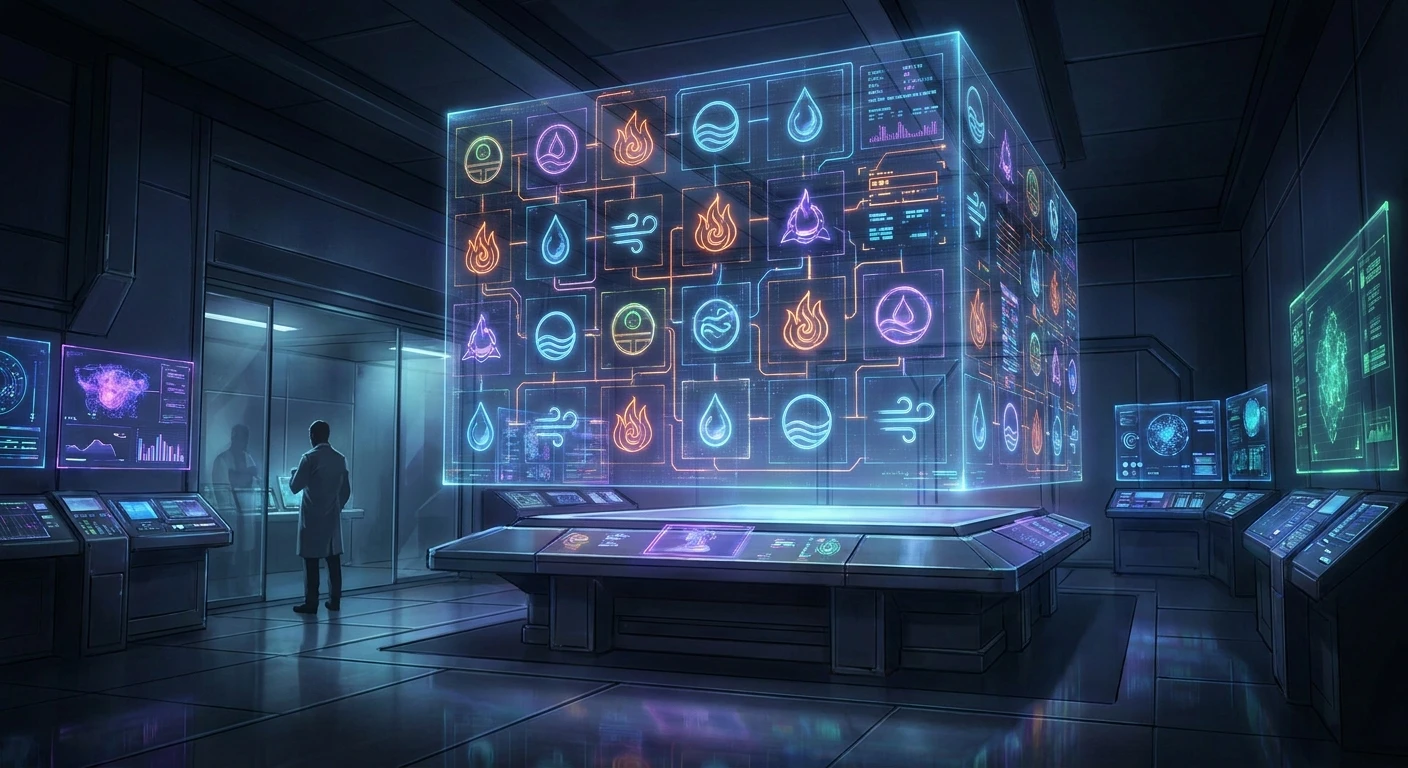
Mastering the Pokemon Too Many Types Type Chart
Figuring out the Pokemon Too Many Types type chart can feel like solving an impossibly complex puzzle, but learning it is exactly what you need to conquer this wildly inventive game. If you are playing this notorious fan-made ROM hack, you already know that the standard elemental rules have been completely thrown out the window. Instead of the classic eighteen elements, you are suddenly dealing with dozens of bizarre, hilarious, and structurally chaotic new typings that interact in ways you would never expect.
This massive expansion turns basic gameplay into a highly strategic endeavor. You can no longer rely on simple muscle memory to know that Water beats Fire. You have to account for entirely new categories, weird defensive immunities, and offensive combinations that can sweep your entire team if you are not prepared. Understanding the exact matrix of weaknesses and resistances is the only way to build a functional team. We are going to break down how to read these new interactions, how the engine handles the math behind the scenes, and exactly how you can adapt your team-building strategies to survive this incredibly bloated elemental system.
Read also: What Is Super Effective Against Poison? Battle Strategies; Who Is the Best Pokemon? Competitive & Casual Guide.
Core Mechanics and Elemental Matchups
When you sit down to play, the sheer volume of the Pokemon Too Many Types type chart is the first major hurdle. Standard games use an 18 by 18 grid to determine what is super effective, neutral, not very effective, or completely immune. When you expand that grid to include over forty or fifty custom categories, the number of potential matchups increases exponentially. A single dual-typed creature can suddenly possess a web of four-times weaknesses or quadruple resistances that defy standard logic. Navigating this requires a complete reset of how you evaluate an opponent.
To succeed, you have to break the game down into manageable chunks rather than trying to memorize a massive spreadsheet all at once. For example, understanding how a handful of the most common custom elements interact will save you during crucial rival battles or gym leader fights.
| Custom Element | Super Effective Against | Highly Vulnerable To |
|---|---|---|
| Bone | Flesh, Normal, Bug | Metal, Sound, Magic |
| Sound | Glass, Liquid, Psychic | Rubber, Vacuum, Space |
| Wood | Water, Ground, Stone | Fire, Bug, Plastic |
Knowing just these specific interactions provides a massive value proposition for your overall run. Here are a few examples of why this knowledge is mandatory:
- Example 1: You encounter a boss using a Glass/Sound combination. Without the chart, you might try a fighting move, only to realize Rubber or Vacuum moves offer a massive four-times multiplier that ends the battle instantly.
- Example 2: You are trying to build a defensive wall. By consulting the matrix, you realize a Plastic/Wood hybrid resists nearly all common early-game attacks, giving you a safe switch-in for difficult encounters.
To read the expanded grid effectively during your playthrough, follow these foundational rules:
- Always check the primary typing first, as the game’s code usually calculates Same Type Attack Bonus (STAB) based on the first slot in the memory block.
- Identify any glaring double-weaknesses before committing to a switch, because the sheer number of types means random coverage moves are incredibly common.
- Keep a digital copy or a printed version of the matrix handy specifically for boss battles, as the game rarely gives you contextual clues for newly invented elements.
Origins of the Expanded Typings
The concept of modifying elemental matchups dates back to the very early days of the internet, long before this specific hack existed. In the late 1990s, players were already theorizing about what a Light or Sound category would look like in the original Game Boy titles. When the official developers added Dark and Steel in the second generation, it proved that the rock-paper-scissors formula was entirely mutable. Fans immediately began using early hex editing tools to try and shoehorn their own custom ideas into the code, though early attempts were plagued by glitches and severe memory limitations.
Evolution of Fan-Made Mechanics
As modification tools grew more sophisticated during the Game Boy Advance era, creators began releasing serious, story-driven projects that featured one or two custom additions. Elements like Nuclear or Cosmic became staples of high-effort fan projects, carefully balanced to fit alongside the original eighteen. However, the community eventually realized that adding just one or two elements was a massive technical undertaking. If they could successfully program one, they could theoretically program dozens. This realization shifted the focus from careful, competitive balance to absolute, chaotic maximalism, prioritizing humor and unpredictability over traditional game design.
The Modern State of Rom Hacks
Today, the landscape of fan projects is completely unrecognizable compared to the early 2000s. Advanced decompilation projects have allowed creators to rewrite the base engine entirely. This is what makes a game with forty-plus elements possible without immediately crashing the system. Creators now have the freedom to assign absurd categories like Gamer, Piss, or Dream to creatures simply for a joke, knowing the engine can fully support the underlying mathematics. The result is a bizarre blend of internet meme culture and surprisingly robust strategic depth, forcing players to apply high-level competitive theory to utterly ridiculous scenarios.
Algorithmic Complexity of Matchups
From a strictly technical standpoint, forcing a vintage game engine to process this many interactions is a programming marvel. The original combat engine uses a specific, hardcoded two-dimensional array to check what happens when Attack X hits Defender Y. When you expand that array from 18×18 to something like 50×50, you are demanding significantly more from the game’s memory allocation. Every single time an attack is selected, the engine must cross-reference the attacker’s move category against both of the defender’s categories, calculate the multipliers, and output the final damage integer.
Memory Management and ROM Limitations
To make this work without overflowing the RAM of an emulator or original hardware, developers use sophisticated pointers and expanded memory banks. They have to hijack unused bytes of data—often originally reserved for unown forms or leftover debugging code—and rewrite them as new elemental identifiers. If the math is even slightly off, hitting a creature with a newly coded attack could cause a buffer overflow, instantly freezing the game.
- The multiplier array is stored as a sequence of bytes where 00 means immune, 05 means half damage, 10 means normal, and 20 means super effective.
- Dual-typing calculations stack these bytes. If a custom element is weak to Fire (20) and its secondary element is also weak to Fire (20), the engine multiplies them to create a 4x (40) weakness.
- Custom weather effects require entirely separate memory tables to temporarily alter the damage output of these new elements.
- Adding new graphics for custom elemental icons requires repointing the visual memory addresses so the user interface can actually display names like Plastic or Sound without corrupting the screen.
Memorizing Core Matchups First
Because it is virtually impossible for a human brain to memorize thousands of unique interactions instantly, your best strategy is to focus on the extremes. Look strictly for the immunities and the four-times weaknesses first. If you know that your Vacuum-type creature takes zero damage from Sound, you have a guaranteed safe pivot. Ignore the neutral matchups during your initial learning phase. By focusing only on the absolute worst and absolute best interactions, you significantly reduce the mental load required to make it through standard trainer battles.
Utilizing Defensive Pivots
In a game where any random opponent might have a completely unhinged elemental combination, switching safely is the most valuable mechanic you have. Equip your team with moves that allow them to deal damage and immediately return to their Pokeball. This allows you to scout the opponent’s defensive capabilities without leaving your fragile attackers exposed on the field. If you bring in a bulky, neutrally-typed wall, you can safely absorb an unknown attack, deduce its category, and formulate a counterattack on the next turn.
Building a Balanced Team Structure
Your team composition needs to be radically different from a standard playthrough. You cannot just rely on the classic Fire, Water, Grass core. Instead, look at the matrix and identify clusters of elements that cover each other’s blind spots. If the newly added Bone element is weak to Magic and Metal, you need a teammate that explicitly resists both of those. Build a roster based on overlapping resistances rather than just offensive coverage. A team that can survive a surprise hit is infinitely more consistent than a team built entirely around hitting hard.
Prioritizing Neutral Attacking Coverage
When you cannot reliably predict what is super effective, neutral damage becomes your best friend. Moves from the Dragon or Normal categories in standard games are prized because very few things resist them. Identify the equivalent elements in this expanded matrix. If the Plastic or Space categories have very few defensive counters on the chart, teach those attacks to your fastest creatures. Firing off high-powered neutral attacks is often much safer than risking a complete immunity because you misread a complex dual-typing.
Myths and Reality of the Expanded Engine
Myth: You have to memorize every single interaction to beat the game.
Reality: You absolutely do not. Most players keep the chart open on a second monitor or their phone. You only need to learn the specific types of the major boss you are currently facing.
Myth: The game is purely a meme and requires no actual skill to beat.
Reality: While the concepts are hilarious, the underlying math is unforgiving. Opponents are given incredibly synergistic dual-typings, meaning you have to apply legitimate competitive strategy, pivoting, and hazard control to win.
Myth: The original eighteen elemental interactions have been completely erased.
Reality: The foundational types usually retain their legacy weaknesses and resistances. Fire still beats Grass, and Water still beats Fire. The complexity comes entirely from how those classics interact with the dozens of new additions.
Myth: Status conditions do not work on custom elements.
Reality: The developers painstakingly coded status immunities into the new matrix. For example, a custom synthetic element might be completely immune to being poisoned, just like Steel.
Frequently Asked Questions
How many custom elements are actually in the game?
The exact number fluctuates depending on the specific patch or version you download, but most modern builds feature upwards of forty to fifty distinct categories, completely dwarfing the original eighteen.
Does Same Type Attack Bonus (STAB) still apply?
Yes. If a creature uses an attack that matches one of its assigned categories, the damage is multiplied by 1.5, making offensive synergy just as critical as it is in the mainline titles.
Are original elemental typings changed entirely?
Most original interactions remain intact, but older creatures are often given new secondary elements to fit the theme of the hack, completely changing how you fight them.
How do weird dual types calculate extreme weaknesses?
The engine multiplies the interactions just like normal. If both elements are weak to a specific attack, the creature takes quadruple damage, making the massive matrix highly volatile.
Is there a dynamic in-game tool to check this?
Some advanced rom hacks include a modified Pokedex or battle interface that hints at effectiveness, but relying on an external image or spreadsheet is highly recommended for accuracy.
Can weather conditions affect custom categories?
Yes, dedicated creators often script custom weather states that boost the damage of bizarre new elements or grant them passive health regeneration at the end of every turn.
Do standard items interact with the new elements?
In many cases, hold items are modified or newly created to boost the power of these custom categories, functioning exactly like a Mystic Water or Charcoal would.
Where can I find the most updated version of the matrix?
The most accurate and up-to-date documentation is usually bundled as a text file or image within the downloadable ZIP folder provided by the original creator of the mod.
Conquering a game this chaotic requires patience, a sense of humor, and a willingness to learn a completely new set of rules. The Pokemon Too Many Types type chart is daunting at first glance, but once you break down the core matchups and start building a team with smart, overlapping resistances, the madness begins to make sense. Do not let the sheer volume of information intimidate you. Keep your reference guide handy, scout your opponents carefully, and start building your unstoppable, bizarrely-typed team today!


Leave a Reply