
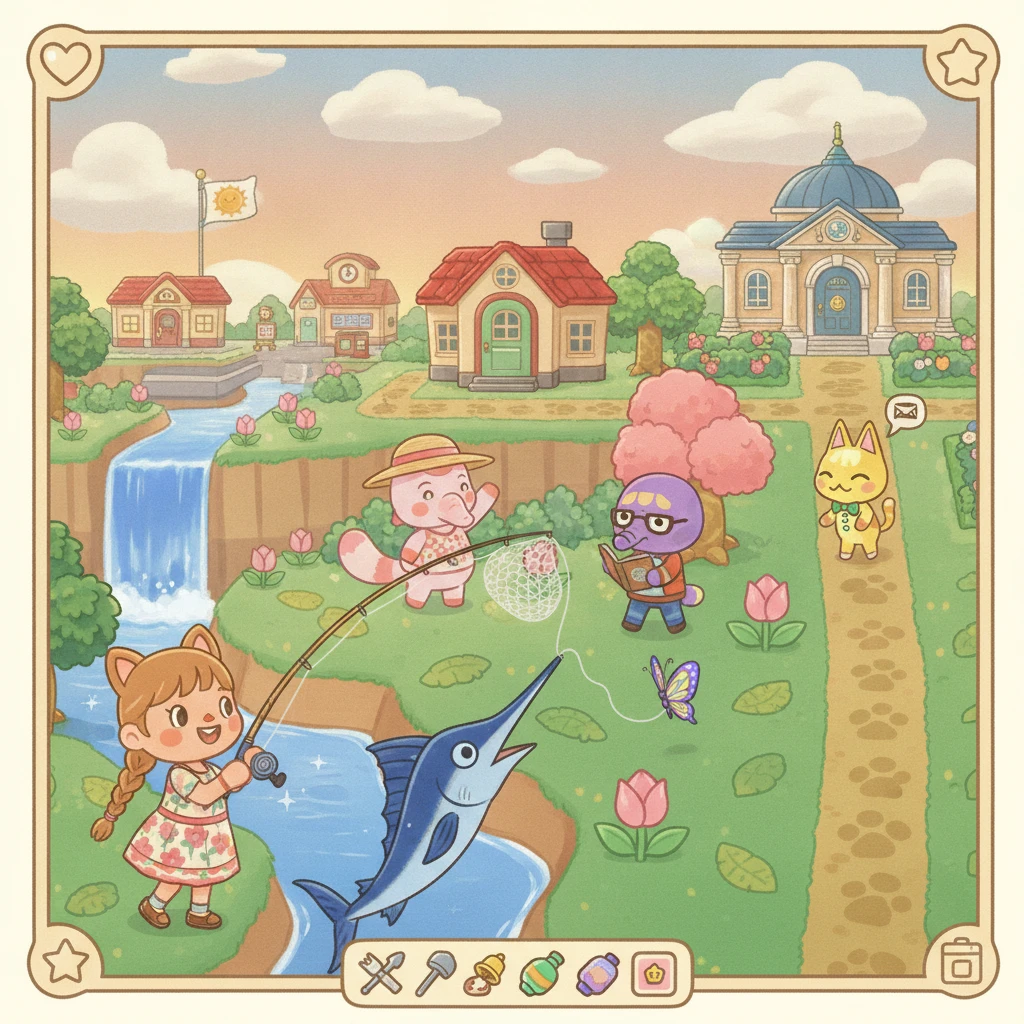
Discovering What to Do in Animal Crossing When You Feel Stuck
If you boot up your Nintendo Switch and find yourself constantly wondering exactly what to do in Animal Crossing, you are certainly not alone in this digital dilemma. The beauty of this franchise lies in its massive, open-ended sandbox design, which deliberately lacks a linear, forceful narrative. Instead, the game relies heavily on intrinsic motivation, meaning you are completely in charge of setting your own daily goals and milestones. Whether you are actively paying off a steep mortgage to Tom Nook, striving to breed the elusive blue rose, or attempting to completely flatten and rebuild your entire island infrastructure, the options are practically limitless.
However, that same freedom can sometimes lead to choice paralysis. Without a flashing quest marker telling you where to go next, players often hit a wall after completing the main tutorial phase. The primary thesis here is simple: structured, self-directed goals combined with a solid understanding of the game’s underlying daily mechanics will instantly cure your boredom and reignite your passion for island life. By breaking down the game into manageable daily routines, long-term creative projects, and technical achievements, you will never run out of engaging activities. Even as we move through 2026, the community continues to find fresh, highly creative ways to manipulate the game’s systems, proving that the true endgame of Animal Crossing is whatever you decide to make it.
Read also: Ultimate Guide to Animal Crossing Flowers; Animal Crossing Shooting Star Guide.
Maximizing Your Daily Island Routine
The core gameplay loop of Animal Crossing relies heavily on a real-time clock, meaning the game rewards consistency over marathon gaming sessions. If you are struggling to find direction, the absolute best place to start is by establishing a highly efficient daily routine. This guarantees you are steadily accumulating wealth, resources, and rare items without feeling overwhelmed by the sheer scale of terraforming projects.
To maximize your efficiency, you should prioritize your daily tasks based on time investment versus the overall payout. Below is a breakdown of the most critical daily activities you should complete.
| Daily Task | Time Required | Reward (Bells/Items) |
|---|---|---|
| Finding the Money Rock | 3 Minutes | Up to 16,100 Bells |
| Assessing 4 Daily Fossils | 5 Minutes | 15,000+ Bells or Museum Donations |
| Checking the Nook Stop | 1 Minute | Bonus Nook Miles (Up to 300/day) |
| Shaking Trees for Furniture | 10 Minutes | 2 Free Furniture Items, 5 Wasps |
Establishing a routine gives you immediate, tangible benefits. For instance, successfully catching five wasps daily yields profitable crafting materials, while buying and selling turnips creates massive wealth generation. Here is a numbered list of the most profitable actions you should prioritize:
- Resource Harvesting: Hit every rock on your island to stockpile iron nuggets, clay, and stone. You will need hundreds of these for advanced crafting recipes.
- Fossil Hunting and Assessment: Dig up the four star-shaped cracks every day. Blathers will assess them, and duplicate fossils sell for a premium at Nook’s Cranny.
- Villager Interactions: Speak to all your residents and check their houses. At least one to three villagers will be crafting or cooking each day, providing you with free DIY recipes.
By executing these tasks daily, you fund your larger, more ambitious projects effortlessly.
The Origins of the Virtual Village
To truly appreciate the depth of your daily activities, it helps to look back at the history of the franchise. The concept of a real-time social simulation game began with Dobutsu no Mori (Animal Forest), released exclusively in Japan for the Nintendo 64. The developers wanted a game that could be played in short bursts by different family members, utilizing the system’s internal clock to create a persistent world that changed even when the console was turned off. This laid the foundation for the entire series.
The Evolution Across Console Generations
As the franchise transitioned to the GameCube, Nintendo DS, Wii, and 3DS, the core formula expanded significantly. Animal Crossing: Wild World introduced seamless online multiplayer, completely changing how players interacted with the game’s economy. Suddenly, visiting a friend’s town to sell native fruit or trade rare furniture became a staple of the experience. Animal Crossing: New Leaf later introduced the mayoral mechanic, giving players unprecedented control over public works projects and town ordinances, planting the seeds for the intense customization seen in later titles.
The Modern State of the Franchise
With the release of Animal Crossing: New Horizons on the Switch, the developers pushed customization to its absolute limit. Players were no longer just moving into a pre-established town; they were building an entire society from a deserted island. The introduction of terraforming—allowing the manipulation of cliffs and water—shifted the genre slightly from a pure social simulator to a robust architectural sandbox. Today, the community utilizes these tools to recreate famous movie scenes, build bustling urban cities, or design intricate natural landscapes.
Understanding the RNG and Spawn Mechanics
Behind the cute aesthetic of Animal Crossing lies a rigid, heavily mathematical structure driven by Random Number Generation (RNG). Everything from the weather patterns to the spawn rates of rare bugs is dictated by specific algorithms. For example, your island’s weather operates on a predetermined seed. By tracking your weather patterns carefully, players can map out their specific island seed using external tools, allowing them to predict meteor showers down to the exact second. This turns star fragment farming from a guessing game into an exact science.
The Hidden Mathematics of Island Living
Similarly, the “Stalk Market” operates on four distinct mathematical models: Fluctuating, Decreasing, Small Spike, and Large Spike. Tracking your daily morning and afternoon prices allows you to mathematically deduce which algorithm your island is currently running, ensuring you never take a loss on your turnip investments. Understanding these hidden layers gives you entirely new goals to pursue.
- Flower Genetics: The game utilizes real-world Mendelian genetics algorithms. Breeding hybrid flowers requires tracking dominant and recessive genes across multiple generations.
- Spawn Tables: Fish and bugs operate on strict spawn tables dictated by hemisphere, month, time of day, and weather conditions. For example, the Coelacanth will only ever spawn in the ocean while it is raining.
- Villager Thought Bubbles: The algorithm for a villager asking to leave your island requires a minimum 15-day cooldown from the last time a villager moved out, and friendship levels mathematically weigh the probability of who will ask.
- Rock Spawning Mechanics: Broken rocks respawn at a rate of one per day. They require a completely empty 3×3 grid to generate, a rule players exploit to force rocks into aesthetic gardens.
Day 1: Island Cleanup and Assessment
Clear all weeds, pick up dropped items, and organize your storage. An organized island prevents frame-rate drops and gives you a clean slate to conceptualize new design ideas.
Day 2: Economic Restructuring and Turnip Planning
Evaluate your Bell balance. Plant a 10,000 Bell bag in the glowing hole for a guaranteed 30,000 Bell tree return. Prepare your finances for Sunday’s turnip purchase.
Day 3: Hybrid Flower Breeding and Terraforming
Dedicate a specific grid on your island to flower crossbreeding. Use the “checkerboard” planting method to maximize the chances of genetic mutation. Water them diligently.
Day 4: Custom Design Integration
Open the Custom Designs Portal and download highly detailed path borders, custom signs, and clothing. Apply these paths to your residential areas to give your island a unique, polished aesthetic.
Day 5: Villager Relationship Building
Focus entirely on your residents. Wrap assessed fossils in wrapping paper and gift them to your favorite villagers. This maximizes friendship points rapidly without cluttering their house interiors with random furniture.
Day 6: Museum Expansion and Deep Sea Diving
Put on a wetsuit and spend an hour diving for sea creatures. The ocean floor is heavily populated with high-value targets like the Giant Isopod or Spider Crab, which are crucial for completing Blathers’ museum exhibits.
Day 7: Island Showcasing and Dream Tours
Update your Dream Address. Uploading your island to the Dream Library allows players worldwide to visit your creation without risking any actual damage to your carefully placed flowers or items.
Myths & Reality
Myth: You must play every single day, or you will lose your favorite villagers.
Reality: In the latest generation of the game, a villager will never move away without asking for your explicit permission first. Taking a break for a month is perfectly safe.
Myth: Time traveling will permanently corrupt your save file.
Reality: While time traveling forward causes weeds to grow and spoils any turnips currently in your inventory, it does not physically break your game or corrupt your Nintendo Switch save data.
Myth: Weeds actively lower your island rating to a single star instantly.
Reality: Weeds do count against your town aesthetic score, but the penalty is highly gradual. A small, carefully placed patch of weeds for aesthetic design purposes will not stop you from achieving a 5-star rating.
Myth: Hitting rocks with an axe gives you more materials than using a shovel.
Reality: The tool used does not dictate the quantity of materials. The speed of consecutive hits is the only variable that determines if you get all eight potential item drops.
How do I get more iron nuggets?
Strike rocks continuously with a shovel without breaking them. Dig two holes behind your character to prevent recoil, allowing you to hit the rock eight times rapidly before the hidden timer expires.
When does the shop upgrade?
Nook’s Cranny upgrades after you have spent or earned a combined total of 200,000 Bells in the shop, provided that at least 30 active days have passed since its initial construction.
Can I move the Resident Services building?
No. The Resident Services building, the airport, the river mouths, and the secret beach location are permanently locked to the exact spots they generated on when you first chose your map layout.
What is the best way to make Bells fast?
The most lucrative method is participating in the Stalk Market. Buying turnips on Sunday and selling them on another player’s island who has a price spike (often over 500 Bells per turnip) generates massive, instant wealth.
How do I get a 5-star island rating?
You must balance “Development” (fences, furniture, bridges, inclines) with “Scenery” (trees, flowers, DIY furniture). Keep your island free of dropped items and excessive trash.
Can I have more than 10 villagers?
No, the maximum capacity for animal residents on any single island is strictly capped at ten. To invite someone new, an existing resident must pack up their boxes and move out.
Do I need an online subscription to enjoy the game?
While an online subscription is required to trade with remote friends or access the custom design portal, the entirely of the single-player island-building experience is available offline.
Conclusion
Figuring out exactly what to do in Animal Crossing is largely a matter of shifting your perspective from following instructions to setting your own creative objectives. By optimizing your daily routine, understanding the technical mechanics, and systematically pursuing long-term architectural goals, the game remains an endless source of relaxation and creativity. Now, pick up your Switch, execute your daily tasks, and start planning your next major island transformation today!


Leave a Reply