
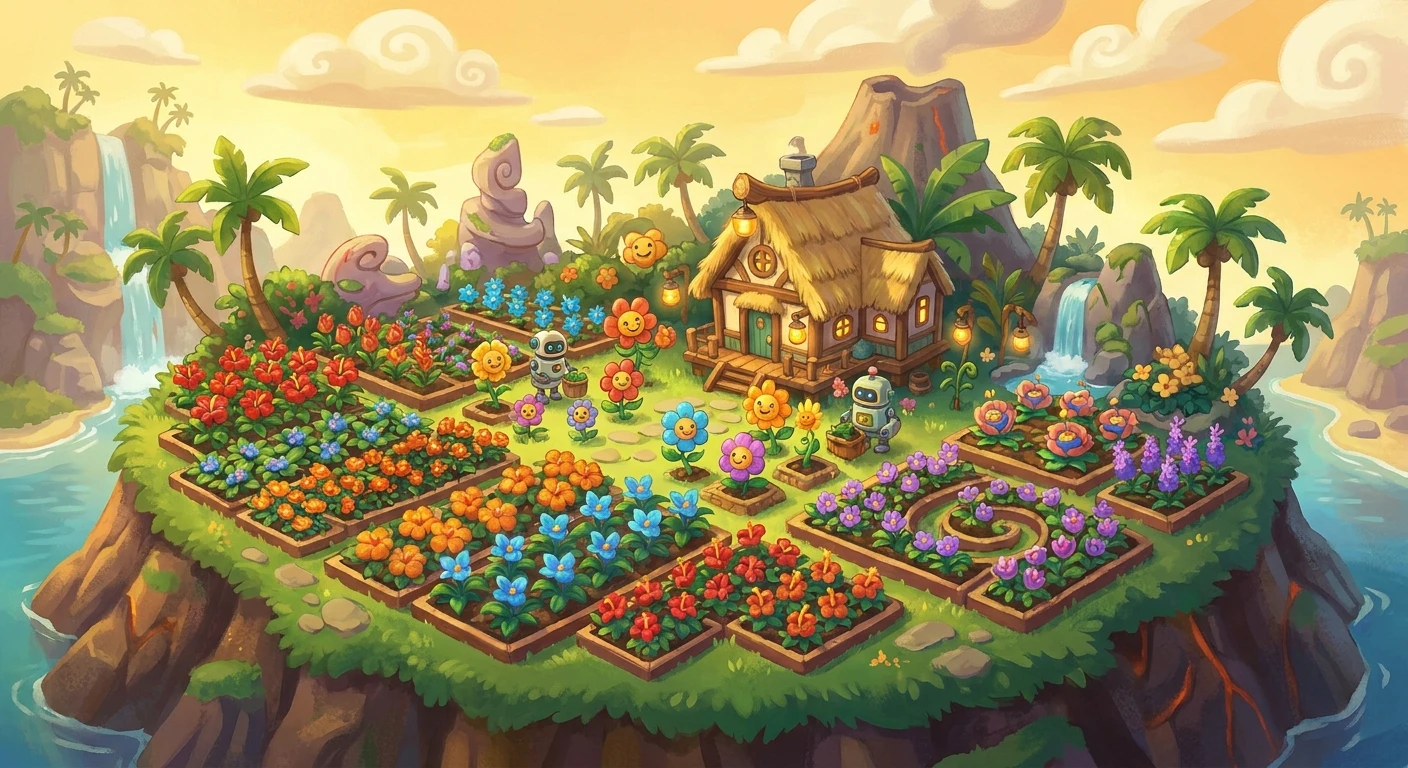
Mastering Animal Crossing Flowers Like a Pro
Listen, if you think planting a few seeds and throwing water on them is enough, you clearly haven’t tried to master animal crossing flowers yet. I remember huddling in a Kyiv hallway during a rolling blackout, my Switch illuminating the dark space while air raid sirens wailed outside. While the real world was chaotic, my digital island offered a pocket of total, controllable peace. I spent hours meticulously rearranging my garden plots, trying to figure out the hidden mathematics behind the game’s botany. It kept me grounded.
The truth is, getting those ultra-rare hybrid colors isn’t just about making your island look pretty. It’s a deep, complex genetic puzzle that rivals actual high school biology classes. You need a solid strategy, a ton of patience, and a fundamental understanding of how the game’s code handles plant reproduction. If you just toss seeds randomly around your villagers’ houses, you will end up with a messy, overgrown island full of basic colors and zero bragging rights.
My goal here is to give you the absolute truth about how these mechanics operate. I’m going to break down the exact pathways, the hidden genes, and the daily routines you need to finally score those coveted blue roses and green mums. Forget the basic advice you’ve seen thrown around forums; we are getting into the real science of island botany.
The Core Strategy Behind Hybrid Breeding
To truly get a grip on this system, you need to stop thinking about your garden as a decoration and start treating it like a laboratory. The benefits of doing this right are massive. First, rare hybrids dramatically boost your island rating, getting you to that five-star status faster. Second, specific colors attract rare bugs like the Peacock Butterfly, which is a fantastic way to rack up Bells. Third, it is the ultimate flex when friends visit your island.
The value proposition here is simple: invest the time in a proper layout, and you will secure endless resources and aesthetics. For example, growing golden roses doesn’t just look incredible; they can be picked and crafted into high-value items. Breeding purple windflowers opens up unique DIY recipes that make your island stand out from the millions of others out there.
You absolutely must use a specific grid layout to maximize your chances of getting the right offspring. Here is exactly how you should approach your daily gardening tasks:
- Clear a massive, totally flat area on your island, removing all trees, furniture, and weeds so nothing blocks new spawns.
- Plant your starter seeds in a diagonal “checkerboard” pattern, leaving exactly one empty space between every single plant.
- Water them every single day, ideally having at least five different visitors water them too, to max out the reproduction bonus.
- Dig up any unwanted clones or incorrect hybrids the moment they spawn, relocating them to a “dump” zone so they do not contaminate your gene pool.
To give you a better idea of what you are aiming for, here is a quick reference table for some of the most popular starter combinations:
| Flower Species | Parent Seed Colors | Target Hybrid Color |
|---|---|---|
| Roses | Seed Red + Seed Red | Black |
| Mums | Seed Red + Seed Yellow | Hybrid Yellow |
| Tulips | Seed Red + Seed Yellow | Orange |
By treating your plots with ruthless efficiency, you’ll start seeing results in a matter of days.
The Origins of Island Flora
If you have been playing this franchise for a while, you know that gardening used to be remarkably straightforward. Back in the GameCube era, you bought bags from Tom Nook, planted them, and they just sat there looking pretty. They did not cross-pollinate, they did not have hidden genes, and they mostly served to keep the town feeling alive. You could run through them and destroy them instantly, which was a constant source of frustration when dealing with careless villagers.
The Evolution of Genetics
When Wild World and City Folk rolled around, the developers decided to introduce a rudimentary hybrid system. Suddenly, putting a red and white tulip next to each other might yield a pink one. It felt magical, but the math behind it was basically a simple coin flip. You didn’t have to worry about the ancestry of the parents. A red was a red, and a white was a white. New Leaf expanded on this by adding more species and colors, but the core mechanic remained mostly surface-level. It was accessible, fun, but not exactly challenging for hardcore players who wanted a grind.
The Modern State of Botany
Everything changed with the launch of New Horizons. The developers quietly implemented an actual Mendelian genetics system into the game’s code. A red rose grown from a seed bag is fundamentally different from a red rose bred from two purple parents. Even now, navigating the game in 2026, players are still relying on community-built datamined spreadsheets to track their genetic lineages. The system tracks multiple alleles for every single plant, meaning that what you see on the screen (the phenotype) doesn’t always tell you what hidden data the plant carries (the genotype). This evolution transformed a casual side activity into one of the most engaging, hardcore elements of the entire game.
Mendelian Genetics in Your Console
Okay, let’s talk about the actual science running under the hood of your console. When we talk about genetics here, we are talking about actual hexadecimal values assigned to individual plants. Most species in the game use a 3-gene system (let’s call them R, Y, and W). Roses, being the absolute nightmare that they are, use a 4-gene system (R, Y, W, and S for shade). Every single seed you buy from Nook’s Cranny comes with a predetermined, fixed genetic code. This is why you must always start your hybrid journeys from seeds, not from random plants you found on a mystery tour.
Understanding Genotypes vs Phenotypes
The phenotype is the color you physically see—red, yellow, blue, black. The genotype is the invisible genetic string determining what offspring it can produce. If you cross a seed red and a seed white, you get a pink offspring. But if you take two of those pink offspring and cross them, their hidden recessive genes might suddenly manifest, giving you something entirely unexpected. If you mess up your tracking, you will end up with “bad” reds that look exactly like “good” reds, but possess zero chance of ever giving you a blue rose.
Here are the hard scientific facts baked into the game’s code:
- Every plant has two alleles for each color gene, inherited strictly from its parents.
- A plant can “clone” itself if it is watered but not touching any compatible partner, perfectly copying its entire genotype.
- Watering increases the base reproduction chance to 5%, but having 5 unique friends water your island maxes this out at a massive 80%.
- Gold roses are entirely exempt from normal genetics; they require a black rose, a gold watering can, and a specific “gold flag” triggered in the game’s hidden data.
- Rain acts as a universal watering event, applying the base 5% chance to every single plant on your island simultaneously.
Day 1: Preparing the Soil and Seeds
To do this right, we need a strict protocol. Your first day is entirely about demolition and acquisition. Go to Nook’s Cranny and buy 10 bags of red seeds, 10 yellow, and 10 white for your chosen species. Find a massive, empty space on your island. Dig up everything. You want a blank canvas. Plant your seeds in an alternating checkerboard pattern, ensuring no two colors touch unless you specifically want them to breed. Do not water them yet.
Day 2: Planting the 5×5 Grid
Now that your seeds are in place, establish physical barriers. I highly recommend placing custom design paths around your dirt patches to strictly control where new spawns can appear. This prevents rogue clones from ruining your carefully planned layout. Once the grid is completely locked down by paths, do your first round of watering. If you have the golden watering can, use it, though any can will do for basic hybrids.
Day 3: The First Watering and Friend Visits
This is where the magic accelerates. You need to leverage the multiplayer mechanics. Send out messages to your friends or jump on a community Discord server. You want five different people to fly to your island and water that specific grid. When you see the massive gold sparkles dripping off the petals, you know you have hit the 80% reproduction cap. Thank your friends, drop them some Bells, and wait for tomorrow.
Day 4: Identifying the First Clones
Wake up and immediately check the grid. You will likely see new buds. This is the most critical step: you must identify if a bud is a hybrid or a clone. If a red plant spawned another red plant where it wasn’t touching a different color, it’s a clone. Dig it up immediately. If you leave it, it will crossbreed with your carefully curated parents and ruin the genetic lineage. Throw clones in the trash or sell them.
Day 5: Isolating First-Generation Hybrids
Hopefully, you have your first true hybrids now—maybe some pinks or oranges. Carefully dig them up with your shovel and move them to a completely separate, brand new checkerboard grid. This is your Gen-2 plot. Never mix your Gen-1 parents with your Gen-2 offspring. Keep a notebook or a spreadsheet on your phone if you have to. Labeling the dirt paths with custom designs can also help you remember what is planted where.
Day 6: Setting Up the Advanced Breeding Pairs
Now you are cooking. You take those Gen-2 hybrids and start crossing them. For example, if you are doing the long path for blue roses, this is the stage where you are desperately trying to breed two specific purples to get a “special” red. The grid needs to be even tighter now, usually done in pairs rather than massive checkerboards, to ensure you know exactly which two parents produced the new offspring.
Day 7: Reaping the Rare Colors
A week of strict isolation, daily watering, and bringing in friends will finally pay off. You will wake up to find that elusive purple pansy, green mum, or blue rose budding in the grass. Once you get one, your job becomes infinitely easier. Move that single rare plant to a totally isolated spot, water it daily, and let it clone itself. You never have to go through the genetic nightmare for that specific color again.
Separating Myth from Reality
Because the mechanics are completely hidden from the player, the community has invented a ton of bizarre superstitions. It is time to clear the air so you don’t waste your time.
Myth: Rain gives you better hybrid chances than a normal watering can.
Reality: Rain applies the exact same 5% base reproduction rate as you watering it yourself. The only difference is that rain hits the entire island, saving you time. It does not boost rarity.
Myth: The Gold Watering Can increases the chance of all hybrids spawning.
Reality: The gold can only does two things: it waters a 3×3 grid, and it triggers the specific “gold flag” on black roses to allow a gold rose to spawn. It does absolutely nothing to help you get blue roses or green mums.
Myth: You can use mystery island hybrids to breed rare colors easily.
Reality: Back in the early days of the game, mystery islands spawned unique genetic hybrids. That feature was patched out years ago. Now, any plant you find in the wild is genetically identical to a basic seed. Do not use them for complex breeding.
Do animal crossing flowers wither?
No, they will never die or disappear. If you do not water them, they simply will not sparkle and will not produce offspring. They do not turn brown or need to be revived.
Can friends help my breeding rates?
Absolutely. Having visitors water your garden is the single most powerful mechanic in the game, boosting your spawn rates from a measly 5% up to a massive 80%.
What is the rarest flower?
The blue rose is objectively the rarest. It requires a minimum of four distinct generational breeding steps and relies on multiple low-percentage genetic rolls to finally appear.
How do gold roses spawn?
You must breed two red roses to get a black rose. Then, you must water that black rose specifically with a Golden Watering Can. The next day, there is a chance it will spawn a gold bud.
Do weeds stop growth?
Weeds do not inherently kill your garden, but they take up physical grid space. If a weed is occupying the tile where a new bud was supposed to spawn, the spawn simply fails.
Is the beautiful island ordinance worth it?
Yes, activating the Beautiful Island ordinance via Isabelle increases the base chance of reproduction slightly and stops weeds from overrunning your plots, making grid maintenance much easier.
Can I place items on top of them?
No, placing furniture or custom paths over a plant will dig it up or destroy it. You need clear, empty dirt or grass for them to grow and clone.
Wrapping Up Your Garden Journey
Mastering this system is honestly one of the most rewarding grinds you can take on. Even running around my island in 2026, I still get a massive hit of dopamine when a rare clone pops up after days of waiting. It takes discipline, a whole lot of watering cans, and a basic respect for hexadecimal genetics. Don’t let the cute aesthetic fool you; you are running a highly advanced botanical lab. Now, grab your shovel, clear out that messy field of weeds, and start breeding those incredible colors today!
Leave a Reply