
How to Find a warm place to rest arc raiders
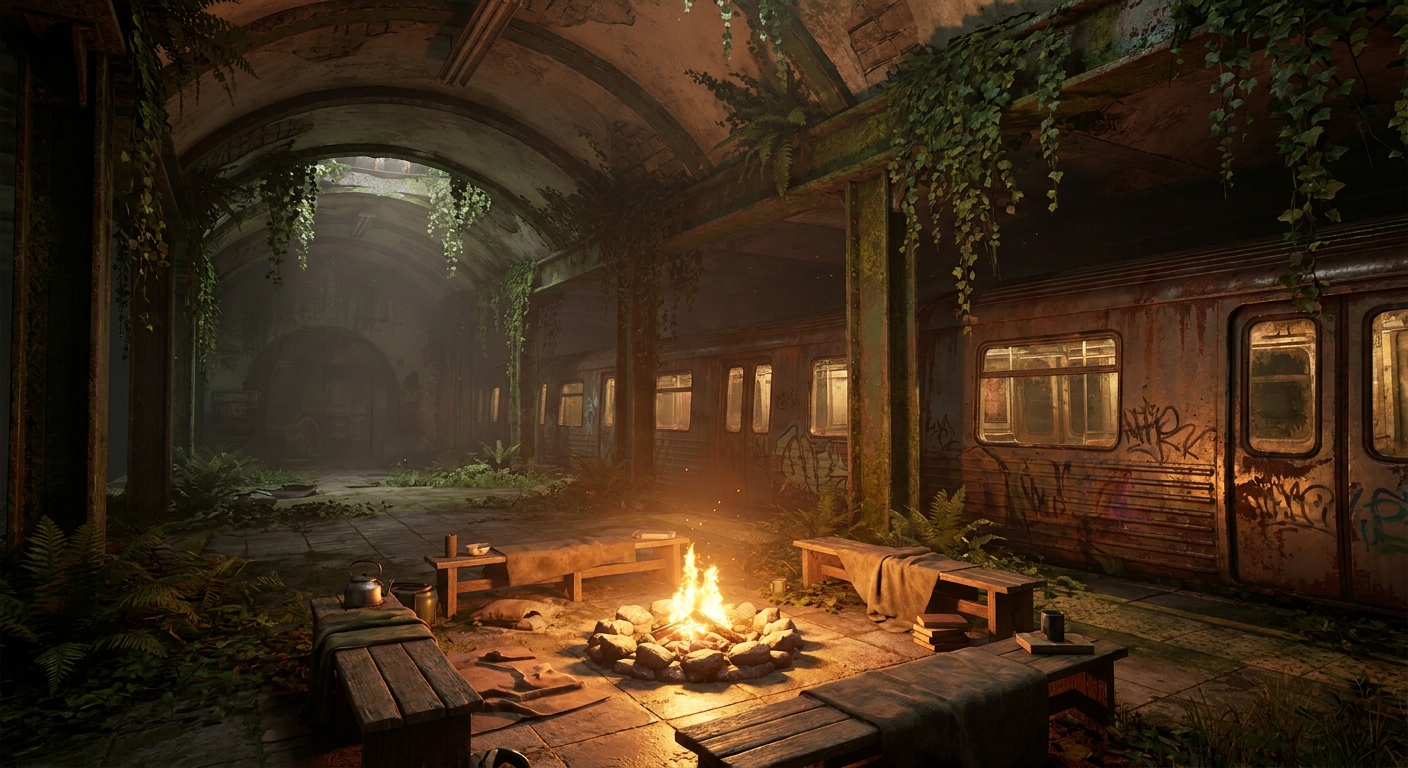
Look, if you are trudging through the rusted wastelands of Calabrese, tracking down a warm place to rest arc raiders is not just a luxury, it is an absolute survival imperative. When your stamina is depleted, your ammo reserves are running dangerously low, and the mechanical screeching of distant ARC patrols echoes through the desolate canyons, securing a proper shelter dictates whether you make it out with your hard-earned loot or lose hours of grueling progression. The game does not hold your hand; it demands tactical patience.
Right now, as I sit in my apartment in Kyiv in 2026, dealing with our own rolling grid blackouts, I deeply understand the psychological and physical need for a solid, quiet sanctuary. When you are sitting in the dark, wrapped in blankets, you realize how much a simple fire and four sturdy walls genuinely matter. Our local gaming squad treats the relentless drone swarms in-game exactly like a harsh, unpredictable winter storm outside—you simply cannot stay exposed to the elements forever. You need to regroup, manage your internal temperature gauge, and plan your next move. This comprehensive guide breaks down the precise mechanics of establishing a secure perimeter, managing your resources, and ensuring your squad lives to see another extraction flight.
Why Temporary Shelters Dictate Survival
The core gameplay loop revolves entirely around risk management. The further you push into contested territories, the higher the tension spikes. A designated shelter acts as a critical reset point for your squad’s momentum. Without these respites, accumulated fatigue and localized damage debuffs will inevitably cripple your movement speed, making you an incredibly easy target for sweeping hunter-killer machines.
| Safe Zone Type | Primary Tactical Benefit | Inherent Risk Level |
|---|---|---|
| Underground Subway Tunnels | Complete visual cover from aerial drones | Low risk from sky, moderate from player ambushes |
| Elevated Cathedral Ruins | Massive vantage point for long-range scouting | High risk of silhouette exposure |
| Abandoned Residential Basements | Excellent acoustic dampening for quiet crafting | Very Low risk if entrances are trapped |
| Dense Forest Canopies | Natural camouflage masking thermal signatures | High risk during dynamic weather events |
Understanding the value proposition of these environments gives your squad a massive advantage over less experienced players who constantly run in the open. For instance, utilizing the Buried Chapel allows your sniper to cover the main road while the rest of the team sorts their inventory below ground. Similarly, securing the Rust Town Subways grants you a direct, completely obscured pathway toward the northern extraction point. You must capitalize on these benefits.
Here are the primary advantages of locking down a shelter:
- Accelerated Stamina Regeneration: Resting near a heat source significantly boosts your core energy recovery rate, allowing you to sprint longer during your next push.
- Secure Crafting Windows: Crafting improvised explosives or medical syringes takes time. Four walls prevent a stray drone from spotting your crafting animation.
- Loot Consolidation: Dropping heavy, low-tier loot in a hidden corner frees up inventory weight for high-value tech components found deeper in the zone.
- Audio Masking: Environmental structures muffle the sound of your team healing, reloading, and communicating over local proximity chat.
Origins of the Safe Zone Concept
The concept of seeking sanctuary is deeply woven into the narrative lore of the game. Before the machines descended from orbit, humanity relied on open communication and sprawling infrastructure. When the invasion hit, the survivors were forced underground, eventually forming the Speranza colony. The developers purposefully designed the surface world to feel overwhelmingly hostile to contrast with the comforting warmth of hidden human enclaves. The initial alpha builds barely featured any resting mechanics, but player feedback quickly indicated that the constant, unrelenting stress was simply too exhausting for long sessions.
Evolution of Shelter Mechanics
Over multiple developmental patches, the studio introduced dynamic environmental interactions. Early on, a building was just a static mesh. Now, structures have distinct properties. Wood offers minimal bullet penetration resistance but burns easily for warmth. Concrete bunkers provide absolute ballistic protection but echo your footsteps loudly. The current iteration requires players to actively think about the material composition of their chosen hiding spot. It forces a deeply analytical approach to navigation.
The Modern State of Survival in Calabrese
As the meta stands right now, seasoned veterans know exactly which abandoned outposts offer the best defensive geometry. Player behavior has shifted from chaotic gunfights to calculated, stealthy incursions moving from one safe house to the next. Finding that perfect resting spot is almost a mini-game within itself, requiring intense map knowledge and an intuitive grasp of where enemy patrols converge.
Environmental Collision Geometry
To master the art of hiding, you must understand how the game engine interprets your presence. The developers utilize a highly complex NavMesh (Navigation Mesh) system for the artificial intelligence. ARC machines do not possess magical omniscience; they rely on simulated sensory inputs. When you are inside a dense structure, the collision geometry of the walls actively blocks the AI’s raycasting line-of-sight checks. If the engine determines a wall is thick enough, the enemy’s visual cone simply stops at the exterior surface.
AI Threat Detection Algorithms
Beyond basic sight, the machines listen and feel. Finding a warm spot is not just about temperature; it is about managing your overall sensory footprint in the game world.
- Thermal Masking: Campfires raise the ambient temperature of a room, which ironically helps blend your character’s body heat into the background when scanned by thermal optics.
- Audio Occlusion Metrics: A closed door reduces the decibel output of a dropped magazine by approximately 60%, drastically shrinking the radius in which enemies will investigate.
- Aggro Drop Distances: Breaking the line of sight and moving 50 meters into a subterranean structure forces the AI to transition from an active combat state back to a localized search pattern.
- Spawning Logic: The engine is hard-coded to avoid spawning hostile patrols directly inside designated safe zones while players occupy them, guaranteeing at least a temporary bubble of security.
Step 1: Scan the Horizon for Structural Anomalies
Begin your search by finding elevated terrain and using your binoculars. Look for structures that do not fit the natural flow of the landscape. An intact roof amidst a field of craters is a prime candidate. Prioritize buildings with minimal windows and solid concrete foundations. You are looking for a fortress, not a glass house.
Step 2: Break Line of Sight Immediately
Once you identify your target, do not run in a straight line. Move from cover to cover. If an ARC drone spots you entering the building, the shelter instantly becomes a death trap. Approach from the blind side, utilizing gullies, trench lines, and thick vegetation to mask your approach vector.
Step 3: Deploy Proximity Sensors
Before you even think about resting, secure the perimeter. Place tripwires or motion sensors at every viable entrance, including broken windows and ventilation shafts. If a rogue machine or an opportunistic player tries to sneak up on your squad while you are managing your inventory, these early warning systems will save your life.
Step 4: Manage Your Thermal Signature
If you need to light a fire to cure the freezing debuff, ensure the flames are not visible from the outside. Keep the fire small and extinguish it the absolute second your core temperature returns to normal. Smoke escaping through a damaged roof acts as a massive beacon to every enemy within a mile radius.
Step 5: Consolidate Your Squad’s Inventory
Use this downtime efficiently. Trade ammunition, drop redundant healing items, and balance your weight loads. If one player is overburdened, they will slow the entire team down during the critical extraction phase. The resting period is the only safe time to heavily micromanage your backpacks.
Step 6: Plan the Extraction Route
Never leave a shelter without a solid plan. Pull up your map, mark the extraction zone, and draw a mental line identifying the safest path. Note potential chokepoints, areas of high enemy density, and secondary fallback shelters just in case the primary plan completely falls apart.
Step 7: Execute a Silent Departure
When you are fully healed and ready to move, do so quietly. Do not sprint out the front door. Crouch walk until you are completely clear of the immediate vicinity. The noise you make leaving is often exactly what draws attention to the fact you were ever there.
Myths and Realities of Wasteland Shelters
Myth: Any building with a roof is perfectly safe.
Reality: High-tier ARC machines can scan right through thin wooden walls or corrugated tin. You desperately need structural density, like brick or reinforced steel, to block their sensors.
Myth: You cannot be ambushed inside a designated shelter.
Reality: While AI might have restricted access to certain zones, other human players are actively hunting you. Never assume an empty room is uncontested.
Myth: Resting restores maximum health instantly.
Reality: Health regeneration is a slow, gradual process that specifically requires the consumption of finite medical supplies. Time is still a resource.
Myth: Drones completely ignore unpowered, dark structures.
Reality: Sweeper units routinely check old ruins on their randomized patrol routes. If you leave an entrance open, they will eventually wander inside to investigate.
FAQ 1: Where is the best shelter early game?
The abandoned railway tunnels near the starting zone offer the most reliable cover for newcomers, completely shielding you from aerial bombardment.
FAQ 2: Do AI enemies enter basements?
Most standard machines lack the pathfinding logic to navigate steep basement stairs, making underground areas exceptionally secure against non-boss AI.
FAQ 3: Can other players hear me heal?
Yes. Syringe injections and bandage tearing have distinct audio cues. Always ensure your perimeter is clear before patching up.
FAQ 4: How long does a fire burn?
A standard wood fire lasts roughly three real-time minutes before turning to embers, which is usually just enough time to clear extreme weather debuffs.
FAQ 5: Are there hidden safe rooms?
Absolutely. Players have discovered numerous false walls and hidden cellars that require specific keypad combinations found on scattered lore notes.
FAQ 6: Does weather affect indoor visibility?
If the roof is compromised, heavy fog or rain will penetrate the structure, reducing your visual range even while indoors. Always check the ceiling.
FAQ 7: Do I lose gear if I log out resting?
Logging out in the wild, even inside a shelter, leaves your character vulnerable for a short duration. Always try to extract rather than forcefully quitting the session.
Surviving the treacherous landscape of this game is all about playing smart, managing your stamina, and knowing exactly when to hide. The wastelands are brutal, but with proper tactical planning, your squad can conquer them. Gear up, stay low, and keep your sensors sharp.





Leave a Reply