
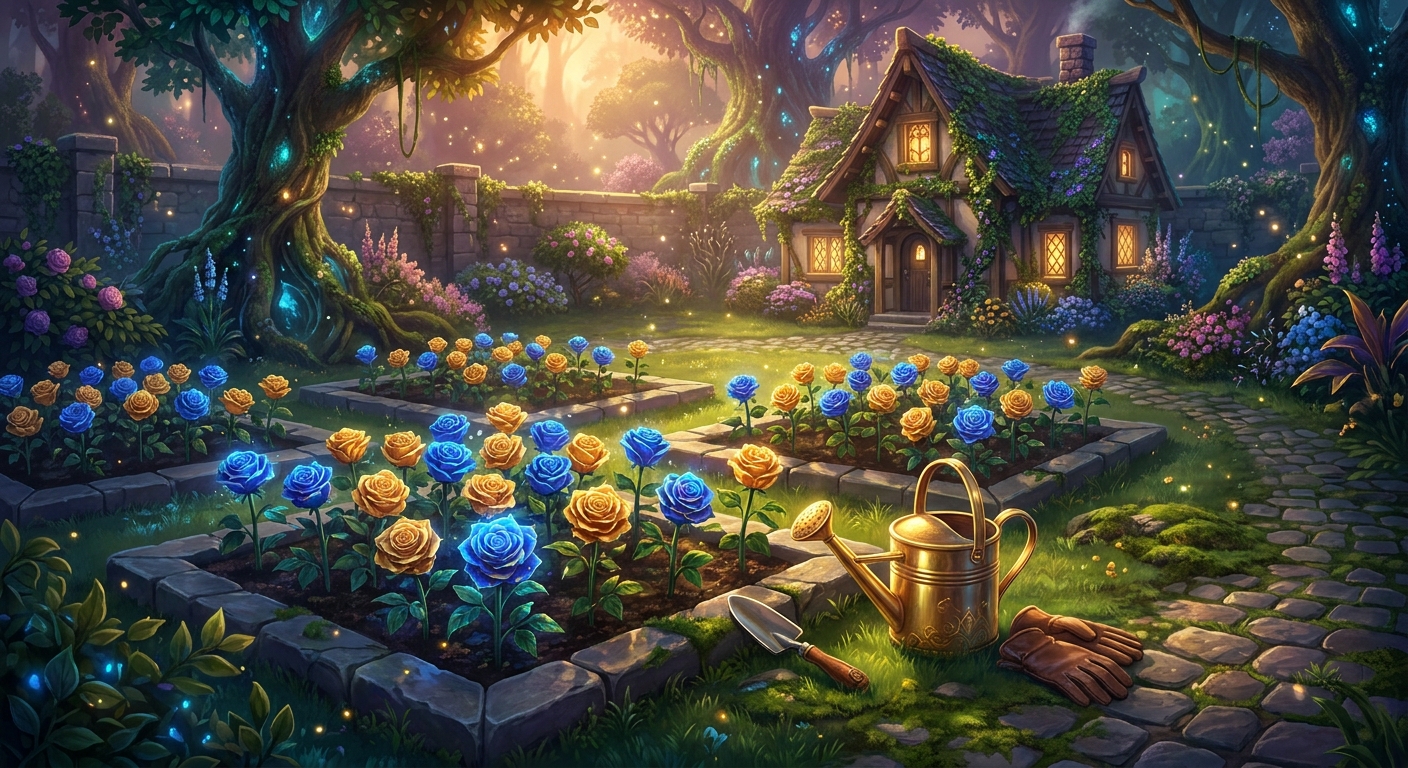
Animal Crossing Flower Breeding: Everything You Need to Know
Figuring out animal crossing flower breeding is basically the ultimate flex for your island aesthetic. Seriously, nothing says you have mastered the game quite like having a sprawling garden of impossibly rare blue roses or dazzling gold ones. I still remember when I first tried to design a massive ‘Little Kyiv’ section on my island. I wanted endless, perfectly manicured fields of blue and yellow flowers to mimic the Ukrainian flag. At first, I thought I could just slap some seeds down, water them, and wait for the magic to happen. Oh, how naive I was. I ended up with a chaotic mess of pink and orange windflowers that looked absolutely nothing like what I planned.
That is the thing about this mechanic—it looks incredibly simple on the surface, but underneath, it is a surprisingly complex system running on actual genetics. You cannot just guess your way to the top tier hybrids. It takes strategy, patience, and a bit of a green thumb. The thesis here is simple: if you want those top-tier hybrid colors, you have to stop treating your island garden like a casual hobby and start running it like a precise botanical laboratory. Once you grasp the hidden mechanics, you will save yourself hundreds of hours of frustration.
Why You Should Care About Botany on Your Island
You might be wondering why you should even bother spending your precious gameplay hours watering plants when you could be fishing or hunting for rare bugs. The benefits are actually huge. First, the value proposition is undeniable. Having a high concentration of rare hybrid flowers directly boosts your island rating, making it significantly easier to hit that coveted five-star status. Second, it is a fantastic way to make an absolute fortune. Selling rare blooms, or offering to craft high-value items like the blue rose crown for other players, can generate massive amounts of bells. Third, the decorative potential is unmatched. A well-planned hybrid garden elevates your island from a basic camp to an elite resort.
To give you an idea of how specific these combinations get, check out this breakdown of some popular hybrid pairings:
| Parent Flower 1 | Parent Flower 2 | Resulting Hybrid Color |
|---|---|---|
| Red Rose (Seed) | Red Rose (Seed) | Black Rose |
| White Pansy (Seed) | White Pansy (Seed) | Blue Pansy |
| Yellow Hyacinth | Red Hyacinth | Orange Hyacinth |
If you are ready to set up your own massive farming operation, you need a strict workflow. Here is exactly how to start:
- Buy base seeds directly from Leif or Nook’s Cranny to guarantee pure genetics. Do not use random flowers you dug up from a mystery island.
- Plant your seeds in an alternating checkerboard pattern to maximize the space available for new sprouts to spawn.
- Invite at least five different friends over to water your garden every single day to trigger the maximum reproduction bonus rate.
- Isolate your successful hybrids immediately so they do not accidentally cross-pollinate with the wrong parents.
The Humble Origins on GameCube
The history of cultivating plants in this series is actually pretty wild. Back in the original GameCube days, things were incredibly basic. You bought flowers, planted them, and they mostly just sat there looking pretty. There was a very rudimentary hybrid system, but it felt more like a random Easter egg than a core gameplay loop. You would occasionally find a pink or orange flower popping up after a rainstorm, and it was a neat little surprise, but nobody was drawing up massive spreadsheets to calculate optimal layouts. The focus back then was just keeping them from wilting.
The Evolution Through Wild World and New Leaf
Things started getting much more interesting during the Nintendo DS and 3DS eras. Wild World and New Leaf introduced a slightly more robust system where watering cans actually mattered a lot more, and players started noticing distinct patterns. We figured out that certain colors mixed to make other colors, kind of like mixing paint. The community started making primitive guides, but the underlying code was still relatively straightforward. A red and a yellow made an orange. A red and a white made a pink. It was logical, predictable, and frankly, a bit too easy once you knew the recipe.
The Modern State of Island Genetics
Then came the complete overhaul that blew everyone’s minds. The developers decided to integrate actual, complex Mendelian genetics into the code. Suddenly, a red flower wasn’t just ‘red.’ It had a hidden genotype. Two seemingly identical red flowers could produce wildly different offspring depending on their unseen genetic ancestry. Now that we are solidly in 2026, the community has completely decoded the algorithms, but it remains one of the most sophisticated background systems in any cozy game. We rely on data miners and complex web calculators just to figure out why a specific purple mum refuses to spawn a green one.
Mendelian Genetics Simplified
Let’s talk about the actual science running in the background. Every single flower in the game has a specific DNA sequence made up of genes—specifically Red, Yellow, White, and sometimes a special Shade gene depending on the species. These genes are represented by numbers in the game’s code, usually ranging from 0 to 2. This determines whether a trait is dominant or recessive. When two flowers cross-pollinate, they pass down a mix of these values to their offspring. This means you can have a ‘Red’ rose that carries the hidden recessive genes of a ‘White’ and ‘Yellow’ ancestor, making it genetically distinct from a standard red rose you grew from a store-bought seed.
Seed Flowers vs. Clones
This brings us to the biggest technical hurdle: the difference between pure seeds and clones. When you water a single, isolated flower, it will eventually duplicate itself, creating an exact genetic clone. This is highly useful for multiplying a rare hybrid once you finally get it. But if you accidentally let your special hybrid cross-pollinate with a genetically inferior clone, you ruin the DNA chain. Here are a few hard scientific facts about how the game handles this:
- Flowers check for available empty adjacent tiles before attempting to spawn a hybrid.
- The base reproduction chance is merely 5% if you only use your own watering can or rely on rain.
- Having five visitors water your plants boosts the reproduction chance to a massive 80%.
- Gold roses completely defy standard genetics; they only check if a black rose was watered with a golden can, requiring a specific hidden ‘golden’ flag to be triggered.
Day 1: Sourcing True Seeds
The first step in your week-long setup is completely clearing your workspace. Dig up any mystery flowers and sell them or move them to a beach where they cannot breed. You must buy fresh seeds from Leif or the Nooklings. These seeds have a guaranteed baseline genotype of 00-00-00 or equivalent, meaning there are absolutely no hidden recessive traits that will sabotage your work later. Plant these pure seeds in your designated breeding zone.
Day 2: The Checkerboard Grid Setup
Your layout matters just as much as your genetics. Do not clump your flowers together in a solid block. You need to arrange them diagonally, like the dark squares on a chessboard. This ensures that each flower touches the corners of potential mates while leaving the cardinal directions empty. These empty spaces are exactly where the newly generated offspring will appear the next morning. If there is no space, the game simply skips the spawn cycle entirely.
Day 3: Watering Optimization and Visitor Bonuses
On the third day, your sprouts are fully grown and ready to reproduce. This is where you need to tap into the community. Relying on your own watering can is a miserable grind. Go online, join a Discord server or a social media group, and host a ‘watering party.’ You need exactly five different players from other islands to water your grid. When five visitors do this, you will see the flowers sparkle with a massive, distinct golden glitter effect, signaling that the maximum spawn rate is active.
Day 4: Evaluating the First Offspring
Wake up early, run to your garden, and check the empty spaces. You should see an explosion of new buds. You need to immediately identify which ones are the hybrids you want. For example, if you are breeding red and yellow, look for the orange buds. Dig these successful offspring up right away. If you leave them in the grid, they might accidentally cross-pollinate with the original parents tomorrow, which creates genetically confused offspring that are useless for advanced breeding.
Day 5: Cull and Clone Strategy
Move your newly acquired hybrids into a completely separate isolation zone. Leave them at least one tile apart from anything else. Water these isolated hybrids daily. Because they have no partners to cross-pollinate with, the game will force them to clone themselves. This is the fastest way to multiply your stock of difficult-to-get colors like purple or black without having to roll the genetic dice again.
Day 6: Setting up Advanced Hybrid Pairs
Once you have cloned enough of your first-generation hybrids, it is time to move to the advanced stage. You will now place these hybrids together in a new checkerboard to chase the second-generation colors. For example, taking two specific hybrid red roses (the ones that grew from crossing orange and purple) and putting them together. This requires meticulous tracking. Many players use custom design paths placed on the ground as labels so they don’t forget the exact genetic lineage of a specific patch.
Day 7: Chasing the Elusive Blue Rose
The final stage is pure patience. The path to the legendary blue rose involves crossing specific hybrid reds that have a microscopic 1.6% chance of producing a blue offspring. You maintain your grid, keep the visitor watering bonus maxed out, and aggressively pull any incorrect colors that spawn to keep the grid clean. It might take weeks, but when that dark blue bud finally appears in the grass, the rush of satisfaction is completely unparalleled.
Clearing Up Common Misconceptions
There is a lot of bad advice floating around out there. Let’s fix that right now.
Myth: Rain replaces the visitor watering bonus, so you don’t need friends if it is raining.
Reality: Rain only acts as your personal daily watering. It sets the spawn chance to the base 5%. You still need visitors to stack the hidden multiplayer bonuses on top of the rain.
Myth: Any two flowers of the same color will always produce identical clones of themselves.
Reality: Because of the hidden DNA system, two hybrids can carry recessive genes and spawn a completely different color. Only a single, isolated flower is guaranteed to clone itself identically.
Myth: You can get blue roses purely by random chance if you leave a messy field of flowers alone long enough.
Reality: Blue roses require incredibly specific genetic combinations that practically never happen by accident. You need a meticulously crafted hybrid path.
Myth: Gold roses multiply when placed next to each other.
Reality: Gold roses are entirely sterile. They cannot breed with anything, not even themselves. You can only get more by repeatedly watering black roses with a golden can.
Can visitors steal my hybrid flowers?
No, standard visitors cannot use a shovel to dig up your plants unless you have registered them as ‘Best Friends’ on your Nook Phone. They can pick the petals, which will regrow in a couple of days, but the actual plant is safe.
Do golden watering cans break?
Yes, unfortunately, they do. Even the golden tools have a hidden durability stat. However, they last significantly longer than the standard or flimsy versions, and they water a massive 3×3 grid in front of you.
How long does a blue rose take?
If you are extremely lucky and maximize your daily visitor bonuses, it can take about a month of daily play. If you play solo, it could realistically take several months of grinding.
Why aren’t my black roses producing gold ones?
First, ensure you are actually using the golden watering can specifically on the black roses. Second, remember that it only triggers a ‘flag’ for a chance to spawn. It is not guaranteed every single day. Keep trying.
Can I crossbreed different species?
No, cross-species pollination is impossible. A tulip will never mix with a lily, no matter how closely you plant them. They will simply ignore each other’s existence.
Do wilted flowers die permanently?
Thankfully, no. Unlike older games in the series where a brown flower would vanish the next day, flowers in the current game never permanently die. They just stop growing and reproducing until you water them again.
What is the absolute rarest flower?
While the blue rose is mathematically the hardest to breed due to the long genetic chain required, the Lily of the Valley is actually the rarest. It cannot be bred at all; it only spawns naturally on cliffsides when your island maintains a perfect five-star rating.
Is there a limit to how many flowers can spawn a day?
There is no strict hard cap, but the game is limited by the number of empty, valid tiles available, and the base mathematics of the reproduction rates. Realistically, a massive, fully-watered grid will yield dozens of new buds overnight.
Do I need to water flowers on mystery islands?
There is absolutely no point. Flowers on mystery tour islands or Kapp’n islands will not reproduce while you are there, and anything you do resets once you fly back home.
Final Thoughts on Your Garden Journey
Navigating the world of genetics in this game is a massive undertaking, but honestly, it is one of the most rewarding long-term projects you can do. By staying organized, sourcing pure seeds, and leveraging your community for watering bonuses, you can absolutely master it. In 2026, the tools and knowledge we have make it easier than ever if you stick to the plan. Stop staring at those random overgrown fields—grab your shovel, clear out the weeds, and start building your dream garden today. Hit that share button and send this guide to the friends you need for your daily watering squad!
Leave a Reply