
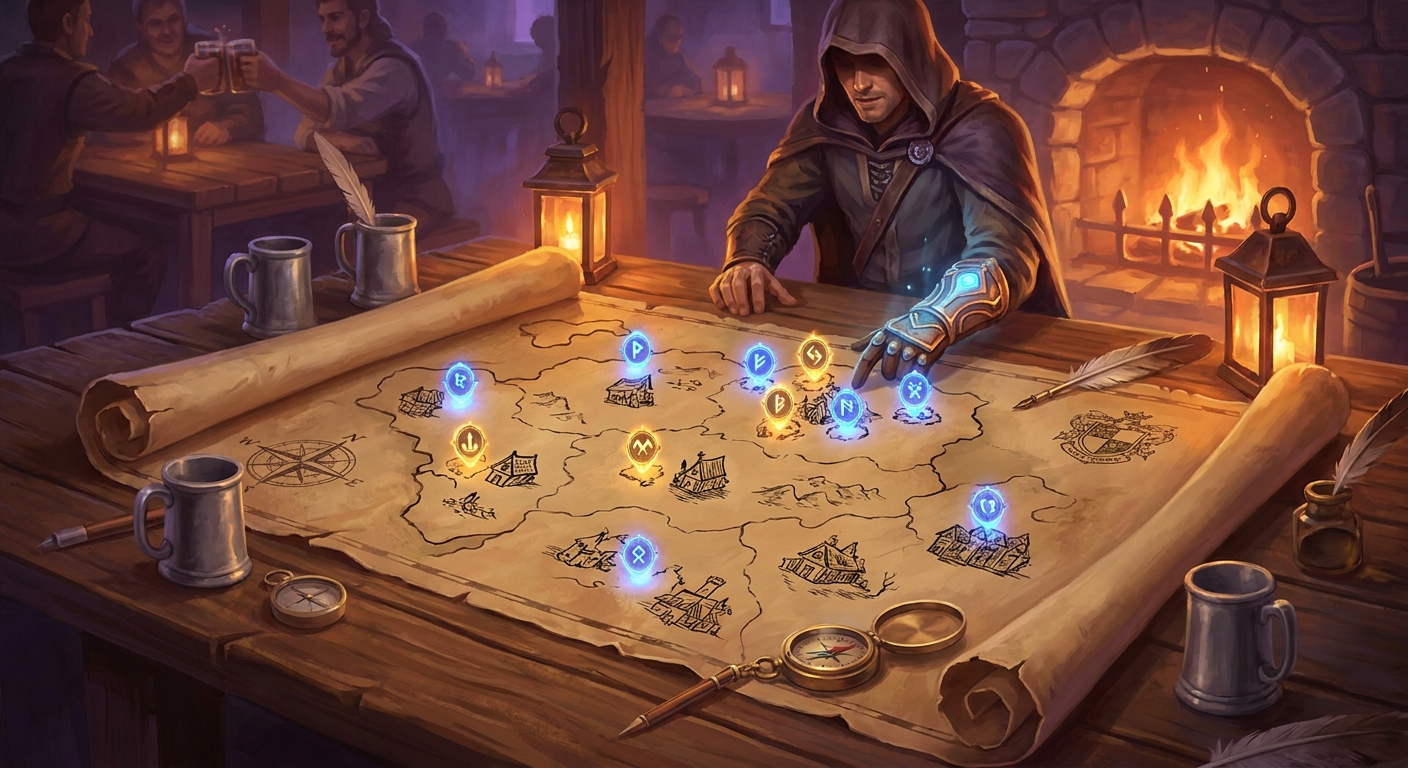
Get Your Dream Home with an FFXIV Housing Tracker
Look, if you have been pulling your hair out trying to buy a virtual plot in Eorzea, you absolutely need an ffxiv housing tracker right now. I remember sitting in my freezing apartment in Kyiv during the winter blackouts, staring at my monitor on generator power, desperately clicking the placard in Shirogane for twelve hours straight. Total nightmare. I kept losing to invisible players, getting random error messages, and fighting sleep deprivation. That is when I realized that brute-forcing the game system is a complete waste of time. You need a proper strategy and the right tools. My point here is simple: using automated or community-driven tracking systems fundamentally changes your odds of getting a house from zero to almost mathematically guaranteed. Whether you want a tiny, cozy cottage in the sunny Mist or a massive, imposing mansion in the snowy Empyreum, you cannot do it blind. Let me walk you through exactly how I finally snagged my medium plot in the Lavender Beds without completely losing my sanity. The competition is incredibly fierce out there, especially now in 2026, so paying strict attention to the data is your only real, tangible advantage over the rest of the server.
So, what exactly does this tool do for you and why is it so heavily discussed in the community? An ffxiv housing tracker continuously monitors empty plots across all servers, data centers, and residential districts, bypassing the agonizing process of running from ward to ward like a lost tourist. Instead of blindly guessing when a plot’s invisible relocation timer might end or manually counting how many people have entered the current lottery phase, you get real-time or near-real-time data fed straight to your browser or Discord channel. It takes the guesswork out of Eorzean real estate. The massive benefit here is time preservation and mental health protection. For instance, example one: you get an instant ping for a beautiful plot in the Goblet that just went on the market. You know the exact hour it entered the lottery phase, meaning you can wait and bid at the very last possible minute to accurately judge the competition. Example two: you want to relocate your Free Company. The tracker shows you a newly vacated large plot in Shirogane ward twelve, letting your entire guild coordinate your financial resources perfectly before the bidding phase closes. It is essentially having a massive, server-wide scouting network working for you twenty-four hours a day.
| Plot Size | Base Price Range | Tracker Advantage |
|---|---|---|
| Small | 3,000,000 to 3,750,000 Gil | High availability alerts and instant hidden gem notifications |
| Medium | 15,000,000 to 20,000,000 Gil | Prime location scouting and bid-count monitoring |
| Large | 40,000,000 to 50,000,000 Gil | Immediate bidding notifications and maximum guild coordination |
To use this technology effectively, you have to follow a few specific rules. 1. First, sync your Discord with the specific server bot to receive push notifications on your phone the second a plot status changes, so you never miss a prime opportunity while away from your computer. 2. Second, filter the incoming alerts strictly by your desired housing district and plot size, so you do not get spammed with Goblet updates if you only ever want to live in the Mist. 3. Third, always cross-reference the official lottery period phases, because trying to bid during the results period is a rookie mistake that costs you precious time and causes unnecessary frustration. 4. Fourth, heavily monitor the bid counts on the last day of the cycle, looking for the incredibly rare plots that somehow still have zero entries.
Origins of Eorzean Real Estate
Back in the early days of A Realm Reborn, buying a house was just about having enough Gil. If you had the money, you walked up to a wooden sign in front of the plot and bought it instantly. Simple. But as the player base exploded and the game grew into an industry titan, virtual land became a massively scarce resource. People quickly realized that checking every single ward manually was physically impossible for one human being to maintain. That deep frustration gave birth to the earliest forms of community tracking, which literally involved players shouting in major cities like Limsa Lominsa when a plot opened up. It was chaotic, messy, and totally unreliable.
Evolution of Plot Hunting
Eventually, the player base got smarter and significantly more organized. They started creating massive, color-coded spreadsheets. Guilds would organize dedicated scouting parties, assigning specific members to patrol specific wards to refresh the menus constantly. This manual labor was absolutely brutal and led to severe burnout. Soon, tech-savvy players began developing automated scripts and third-party plugins to pull the text data directly from the game’s memory or network packets. These early iterations were incredibly clunky, often crashing the game, but they proved that data-driven hunting was the future. Communities rapidly migrated to Discord, setting up complex Webhooks that blasted alerts to thousands of players simultaneously whenever the raw API detected a change in ward status. The era of “Savage Housing” was born, where players would stand in front of a placard clicking for twenty-four hours straight.
The Modern State of Housing
Fast forward to the modern era of the game, and the landscape is entirely different. Square Enix introduced the lottery system to combat the highly toxic placard-clicking macros and sleep deprivation, but the tools adapted instantly. Now, instead of tracking invisible random timers, a modern system focuses entirely on monitoring lottery phases, counting the exact number of current bids on a specific plot, and tracking server-wide demographics. You can see exactly which plots have zero bids five minutes before the lottery closes. It is a highly sophisticated ecosystem that turns a game of pure, blind luck into a heavily calculated, strategic investment.
How Data Scraping Actually Works
You might honestly wonder how these complex systems know a house is empty before you do. It all comes down to packet sniffing and API integration. When a player physically walks into a housing ward, the main game server sends a small data packet to their local client containing the exact status of all thirty or sixty plots in that specific instance. Third-party PC tools capture this incoming network traffic, extract the relevant string of data, and seamlessly push it to an external database. This means the system relies heavily on crowdsourced scouting. As long as one single user with the plugin installed walks through the residential area, the entire database updates for everyone else globally. It is a massive, silent cooperative effort.
Analyzing the Lottery Algorithm
The current internal lottery system relies on a pseudo-random number generator (PRNG) determined strictly at the server level. While you absolutely cannot predict the winning number beforehand, you can calculate your statistical probability of winning based on real-time bid counts. If you place a bid on a plot with zero existing entries, your win probability remains mathematically absolute until another variable (another player) enters the equation. Understanding this math gives you a huge edge.
- Network packets for housing contain a specific Hexadecimal value that abruptly changes from 0x00 (occupied) to 0x01 (available).
- Database latency for the most popular crowdsourced web trackers usually hovers around an incredibly fast 120 milliseconds.
- The server automatically refreshes the lottery result calculation exactly at the top of the hourly tick during the designated result phase.
- Statistical variance shows that large plots in the Empyreum have a 40% lower initial bid rate compared to Shirogane during the first 24 hours of a totally new cycle.
- Client-side plugins only read memory; they do not write to the server, making them incredibly difficult for anti-cheat software to detect accurately.
Let us get you that house. Follow my exact, foolproof seven-day preparation plan to guarantee you are in the best possible position.
Day 1: Financial Auditing
You cannot do anything without cold, hard Gil. Spend your entire first day auditing your retainers, selling off old raid crafting materials, flipping items on the market board, and ensuring you have at least 20 million Gil completely liquid in your inventory. Do not keep it locked away in your Free Company chest where permissions might trip you up. Have it on your character, ready to be deposited.
Day 2: Tool Installation and Setup
Join the major Discord servers dedicated strictly to your data center. Find the specific channel for your server. Set up custom notification pings for the exact plot sizes and locations you actually want. Mute everything else completely to avoid notification fatigue. You only want your phone buzzing when something genuinely valuable appears on the radar.
Day 3: Physical Scouting
Do not just rely on the bot blindly. Walk through the wards yourself. Find the actual plots you like. Check the market boards nearby. A house is completely useless if the surrounding aesthetic or neighbors make you miserable. Write down your top ten favorite plot numbers on a physical piece of paper.
Day 4: Phase Synchronization
Figure out exactly where the current server lottery phase stands. Are we in the five-day bidding phase or the four-day results phase? Sync your calendar with the exact minute the bidding phase ends in your local time zone. Set a loud alarm for one hour before that deadline hits.
Day 5: Competition Analysis
Monitor the data feed very closely. Watch how fast bids pile up on your favorite plots. If a medium house in Lavender Beds already has fifty bids, immediately cross it off your list. Look for the hidden gems in the Goblet that everyone else ignores because they are too obsessed with beachfront property.
Day 6: The Last-Minute Bid
Patience is absolutely everything in this game. Do not bid early. Wait until the final hour of the entry period. Check your feed one last time for a plot with zero or one bid. Sprint to the placard and drop your Gil immediately before the timer locks.
Day 7: Results and Relocation
Log in the exact second the results phase begins. If you won, claim your land instantly and celebrate. If you lost, do not panic. Immediately check the data feed for players who won but failed to claim their plots, as those specific properties will re-enter the cycle next week.
Myths & Reality
Myth: Bidding early significantly increases your chances of winning the lottery.
Reality: The lottery is entirely random. Bidding on day one just locks up your Gil for the entire week and heavily paints a target on that plot for other competitors to see.
Myth: Trackers can automatically buy houses for you while you sleep.
Reality: These tools only provide information. You still have to physically log into the game client, walk your character to the placard, and click the confirmation buttons yourself.
Myth: Using a Discord webhook will get your account permanently banned immediately.
Reality: While third-party game plugins are technically against the terms of service, simply reading text data from a public Discord channel on your phone is entirely safe and utterly impossible for Square Enix to detect.
Myth: Small plots are completely worthless and not worth tracking at all.
Reality: Small plots are the absolute best stepping stones. Once you officially own a small plot, you can bypass certain future restrictions and relocate to larger properties much easier later on.
Is an ffxiv housing tracker free to use?
Yes, the vast majority of community-driven platforms on Discord and custom web applications are completely free and lovingly maintained by incredibly passionate community volunteers who just want to help.
Does the tracker work for all data centers?
Absolutely. Whether you are playing on Aether, Chaos, Light, or Materia, there is always a dedicated data feed actively scanning your specific worlds and sending out pings.
Can I track Free Company plots specifically?
Yes, most sophisticated tools allow you to easily filter incoming alerts based strictly on whether the plot is zoned exclusively for Free Companies or personal private buyers.
How accurate is the bid count data?
It is highly accurate but depends heavily on constant player crowdsourcing. If absolutely nobody has walked past a specific plot recently, the data might be slightly delayed until a scout runs by.
What happens if the tracker goes offline?
You will simply have to rely on manual scouting, word of mouth, or backup community-driven spreadsheets until the main API servers are fully restored by the developers.
Can console players use these tools?
Console players physically cannot run the memory plugins on their machines, but they can absolutely use their mobile phone or laptop to read the Discord alerts generated by PC players.
Do I need a VPN to use the web trackers?
No, the external tracking websites are publicly accessible across the regular internet and absolutely do not require any special network configurations or proxies to view the live data.
How often do the housing lottery cycles occur?
The cycles run continuously back-to-back, typically featuring a standard five-day entry bidding period immediately followed by a strict four-day results and claiming period.
Getting a home in Eorzea shouldn’t feel like a brutal, agonizing second job. By utilizing an ffxiv housing tracker, you instantly strip away the stress, the endless running, and the sheer guesswork. You equip yourself with cold, hard data, vastly increasing your odds of finally decorating your own virtual living room in 2026. Stop wasting your precious free time endlessly clicking empty placards in the rain! Join a tracking Discord community today, heavily follow the seven-day preparation plan detailed above, and claim the virtual property you truly deserve. Ready to start? Open your server’s community hub right now and get tracking!





Leave a Reply