
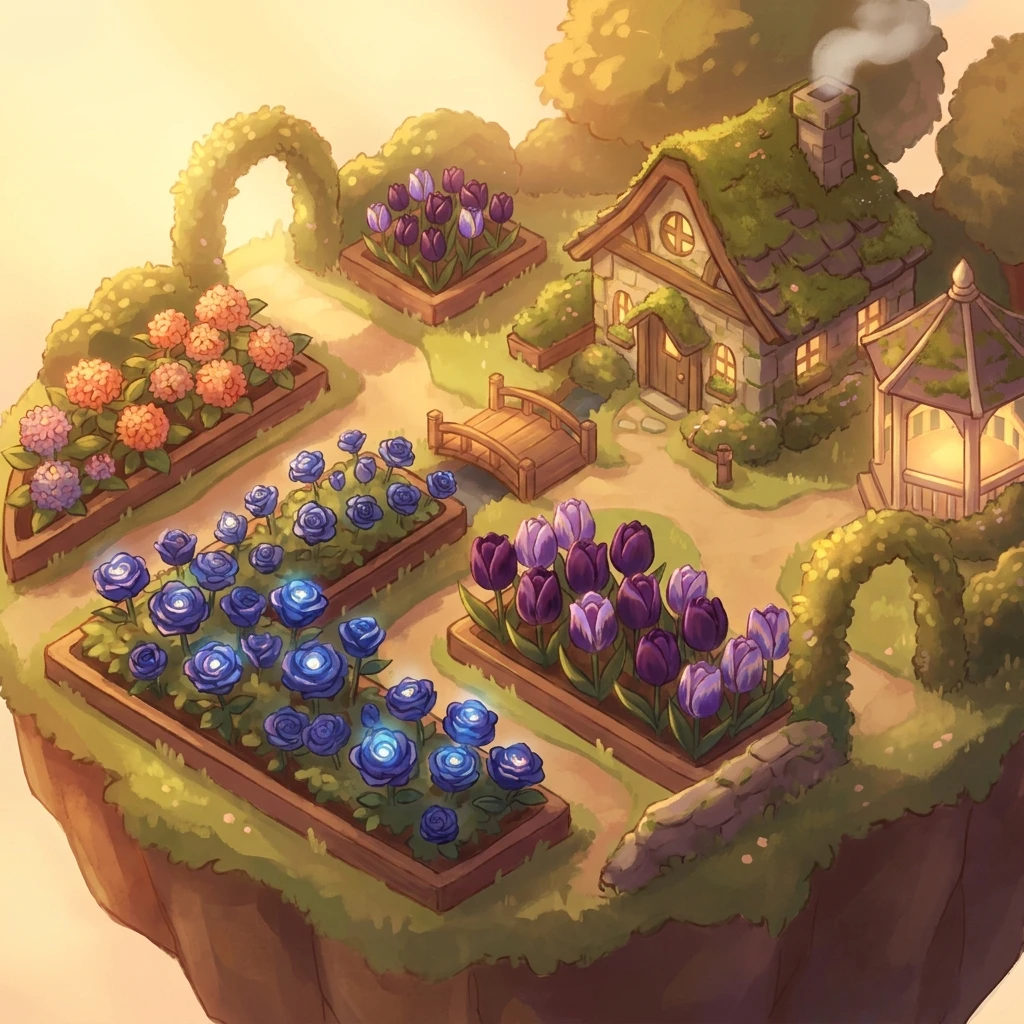
Mastering flower breeding acnh: Your Ultimate Garden Guide
If you are tired of staring at basic red pansies and wondering why you aren’t getting those legendary blue roses, mastering flower breeding acnh is the only way to level up your island aesthetic. Seriously, you can’t just throw seeds into the dirt and expect magic to happen anymore. There is a whole hidden layer of mechanics waiting for you to exploit.
I still clearly remember sitting in my apartment in Kyiv during the heavy winter blackouts, totally dependent on my Switch’s remaining battery life. While the snow fell heavily outside and the power was out across my block, I was obsessively moving digital dirt and watering digital mums by the glow of a flashlight. That stark contrast between my cold, dark room and the vibrant, sunny island garden kept my spirits up. That specific experience forced me to learn exactly how the underlying garden mechanics operate because I had absolutely zero battery life to waste on inefficient gardening layouts.
Getting your horticulture strategy right isn’t just about making things look pretty. It totally shifts how you experience the game, gives you access to rare DIY recipes, helps you easily score that five-star island rating, and honestly, gives you massive bragging rights when your friends visit. By taking control of the genetic chaos on your island, you turn a passive background element into a highly rewarding daily mission.
The Core Benefits and Grid Mechanics
Look, the benefits of putting effort into your gardens are massive. Aside from the obvious aesthetic upgrades, rare hybrids are essentially a highly lucrative economic engine for your island. When you craft items like the Blue Rose Wreath or the Gold Rose Crown, you can sell them for an absurd amount of Bells. Plus, certain bugs like the Peacock Butterfly only spawn around hybrid blooms, meaning your passive daily income gets a significant bump.
To actually get these benefits, you have to understand the value proposition of proper spacing. Here are two clear examples: First, planting in a dense square guarantees you’ll run out of empty tiles for offspring to spawn, completely halting your progress. Second, leaving too much space means the parent blooms can’t touch diagonally, so they will only duplicate themselves instead of actually combining their genetics to make something new.
Here is a quick reference table showing some high-value targets and what you need to start them:
| Target Hybrid Color | Base Parent Requirements | Primary Benefit / Rarity |
|---|---|---|
| Blue Roses | Special Hybrid Red + Special Hybrid Red | Extremely rare, highest selling price for DIYs |
| Green Mums | Hybrid Yellow + Hybrid Yellow | Unique color palette, spawns rare butterflies |
| Gold Roses | Black Roses + Golden Watering Can | Ultimate prestige item, never wilts |
To really maximize your daily spawn rates, you need to follow a strict protocol. Keep these mandatory steps in mind before you plant anything:
- Always start with fresh seeds bought directly from Leif or Nook’s Cranny, never use random blooms you found on a mystery tour because their hidden genetics are totally unpredictable.
- Set up an isolated grid (like the checkerboard pattern) where only the intended parents can touch each other diagonally.
- Recruit actual human visitors to water your garden, because the game’s code exponentially boosts your chances of generating offspring when multiple friends help out.
Origins: The Wild World Days
Let’s take a quick trip back in time. The gardening mechanics used to be incredibly basic. Back in the early days of the franchise, you basically just shoved two colors next to each other and hoped for the best. There were no hidden data strings tracking ancestry, no complicated back-crossing requirements, and definitely no need to chart out massive grids. It was charming, but totally lacked any strategic depth.
Evolution: New Leaf’s Fertilizer Era
By the time the 3DS era hit, the developers started adding extra layers of complexity. We were introduced to fertilizer, which forced players to spend bells daily to boost their chances of rare spawns. You also had to heavily rely on the golden watering can to trigger specific reactions. It was the bridge between casual planting and the hardcore mechanics we deal with today, setting the stage for a massive overhaul in how the code handles plant generation.
Modern State: The New Horizons Genetics System
Fast forward to the present day, and the system is genuinely staggering. Even now in 2026, players are still actively relying on massive community-built tools to calculate probabilities because the game secretly uses real-life Mendelian genetics. Every single bloom has a specific DNA sequence tracking four different genetic markers. When two parents combine, they pass down a mix of these genes. This is exactly why two basic reds can suddenly spit out a black hybrid, and why you literally have to breed specific test batches just to verify you have the right DNA before attempting the hardest combinations.
The Hidden DNA Mechanics
You don’t need a biology degree to get this, but you do need to understand how the code treats your garden. Every plant has a hidden sequence of genes usually represented by R, Y, W, and S (Red, Yellow, White, and Shade/Brightness). When you buy a bag of seeds, you know exactly what those genes are. But the moment those seeds cross-pollinate, the offspring gets a shuffled mix. This means a red rose born from two purples is fundamentally different from a red rose grown from a seed, even though they look totally identical on your screen.
Cloning vs. Breeding
There is a massive difference between cloning and actual genetic mixing. If a plant is watered but is absolutely not touching any other plant of the same species, it will eventually clone itself. The clone has the exact same DNA as the parent. If it touches another valid parent, they mix DNA. You have to actively prevent unwanted mixing if you are trying to preserve a specific genetic sequence.
- Seed DNA is fixed and guaranteed (e.g., Seed White is always 0-0-1-0).
- Watering by yourself gives a 5% base chance of reproduction the next day.
- Watering by 5 different island visitors pushes that reproduction chance up to a massive 80%.
- Rain acts exactly like watering by yourself, but it waters every single tile on the map simultaneously.
- Plants keep track of their water level internally, which resets at 5 AM every single day.
Day 1: Sourcing Base Seeds
Your week starts by completely clearing a large, flat area on your island. Go straight to Nook’s Cranny or wait for Leif, and buy fresh seed bags for whatever target you want. For this example, let’s say you want those crazy green mums. Buy plenty of red and yellow mum seeds. Do not use any flowers currently growing wild on your cliffs.
Day 2: The Grid Layout Setup
Plant your fresh seeds in a strict diamond or checkerboard layout. You want reds touching yellows diagonally, but you must leave the adjacent tiles totally empty so the new offspring have physical room to spawn. Dig a dirt path underneath them if it helps you visually track where the babies should pop up.
Day 3: The Watering Squad Strategy
Watering them yourself is fine, but it is super slow. Get your phone out, message your friends, or hop onto a Discord server to form a watering squad. You need up to five people to visit your island and water that specific grid. When the blooms sparkle with huge gold glints, you know you’ve maxed out the daily spawn probability.
Day 4: Managing Clones and Hybrids
When you log in at 5 AM the next morning, check the empty spaces. You are looking for specific first-generation babies (like yellow hybrids). The second you see one, dig it up immediately. If you leave it there, it might accidentally cross-pollinate with the original seed parents and completely ruin your genetic tracking.
Day 5: Testing the First Batch
Move those new yellow hybrids into a brand new, separate grid on the other side of a river or fence. You have to isolate them. These are your generation-two parents. Start watering this new grid obsessively. You are now hoping these specific yellows cross to create either a purple or a green.
Day 6: Relocating Special Reds
If you are going for the hardest targets (like the blue rose), you will be dealing with multiple generations of ‘Special Reds’. These look exactly like base reds. You absolutely must keep them segregated. Use custom design paths on the ground to label the area so you do not mix them up with your trash flowers.
Day 7: The Waiting Game for Blue Roses
By the end of the week, your isolated final-tier grid is fully set up. At this point, it is purely a numbers game. Even with perfect genetics and five friends watering daily, the final step for blue roses has a ridiculously low spawn rate (sometimes just 1.6%). Stay consistent, keep the area clean, and do not lose patience.
Myths vs. Reality
There is so much bad information floating around out there. Let’s clear up the nonsense.
Myth: Rain is worse than using a watering can and lowers your spawn rates.
Reality: Rain functions exactly like you watering the plants yourself. It provides the base 5% spawn chance to every single eligible bloom on the island without breaking your tools.
Myth: You can breed gold roses by mixing yellow roses together for long enough.
Reality: Absolutely false. The only way to get a gold rose is to breed two reds to get a black rose, and then water that specific black rose with a Golden Watering Can.
Myth: Island ordinances don’t impact your gardening at all.
Reality: Activating the Beautiful Island ordinance actually boosts the overall cap on how many new blooms can spawn overnight, making massive farms much more efficient.
Frequently Asked Questions
How long do blue roses actually take?
If you start from scratch with seeds and play totally solo, it can take months of daily effort. With visitors watering, you can realistically compress the timeline to about 3 to 4 weeks.
Do I need to water flowers on mystery islands?
No, plants on Nook Miles islands or Kapp’n islands will not reproduce or change. You just dig them up and take them home.
Why did my layout stop producing babies?
You probably ran out of empty adjacent dirt/grass tiles. Weeds, dropped items, or custom paths block spawns. Clear the surrounding area completely.
Can gold roses duplicate themselves?
No. Gold roses are genetically sterile in the game. They cannot clone themselves and they cannot cross-pollinate with anything else.
Does the type of dirt path matter?
Dark dirt and light dirt paths do absolutely nothing mechanically; they just look nice and help you organize your grid visually. As long as it isn’t stone or wood, plants can grow.
Do I have to use fences?
Fences just stop you from accidentally running over the petals and destroying them. They do not block genetics or pollen from jumping to adjacent diagonal tiles.
What is the absolute easiest hybrid to get?
Pink blooms of almost any species are extremely common and usually just require crossing a base red with a base white seed.
Getting your island’s ecosystem under control is one of the most rewarding grinds you can tackle. Stop letting your gardens grow wildly out of control. Grab your shovel, clean up your grids, call in some friends for a watering party, and start breeding those ultra-rare colors today!
Leave a Reply