
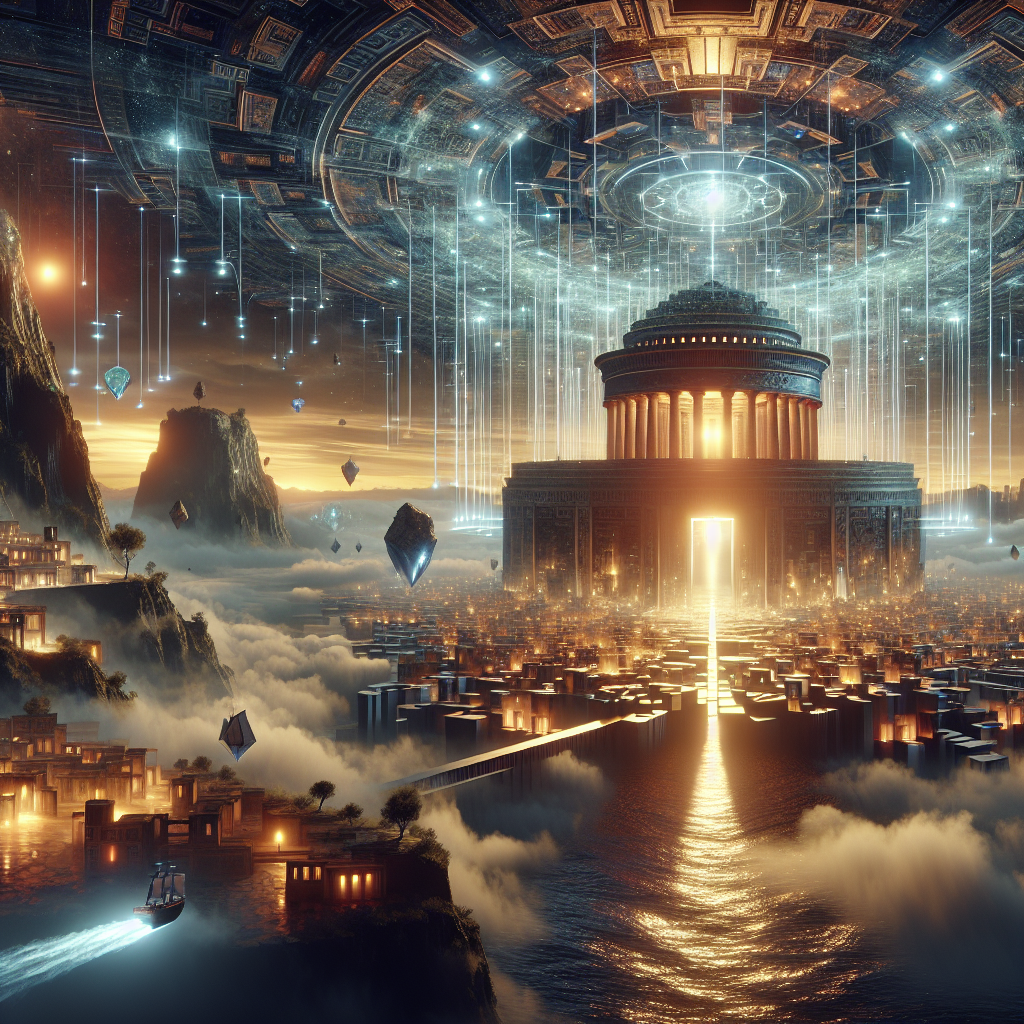
Why Fortnite Chapter 5 Season 2 Redefined the Battle Royale Experience
Remember exactly where you were when Fortnite Chapter 5 Season 2 dropped and totally flipped our expectations upside down? I definitely do. I was sitting in a dimly lit gaming club right in the heart of Kyiv, relying on a massive industrial generator to keep the PCs running during a scheduled power outage. The moment the servers went live, the entire room erupted. Epic Games had managed to pull off a mythological masterpiece, bringing Mount Olympus and The Underworld straight to our screens. If you missed the initial hype or just want to relive the peak of tactical gameplay, understanding the core mechanics of Fortnite Chapter 5 Season 2 is an absolute necessity.
It was never just about a new map; it was a total overhaul of how we approached combat, movement, and survival. The introduction of Greek mythology into the island’s lore brought a level of verticality and speed that completely changed the pacing. We traded simple run-and-gun tactics for flying across the sky with the Wings of Icarus and raining down the Thunderbolt of Zeus. Looking back, that specific update fundamentally raised the bar for what players expect from live service games.
The Core Mechanics and Tactical Shifts
To truly grasp the magnitude of the changes, you have to look closely at the gameplay loop. The developers essentially forced everyone to relearn the meta. Suddenly, playing passively on the edge of the storm meant you were missing out on the game-changing mythic weapons heavily guarded by boss NPCs at named locations. Claiming the Medallions was the only reliable way to guarantee late-game dominance. If you grabbed Cerberus’ Medallion at Grim Gate, you gained the Underworld dash—a mechanic so broken in the hands of a skilled player that it made box-fighting feel completely different.
This dynamic shift rewarded aggressive, highly coordinated squad play. You had to risk everything to land at a hotspot, defeat a tough boss, and survive the third-party attacks from other teams aiming to steal your hard-earned loot. It created a beautifully chaotic mid-game, a part of a battle royale match that usually suffers from pacing issues.
| Gameplay Element | Previous Seasons | Fortnite Chapter 5 Season 2 |
|---|---|---|
| Movement Items | Grapple Blades, Shockwave Grenades | Wings of Icarus, Underworld Dash |
| Boss Rewards | Basic Mythic Weapons | Aspects of the Gods (Medallions with passive buffs) |
| Map Verticality | Standard hills and moderate buildings | Towering Mount Olympus, deep Underworld ravines |
If you want to dominate scenarios like the ones introduced in this era, you need to lock down a few specific strategies. The value proposition of mastering these mechanics is huge: faster eliminations, better survival rates during third-party attacks, and infinitely better rotations. Here are the standout tactics:
- Aggressive Medallion Hunting: Target Cerberus or Zeus early. The passive movement and damage buffs outscale almost any standard legendary weapon you might find in a chest.
- Air-to-Ground Coordination: Use the Wings of Icarus solely for repositioning, never for initiating combat, as the hitboxes become massively exposed while flying.
- Shotgun Dominance: Prioritize the Gatekeeper Shotgun. The three-round burst damage output absolutely shreds through full shields in close quarters.
MANDATORY EXPANSION A: History & Origins
Origins of the Seasonal Reset Concept
The concept of wiping the slate clean every few months wasn’t always the industry standard. Early battle royale titles just added a gun or two and called it a day. Epic Games completely shattered that lazy approach early on, but the roots of the massive, world-altering events truly began to solidify during the early chapters. By constantly destroying and rebuilding the island, the developers kept the player base engaged in a continuous narrative loop. The seasonal reset became less about patch notes and more about a global digital event that millions tuned in to watch.
Evolution of the Battle Pass Model
When you look closely at how the progression system has evolved, the shift is staggering. Initially, a Battle Pass was simply a linear track of cosmetic rewards. You played, you leveled up, you got a skin. Fast forward to the era of Fortnite Chapter 5 Season 2, and the pass itself was deeply woven into the mythology. Unlocking Hades or Artemis wasn’t just a cosmetic flex; it felt like a narrative accomplishment. The integration of V-Bucks, super styles, and bonus pages created a masterclass in player retention. The psychological feedback loop of unlocking a reactive skin that physically changes as you get eliminations in-game is a powerful motivator.
The Modern State of Live Service
Standing here in 2026, we can look back at that specific mythological season as a turning point. Many competing studios tried to replicate the formula, throwing random mythos and overpowered items into their shooters, but most failed to capture the buttery-smooth integration Epic achieved. The modern state of live service games owes a massive debt to the risks taken during that update. The seamless blending of deep lore, competitive balance adjustments, and literal map-shattering events set a precedent that developers are still struggling to match today. It proved that gamers don’t just want new content; they want a living, breathing digital universe that reacts to their presence.
MANDATORY EXPANSION B: Scientific/Technical Deep Dive
Server Tick Rates and Matchmaking Logic
Behind the colorful graphics and cartoonish dances lies an incredibly sophisticated technical infrastructure. Handling one hundred players on a massive, highly detailed map while calculating bullet physics, building mechanics, and environmental destruction is a monumental task. The server tick rate—essentially how many times per second the server updates the game state—must remain incredibly stable. If a player triggers a fast-paced Underworld dash while another fires a sniper rifle across a valley, the server has precisely milliseconds to determine who acted first. The matchmaking logic also relies on complex algorithms calculating hidden Matchmaking Ratings (MMR) to group players of similar skill, ensuring that lobbies remain competitive rather than completely one-sided.
The Unreal Engine 5.4 Revolution
The visual leap forward during this period was powered by Epic’s proprietary engine upgrades. The transition into the newer iterations of Unreal Engine brought desktop-level graphics to standard consoles and optimized PC setups. Two massive technologies drove this: Nanite and Lumen. Nanite virtualized highly detailed micropolygon geometry, allowing developers to create the intricate marble statues of Mount Olympus without absolutely melting your graphics card. Lumen provided fully dynamic global illumination, meaning when you destroyed a wall, the lighting bounced naturally into the newly exposed room in real-time. This tech changed the way shadows hid players, directly impacting tactical visibility.
- Lumen Global Illumination: Calculates realistic light bounce dynamically, eliminating the need for pre-baked lightmaps.
- Nanite Virtualized Geometry: Renders millions of polygons seamlessly, retaining visual fidelity at massive distances.
- Temporal Super Resolution (TSR): Upscales lower-resolution renders to 4K quality, drastically saving frame rates during intense late-game build fights.
- Chaos Physics Engine: Handles the incredibly complex math required when a player destroys the foundation of a massive player-built tower.
MANDATORY EXPANSION C: Actionable Plan/Menu
If you genuinely want to elevate your gameplay and secure those Victory Crowns, casual play won’t cut it. You need a structured approach. I have developed a rigorous 7-Day Bootcamp designed to rewire your muscle memory and spatial awareness. Follow this protocol precisely.
Day 1: Map Familiarization
Your first day is solely about geography. Drop strictly into the new POIs. Spend three hours landing at The Underworld and Mount Olympus. Do not worry about winning. Your only goal is to learn exactly where the chest spawns are, how to navigate the vertical elements without taking fall damage, and where the boss patrol routes lie. Memorizing the terrain gives you an immediate micro-advantage in early-game skirmishes.
Day 2: Loot Path Optimization
Now that you know the map, optimize your loot route. Pick one specific building at a hotspot. Time exactly how long it takes you to break the roof, loot three chests, grab full shields, and exit through a window. Shaving five seconds off your loot path means you get your gun before the enemy landing next to you. Speed is survival.
Day 3: Movement Mechanics Mastery
Dedicate today to mastering the mobility items. Jump into a creative map or unranked mode. Practice activating the Wings of Icarus and immediately canceling the flight to drop quickly onto an opponent. Practice chaining the Underworld dash with shotgun blasts. If you cannot shoot accurately immediately after a dash, you are a sitting duck.
Day 4: Aim Training and Weapon Recoil
Every season changes weapon recoil patterns. Spend two hours in aim-training scenarios. Focus entirely on tracking moving targets with the season’s specific assault rifles and mastering the spread of the Gatekeeper Shotgun. Muscle memory needs to take over so you aren’t actively thinking about pulling your mouse down to counter recoil.
Day 5: Team Communication Protocols
If you play squads or duos, you need clear comms. Stop shouting “He’s over there!” Establish a strict callout system. State the compass number, the elevation, and the specific skin. “Southwest 240, high ground, cracked the banana skin” is actionable intelligence. Spend the day enforcing this discipline with your teammates.
Day 6: End-Game Rotations
The final circles require a totally different mindset. Focus heavily on positioning rather than raw aggression. If there are five players left, do not be the one to start a fight. Wait for two others to engage, then rotate on the edge of the storm to secure the high ground. Let them waste their materials and healing items while you secure the ultimate vantage point.
Day 7: The Tournament Mentality
Put it all together. Treat your gaming session like a professional cash cup. Hydrate, focus your posture, and execute your loot paths perfectly. Do not get tilted by bad RNG or a lucky sniper shot. Reset your mental state after every match and analyze exactly why you died. If you stick to the protocol, your win rate will skyrocket.
MANDATORY EXPANSION D: Myths & Reality
The community is constantly flooded with terrible advice and straight-up misinformation. Let’s clear the air and separate fact from fiction so you stop making easily avoidable mistakes on the island.
Myth: Mythic items are automatic win buttons.
Reality: While powerful, mythics often come with severe drawbacks, like exposing your position or locking you into a long animation. A skilled player with a standard grey weapon and superior cover will destroy a careless player relying solely on a mythic item.
Myth: Your ping entirely defines whether you win or lose a box fight.
Reality: High ping is frustrating, but game sense, pre-firing, and unpredictable movement easily counter zero-ping wall-takers. You just have to play smarter, not faster.
Myth: You need to play ten hours a day to stay competitive.
Reality: Targeted, deliberate practice for just one hour yields far better results than mindlessly hot-dropping and dying for eight hours straight. Quality over quantity always wins.
Myth: Controller aim assist makes aiming practically effortless.
Reality: Aim assist simply helps compensate for the lack of micro-adjustments available on a tiny plastic thumbstick compared to a massive mousepad. Both inputs require hundreds of hours to truly master at a high level.
FAQ & Conclusion
Is the content from this era still accessible?
Due to the live-service nature of the game, specific maps and battle passes rotate out permanently, but mechanics and weapons often return in limited-time modes or creative islands.
What were the most contested drops?
Grim Gate and Mount Olympus were arguably the deadliest locations due to the high-tier loot and the aggressive boss fights housed within them.
Did it introduce permanent movement mechanics?
The localized dashes were tied to Medallions and environmental water, meaning they were season-specific, though the data gathered undoubtedly influenced future movement physics.
How did the Greek gods fit into the lore?
They were summoned via Pandora’s Box, blending ancient mythos with the chaotic dimensional lore established by The Zero Point.
Was the competitive scene balanced?
Initially, it was chaotic. The developers had to drastically nerf the drop rate of certain mythic powers to ensure competitive integrity during major tournaments.
What happened to the Underworld dash?
It was vaulted at the end of the season, cementing its legacy as one of the most beloved, high-skill movement abilities ever introduced.
Can I get the old Greek mythology skins now?
Battle Pass exclusive skins generally never return to the item shop, making them incredibly rare legacy items for veteran players.
How massive was the initial update file?
The addition of completely new biomes and heavy Unreal Engine 5 updates meant players had to download a hefty patch, often exceeding 20 gigabytes on certain platforms.
Reflecting on everything we’ve covered, it’s clear that the sheer ambition displayed during Fortnite Chapter 5 Season 2 fundamentally altered the trajectory of the game. From the sweeping visual upgrades of Unreal Engine to the ruthless precision required to survive the Underworld, mastering these elements built a foundation for high-tier gameplay that persists even deep into 2026. Stop relying on luck. Implement the strict 7-day routine, master the mechanics, and take control of your matches. Share this guide with your squad right now and start dominating the competition together!


Leave a Reply