
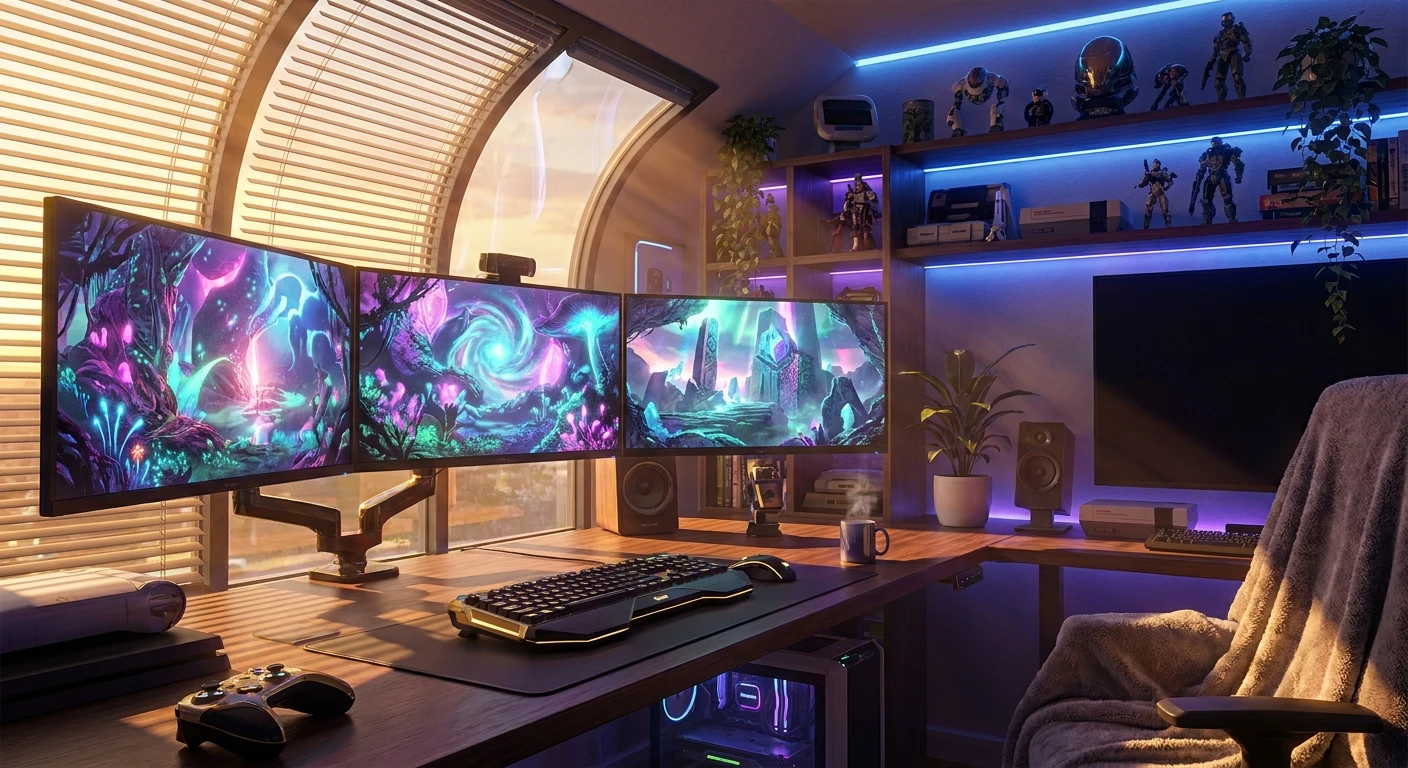
Epic games coming out in 2026 You Cannot Miss
If you are frantically searching the web for the absolute best games coming out in 2026, you are exactly where you need to be right now. Seriously, the lineup this year is nothing short of breathtaking and totally redefines interactive entertainment. I remember sitting in a tiny, cramped coffee shop in Kyiv just a couple of years ago, trying to keep my old laptop alive during the scheduled rolling blackouts. We were all huddled around a glowing screen, drinking lukewarm espresso, wildly speculating about the next generation of gaming. Now that we are actually living in 2026, the reality has totally smashed our wildest expectations. The industry has radically shifted, delivering massive open worlds without those agonizing loading screens that used to ruin the vibe.
My goal right now is to give you a straight-talking, no-nonsense breakdown of the titles that actually matter. You do not need to sift through thousands of fake trailers, deceptive marketing campaigns, or clickbait forums trying to sell you hype. I have done the heavy lifting for you. We are looking at a literal masterclass in game design across the board, blending hyper-realistic physics with narratives that grab you by the throat and absolutely refuse to let go. Grab a coffee, charge up your high-performance wireless controllers, clear out your storage space, and get ready to update your digital wishlist immediately.
Why This Year’s Lineup is Absolute Fire
Let’s talk about the massive shift we are seeing right now in the software landscape. The sheer scale of development has radically upgraded since the early twenties. We are getting massive digital playgrounds that finally utilize the full, unbridled potential of high-end NVMe SSDs and advanced cloud computing networks. The value proposition is insane. For example, look at the seamless drop-in co-op modes replacing traditional matchmaking lobbies. No more waiting around in menus; you just seamlessly walk right into your friend’s universe. Another massive leap is generative AI-driven NPCs that actually remember past conversations with your specific character. You are no longer just buying a sixty-hour static campaign; you are investing your time in dynamic, living ecosystems.
Developers are heavily prioritizing framerate stability alongside jaw-dropping visual fidelity, meaning we finally get to enjoy native 4K resolutions at a buttery smooth 60 or even 120 FPS without massive hardware bottlenecks ruining the immersion. It is genuinely a game-changer for casuals and hardcore enthusiasts alike.
| Game Genre | Anticipated Title Focus | Next-Gen Feature |
|---|---|---|
| Open-World RPG | Fantasy Sandbox Ecosystems | True AI Pathfinding |
| Sci-Fi Survival | Deep Space Exploration | Zero-Gravity Physics |
| Tactical Action | Urban Covert Ops | Dynamic Sound Propagation |
If you want to maximize your gaming setup for these absolute beasts, you need to pay close attention to a few core mechanical innovations that define this era:
- Procedural Geometry Scaling: Engines are now dynamically altering polygon counts on the fly based precisely on where your camera is looking, saving massive amounts of precious VRAM.
- Real-Time Global Illumination: Shadows and complex light bounces are fully ray-traced globally without the massive performance hits we suffered through just three years ago.
- Server-Side Physics Processing: Massive multiplayer matches now offload complex destruction math to the server, keeping your local machine cool and frame rates incredibly high.
These systemic upgrades are exactly why the current roster of software is so mind-blowing.
How We Got to This Gaming Golden Age
The Origins of the Next-Gen Hype
You have to look back at the chaotic development cycles of 2020 through 2023 to truly understand why things are so impeccably polished right now. Studios across the entire globe faced immense logistical nightmares, shifting abruptly to decentralized remote work. This forced a massive, painful reorganization of how massive AAA titles were fundamentally built from the ground up. The origins of the incredible software we are playing right now stem directly from those harsh, frustrating lessons. Developers quickly realized that monolithic, tangled codebases were an absolute disaster for remote teams working across different time zones, leading to the rapid adoption of highly modular game design.
The Evolution of Development Cycles
By the time late 2024 rolled around, we saw a massive pivot in high-level project management. The evolution was incredibly rapid and entirely necessary for the industry’s survival. Teams started relying heavily on automated testing environments and machine learning tools to hunt down game-breaking bugs that human QA testers simply did not have the physical time to find. Instead of crunching for a hundred hours a week right before launch, major studios successfully implemented continuous integration pipelines. This means the nightly builds were always relatively stable. That systemic shift is the exact reason why the major titles dropping now are not shipping as broken, buggy messes that require massive day-one patches just to boot up.
The Modern State of Global Gaming
Now, the modern state of the industry is a beautifully oiled machine. Studios across the globe, from massive corporate hubs in Tokyo and California to incredibly talented, scrappy boutique teams right here in Kyiv, are collaborating seamlessly in real-time. Cross-border asset sharing is flawless. We are seeing a gorgeous fusion of cultural storytelling that was practically impossible a decade ago. The traditional financial barriers between indie creativity and massive AAA budgets have blurred completely, giving us massive entertainment blockbusters with the true heart and soul of indie passion projects.
The Tech Fueling the Fire
Let’s get a little geeky for a second, because the underlying architecture of these new titles is totally wild. The hardware constraints of the past are basically a distant memory, replaced by ingenious software-driven solutions that effectively cheat reality to give you a better experience.
Neural Rendering and Frame Generation
The most massive leap forward is in neural rendering technologies. Instead of brute-forcing every single pixel on your screen through the GPU pipeline, modern game engines use sophisticated AI algorithms to intelligently guess what the next frame should look like. This is essentially computational magic. It analyzes motion vector data and heuristic algorithms to seamlessly insert fully generated frames between traditionally rendered ones. This cuts raw rendering time literally in half. You get double the framerate without your graphics card sounding like a jet engine catching on fire. The latency penalty, which used to be the absolute bane of highly competitive players, has been mitigated entirely by driver-level hardware integration that bypasses the CPU completely.
Haptic Feedback and Biometric Scaling
Then we have the physical connection to the game itself. Advanced haptic feedback is no longer just a cheap gimmick where the controller randomly rumbles during an explosion. We are talking about pinpoint, highly localized vibrations that simulate the tight tension of a drawn bowstring or the exact, gritty texture of gravel beneath virtual tires. Some cutting-edge peripherals are even experimenting with active biometric scaling, dynamically adjusting the game’s difficulty curve based on your actual resting heart rate and skin conductivity.
Here are some of the raw scientific facts behind this insane new tech:
- Sub-10ms Input Latency: Hardware polling rates have hit an astonishing 8000Hz, meaning the delay between physically clicking a button and seeing an action on screen is basically imperceptible to the human brain.
- Micropolygon Nanite Structures: Everyday environmental assets routinely feature over 10 million individual polygons per object, rendered efficiently via streaming micro-caches rather than massive, sluggish RAM dumps.
- Dynamic Audio Raycasting: Sound waves are calculated physically in real-time, bouncing off virtual materials exactly as they would in the real physical world, heavily relying on advanced Fourier transforms.
- AI-Driven Animation Blending: Massive machine learning datasets containing thousands of hours of raw motion capture seamlessly stitch character movements together, eliminating awkward foot-sliding animations completely.
7-Day Pre-Launch Prep Plan
You absolutely cannot just jump into this year’s massive releases without a solid, actionable battle plan. Your gaming backlog is probably a chaotic mess, and your hard drive is definitely completely full of games you do not play anymore. Follow this highly aggressive, week-long sprint to get your gaming ecosystem completely optimized and totally ready for the next big software drop.
Day 1: The Brutal Backlog Purge
Be brutally honest with yourself right now. You are never going to finish that 150-hour sprawling RPG you abandoned three months ago. Uninstall the digital guilt. Clear out absolutely anything you haven’t touched in thirty days. Free up at least 200 gigabytes of prime SSD real estate immediately.
Day 2: Hardware Health Check
When was the last time you actually cleaned the dust out of your rig or console? Grab some compressed air. Blow out the massive dust bunnies from your heatsinks. Ensure your cooling system is running perfectly, because these new sophisticated engines will push your hardware to the absolute thermal limit.
Day 3: Network Optimization
Stop playing multiplayer over a weak, spotty Wi-Fi signal. Run a physical ethernet cable directly from your router to your machine. If that is literally impossible due to your apartment layout, invest in a high-end mesh network system. You want absolute zero packet loss when you are frantically downloading those massive 100GB installation files.
Day 4: Peripheral Assessment
Check your primary controller right now for stick drift. Test your mechanical mouse switches. There is literally nothing worse than booting up a highly anticipated release and realizing your gear is physically failing you. Order quality replacements right now if anything feels mushy or unresponsive.
Day 5: The Social Sync
Get on Discord. Ping your main friend group. Figure out exactly who is buying what game, and properly coordinate your launch schedules. Complex co-op campaigns require actual commitment, so lock down the squad’s availability well ahead of time.
Day 6: Driver and Firmware Updates
Do not wait until the chaotic launch day to update your GPU drivers or console firmware. Check the manufacturer sites manually. A fresh, clean driver installation absolutely prevents random crashes and ensures you get all the crucial day-one optimizations.
Day 7: The Final Countdown and Snacks
Stock up on hydration and decent, non-greasy food. Pre-load the game files immediately if the publisher allows it. Set your alarms, turn off your annoying phone notifications, and get ready to completely disappear from normal society for the entire weekend.
Debunking the Biggest Hype Myths
There is so much garbage information floating around social media right now. Let’s clear the air and aggressively kill these misconceptions dead.
Myth: The insane new hardware requirements are going to lock everyone out of playing.
Reality: This is absolute nonsense. Thanks to massive advancements in AI upscaling tech like DLSS and FSR, even mid-range graphics cards from three years ago are running these brand new engines brilliantly. Optimization has actually improved significantly.
Myth: Single-player narrative games are officially dead and buried.
Reality: Totally false. If you look at the absolute top tier of releases, some of the most heavily funded projects are strictly single-player, meticulously story-driven epics. Major studios know we desperately crave isolated, deeply immersive experiences without forced multiplayer microtransactions.
Myth: Every single major game is getting a massive, devastating delay.
Reality: While the pandemic era definitely saw endless painful delays, the current production pipelines are highly stable. What you see on the official release calendar right now is largely locked in stone. The continuous integration methods we talked about earlier keep development timelines incredibly accurate.
Quick Fire Q&A
Will my old console run these games?
Mostly, no. The baseline has finally shifted exclusively to the current generation. It is finally time to upgrade if you seriously want to play anything newly released.
Are physical game discs still a thing?
Barely. A few expensive collector’s editions still include them, but roughly 95% of the overall market has shifted entirely to pure digital downloads.
How big are the average install sizes?
Expect an average footprint of 80GB to 130GB. Heavy texture compression tech is helping, but raw 4K assets simply take up massive space.
Do I need to pay extra for next-gen graphical upgrades?
Thankfully, no. Most publishers have completely stopped charging for graphical fidelity updates. Smart delivery systems just automatically download the absolute best version for your specific hardware.
Is cloud gaming actually a viable option now?
Yes. If you possess a solid, stable fiber internet connection, cloud platforms offer an incredibly seamless way to play these highly intensive titles without dropping massive cash on a brand new PC.
Are predatory microtransactions getting worse?
Actually, there is a massive community pushback happening. Many top-tier premium releases are actively marketing their total lack of predatory monetization just to win back essential player trust.
What is the average retail price tag?
Seventy bucks is the definitive new standard baseline for massive AAA releases, though you can routinely find incredible indie masterpieces for exactly half that price.
Should I actually pre-order games?
Only if you desperately want the exclusive physical bonuses. Digital copies literally never run out, so waiting for actual day-one reviews is almost always the smartest, safest play.
Will VR platforms get any major titles?
Yes, absolutely. Several massive, established IP spin-offs are hitting virtual reality platforms, pushing wildly immersive mechanics to totally new levels.
Where can I reliably track all these release dates?
Right here on our site, we keep a highly active, constantly updated release calendar just for you.
The sheer volume of phenomenal games coming out in 2026 is genuinely staggering. Whether you are deeply into hardcore tactical shooters, sprawling fantasy epics, or cozy, relaxing management sims, this is genuinely a brilliant time to be a gamer. Do not get left behind playing old, dusty titles while everyone else moves forward. Smash that bookmark button right now, share this comprehensive guide with your regular gaming squad, and start aggressively preparing your setup for an absolutely legendary year of gaming!


Leave a Reply