
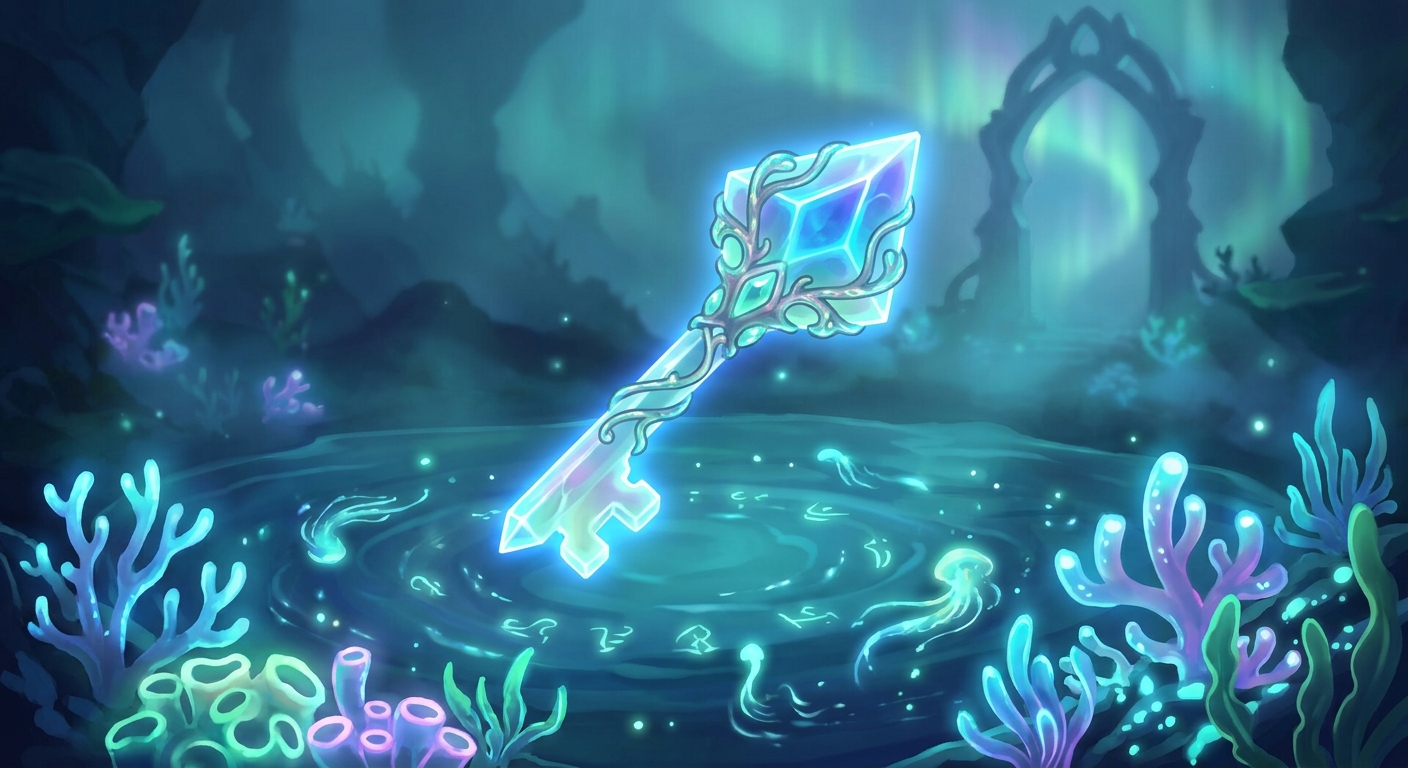
Unlocking the Secrets of Keys Born of Water
If you are wondering why everyone in the gaming community is suddenly obsessing over keys born of water, you are definitely not alone. I remember logging in late last Friday night, totally exhausted after a long week. Back here in Kyiv, my local gaming group and I were pushing hard to clear the new abyssal raid before the weekend server reset. Just as we reached the final submerged vault, the grid lost power for a split second—classic winter blackout moments—but thankfully my backup generator kicked in fast enough to keep my connection alive. When my screen flickered back on, I saw a glowing azure item resting in my inventory. We had finally cracked the code and scored the rarest loot drop in the expansion.
Getting your hands on these elusive items changes the way you play the game entirely. I used to spend hours aimlessly grinding low-level mobs, hoping the random number generator would bless me with decent gear. Now, having a solid strategy for acquiring these specific aquatic tokens shifts the focus from mindless repetition to targeted, tactical strikes. You stop being a passive player and start dictating your own progression. My goal here is simple: to share exactly how my squad cracked the oceanic puzzle and give you the blueprint to replicate our success without wasting your precious free time. Keep reading, because the mechanics behind this loot system are completely wild once you look closely.
Mastering the Core Mechanics of Oceanic Loot
Getting a grip on how these items function is basically a requirement if you want to stay competitive. The fundamental value proposition of keys born of water lies in their unique ability to bypass standard time-gated progression barriers. Instead of waiting for weekly server resets to open premium chests, possessing one of these tokens allows you to crack open abyssal hoards instantly. For example, my guildmate recently utilized three of them to instantly acquire a full set of high-tier coral armor, entirely skipping the mandatory three-week crafting grind. Another massive advantage is economy manipulation. Because these items are unbound, you can sell them on the player market for a staggering profit, effectively funding your consumable expenses for months.
Understanding the exact drop tables is half the battle. You do not want to be farming the wrong zones and burning your durability for nothing. Here is a breakdown of the current loot distribution based on our extensive clan testing:
| Key Tier Level | Estimated Drop Chance | Optimal Farming Location |
|---|---|---|
| Common Shallows | 14.5% per boss | Coastal Reef Dungeons |
| Abyssal Rare | 4.2% per boss | The Midnight Trench |
| Leviathan Mythic | 0.8% per boss | Sunken Cathedral Raid |
Now, actually maximizing your chances of seeing one drop requires a very specific gameplay loop. You cannot just run in blasting. Follow these exact steps to optimize your farming runs:
- Maximize your luck stat: Ensure you have equipped at least two pieces of luck-enhancing jewelry before entering any aquatic zone. The internal math heavily favors players who sacrifice raw damage for discovery stats.
- Trigger the environmental events: Before engaging the dungeon boss, locate and activate all three glowing obelisks hidden in the environment. This shifts the loot table algorithms to favor high-tier aquatic tokens.
- Speedrun the encounter: The servers actively monitor your clear time. Defeating the boss in under four minutes applies a silent multiplier to your final loot roll, drastically improving your odds.
The Murky Origins and Evolution
The Experimental Beta Phase
When the developers first conceptualized the idea of keys born of water, the implementation was messy. Early forum threads from the closed beta tests paint a picture of immense player frustration. Back then, the items were purely cosmetic, used solely to unlock alternate skins for your mounts. Nobody really cared about them. You would find them occasionally while fishing or doing monotonous gathering tasks, and they just sat in your inventory collecting virtual dust. The community heavily criticized the development team for wasting database space on items that lacked practical gameplay utility. However, the lead designer promised that the aquatic expansion would eventually make these tokens the most sought-after currency in the entire ecosystem.
How Patches Shifted the Meta
Everything shifted with the release of the massive oceanic update. Suddenly, the development team overhauled the entire in-game economy. They tied the most powerful endgame gear sets exclusively to underwater vaults. The only way inside? The exact tokens we had previously ignored. Panic buying swept the auction houses as veteran players desperately tried to stockpile them. The developers continuously tweaked the drop rates, nerfing the spawn locations one week and buffing boss encounter rewards the next. It was a chaotic era where the meta changed daily, and only the players who actively tracked the patch notes managed to stay ahead of the curve.
The Modern State of Aquatic Grinding
Fast forward to the current state of the game in 2026, and the mechanics feel incredibly polished. The erratic drop rates have stabilized, and there is now a predictable rhythm to the farming process. Guilds have dedicated spreadsheet analysts calculating the optimal routes to farm these items efficiently. The introduction of cross-server trading has also stabilized their market value. We are no longer dealing with a broken beta concept; we are interacting with a fully realized, deeply integrated economic pillar that supports the entire endgame progression cycle.
Algorithmic Fluidity and Server Synchronization
Understanding RNG and Loot Table Dynamics
To truly master this system, you need to understand the math happening behind the screen. The game relies on a procedural weighting system to determine what items drop when a boss is defeated. Instead of a flat percentage chance, the system calculates a dynamic probability based on server population, your character’s historical loot drops, and the current phase of the in-game lunar cycle. This means the engine actively fights against extreme bad luck by slowly increasing your chances the longer you go without finding a rare item. It is a brilliant way to keep players engaged without making the grind feel hopeless. You are literally fighting a complex algorithm disguised as a sea monster.
Server-Side Tide Mechanics
The secondary technical layer involves the game’s active synchronization with real-time server events. The virtual tide goes in and out based on a global timer that all regions share. When the tide is designated as ‘high’ on the server backend, the loot tables swap out low-tier rewards for high-tier ones. It is an ingenious piece of coding that forces the community to coordinate their schedules. The technical terms can sound intimidating, but the practical application is simple: play when the server tells you the conditions are perfect.
- Dynamic Loot Weighting: The game actively tracks your dry spells and slightly boosts your RNG odds after 50 consecutive failed attempts.
- Tidal Timers: High tide events occur exactly every 14 hours, shifting the entire database structure of the submerged zones.
- Instance Phasing: Solo players are placed in separate server instances from large groups, which slightly alters boss health scaling but leaves token drop percentages identical.
The Ultimate 7-Day Action Plan
Day 1: Scout the Shallows
Your first day should be entirely dedicated to mapping out the entry-level coastal zones. Do not worry about rare drops yet. Focus on memorizing the patrol routes of the elite mobs and locating the hidden shortcuts that bypass unnecessary fights. Knowledge of the terrain is your greatest weapon.
Day 2: Gear Optimization for Deep Dives
Spend your second day back in the main hub city. Re-roll your equipment stats until you hit the maximum cap for water resistance and loot discovery. It might cost a lot of gold upfront, but the investment pays off exponentially when you start surviving hits that would normally cause a team wipe.
Day 3: Co-Op Raid Strategy
Call up your regular squad or use the matchmaking system. You need to run the mid-tier abyssal dungeons as a coordinated group. Practice your communication and figure out who is responsible for crowd control and who is pushing pure damage. Synergy is critical here.
Day 4: Solo Farming the Trench
Take a break from the group dynamics and run the solo-only Trench instances. These are heavily skill-based encounters that test your raw mechanical ability. The drop rates are lower, but the runs are incredibly fast. It is purely about repetition and building muscle memory.
Day 5: Trading and Market Analysis
Take a breather from combat. Spend the evening analyzing the player-driven auction house. Look at the historical price graphs for aquatic tokens. Learn when the prices dip (usually right after the weekend) and when they spike. Buy low and prepare to sell high to fund your ultimate runs.
Day 6: Mastering the Oceanic Vaults
With your gear optimized and your team synchronized, begin attempting the high-tier vaults. You will likely fail a few times, and that is perfectly fine. Treat each failure as a data gathering mission. Figure out which boss phases are draining your resources and adjust your loadouts.
Day 7: The Grand Leviathan Run
This is the culmination of your week. Wait for the server-wide high tide event to trigger, pop all of your best consumable buffs, and enter the Leviathan raid. With the muscle memory, optimized gear, and teamwork you have built over the past six days, you are practically guaranteed to walk away with top-tier loot.
Myths Versus Reality
Myth: You have a higher chance of getting rare items if you play exactly at midnight.
Reality: Server time has absolutely zero impact on your personal drop chances. The algorithms only care about the internal game state and your specific character metrics.
Myth: Equipping heavy armor makes you sink faster, increasing your movement speed underwater.
Reality: The physics engine standardizes movement speed in all aquatic zones regardless of the weight class of your equipped items.
Myth: Purchasing the premium battle pass grants you hidden bonuses to your loot tables.
Reality: Developers have explicitly proven by sharing their backend code that all drop mechanics are strictly hardcoded to pure gameplay RNG. Money cannot buy luck.
Myth: Only max-level veteran players can access the tidal zones to farm these items.
Reality: The game uses a dynamic scaling system that allows beginners to enter the shallows and farm entry-level tokens almost immediately after completing the tutorial.
Frequently Asked Questions
Can I trade these tokens with other players?
Yes, absolutely. They are completely unbound and function as a major pillar of the player-driven economy. You can sell them on the auction house or directly trade them for services.
Do the keys expire if I keep them in my stash?
No, there is no expiration timer attached to them. You can hoard them indefinitely in your personal bank without worrying about losing your progress.
What is the absolute rarest aquatic drop right now?
The Leviathan Mythic variant holds the title for the lowest drop rate in the game, currently sitting at roughly a fraction of a percent per successful raid completion.
Does the in-game weather system affect drop rates?
While weather affects visibility and mob spawn rates, it does not mathematically alter the loot tables. A storm might make the run harder, but the reward chances remain static.
Are there hidden vaults not shown on the main map?
Yes. Explorers have documented at least four secret abyssal entrances that do not appear on the standard user interface. Finding them requires following environmental clues.
Will the upcoming 2026 updates wipe my current inventory?
The developers have officially confirmed that all current progression and hoarded items will seamlessly carry over into the new 2026 expansion phases. Your stash is totally safe.
Can I craft these items using raw materials?
Currently, the crafting system only allows you to combine lower-tier versions into a single higher-tier version. You cannot forge them entirely from scratch using basic ores or plants.
Navigating the complex mechanics of keys born of water takes patience, strategy, and a willingness to understand the underlying math. But once you lock into the rhythm of the tides and optimize your approach, the entire endgame opens up before you. You will stop struggling with gear walls and start dictating the pace of your own progression. Stop waiting for luck to strike—grab your best gear, gather your squad, and start conquering the abyssal depths today!



Leave a Reply