
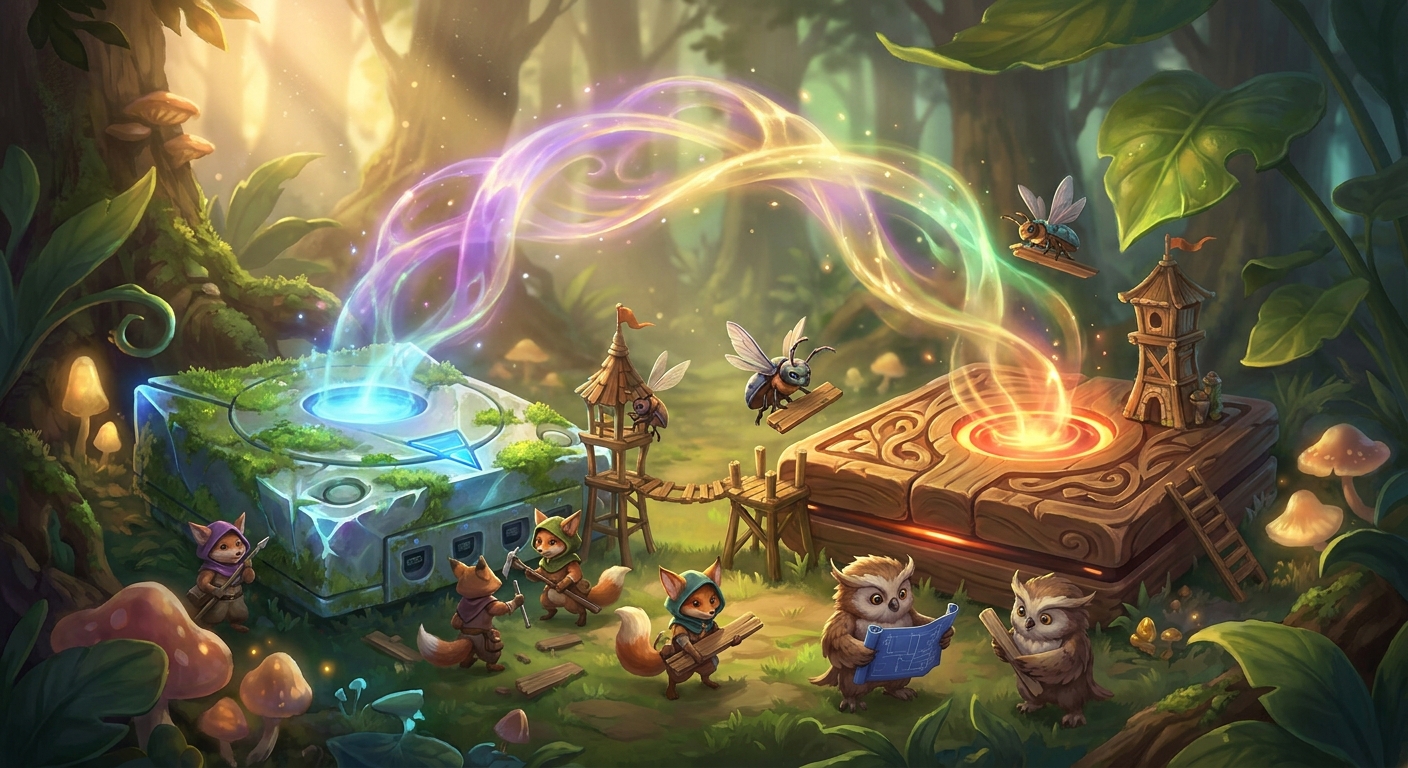
The Real Deal About Palworld Crossplay Setup
So you just booted up the game and immediately wondered if palworld crossplay is actually working right now, right? I completely get it. You have friends sitting on PC, some exclusively on Xbox, and maybe someone holding out hope on a completely different piece of hardware. Playing together regardless of the plastic box sitting on your desk is the core of gaming right now, and getting your servers connected smoothly completely upgrades the whole survival experience. Honestly, trying to figure out the exact parameters for getting everyone into the exact same lobby can feel like a part-time job, but doing it right is absolutely worth the effort.
Let me tell you about a wildly frustrating Tuesday I had recently. I was stuck in Kyiv during a scheduled rolling blackout last month, running my rig on a massive eco-flow battery, trying to sync up my Steam save with my friend’s Xbox lobby. He was sitting in his basement in Lviv with perfect power but a horribly messy NAT type on his router. We spent an hour arguing over Discord voice chat, typing IP addresses back and forth like we were hacking a corporate mainframe. It took some serious tinkering and router resets, but the absolute rush of adrenaline the moment we finally loaded into the exact same base was pure magic. That shared survival grind is unbeatable. You just need to know the exact steps to bypass the frustrating connection hurdles.
Getting your multiplayer lobbies functioning flawlessly requires a bit of patience and highly specific network knowledge. The whole idea of joining a buddy’s server sounds simple on paper, but the reality involves overlapping ecosystems that don’t always want to talk to each other cleanly. When you configure your network correctly, you get massive benefits. First, you can farm resources twice as fast while your console friend handles base defense against raids. Second, you can trade rare captured creatures across completely different player economies seamlessly, letting one person focus purely on breeding while the other explores the map.
| Platform Ecosystem | Compatibility Status | Required Workaround |
|---|---|---|
| Steam (PC) | Partial (Depending on Server) | Dedicated Server Setup via IP |
| Xbox Series X/S | Native with PC Game Pass | Invite Code Generation |
| PC Game Pass | Native with Xbox Console | Ensure matching game versions |
| PlayStation 5 | Pending Deployment | Awaiting Sony Infrastructure Approval |
The gap between Steam players and Xbox ecosystem players has historically been the biggest pain point for communities trying to play together. You cannot just blindly send an invite and pray it connects. You have to actively manipulate the session settings to force a proper digital handshake between the client and the host. Here is exactly what you need to prioritize when setting up your multiplayer session:
- Verify the patch numbers match perfectly across all machines trying to connect, down to the last decimal point.
- Ensure the host has multiplayer toggled to ‘ON’ before loading into the specific world save file.
- Create a dedicated IP exception in your firewall if you are hosting a high-capacity 32-player community server.
Skipping even one of these crucial steps usually results in the dreaded Connection Timed Out error right as the loading screen hits the ninety percent mark.
The Origins of Pocketpair’s Multiplayer Network
When the game first exploded onto the scene, the network infrastructure was practically held together by duct tape and sheer willpower. Millions of people crashed the servers simultaneously. The developers initially built the multiplayer framework around completely isolated environments. Steam users lived on their own digital island, while Xbox users were fenced tightly into Microsoft’s proprietary backend. Bridging that gap wasn’t originally scheduled for the immediate launch window, causing massive friction for friend groups split across different digital storefronts who just wanted to build a base together.
Evolution Through the Early Access Phase
Month after month, the community relentlessly begged for unified servers. The developers started rolling out backend architecture patches, quietly testing node connections between the different client versions. The primary hurdle always involved matching the update certification process. Xbox patches traditionally required days of corporate approval, whereas Steam updates pushed out instantly. This created immediate version mismatches that broke cross-platform compatibility literally overnight. The engineers eventually had to restructure their entire deployment pipeline to ensure simultaneous patch releases just to make interconnected lobbies technically feasible.
The Modern State of Connectivity
Now that we are deep into 2026, the entire network topology feels wildly different. The backend handshakes are incredibly optimized. We finally have a stabilized environment where the client requests efficiently route through centralized matchmaking servers. You no longer have to pray to the router gods just to see your friend’s gamertag pop up in the guild menu. The infrastructure now actively compensates for minor ping spikes, making the shared open-world exploration feel significantly less disjointed, even if one person is playing on a wired fiber connection and the other is using a spotty Wi-Fi signal.
Understanding Packet Routing Between Ecosystems
Let’s talk about the actual nuts and bolts of what happens when you press connect. When an Xbox client tries to join a Steam host, the data packets don’t just travel directly from house to house. They hit a designated relay node. Microsoft’s Xbox Live API requires specific security authentications before it allows an external IP address to inject data into its ecosystem. The game uses a custom translation layer to convert the host’s positional data into a format the console can read without triggering an anti-cheat false positive. If this relay drops a packet, your buddy’s character immediately starts rubber-banding into a wall.
Server-Side Synchronization Mechanics
The real heavy lifting happens entirely in the background with entity synchronization. Think about how many moving parts exist in your primary base. You have hundreds of creatures actively pathfinding, harvesting materials, hauling stone, and fighting off random raids. Every single action must process simultaneously for a PC player and a console player without visually stuttering.
- Tick rate dictates the server update frequency, usually locked around 30Hz to prevent CPU throttling on older console hardware.
- The host machine utilizes predictive client-side scripting to guess where a player is moving before the network actually confirms it, effectively masking terrible lag.
- Dedicated servers offload the AI processing scripts entirely to the cloud, freeing up local memory for rendering graphics instead of constantly crunching math.
- Cross-platform handshakes heavily rely on standardized UDP ports, specifically port 8211, to maintain a constant, uninterrupted stream of positional data.
Stop guessing and just follow a strict routine to get your cross-platform lobby running flawlessly. I have mapped out an exact sequence you need to execute to guarantee everyone gets connected without pulling their hair out or rage-quitting before the game even starts.
Step 1: Check Your Platform Version
Boot up the title screen. Check the very bottom right corner of your monitor. Read the exact version number out loud to your friends over voice chat. If someone is on v0.3.1 and you are on v0.3.2, stop right there. Force a manual update through your respective storefronts by verifying the game files. Mismatched versions will auto-reject incoming connections instantly without explaining why.
Step 2: Generate the Invite Code
The designated host needs to load completely into the world save. Open the pause menu. Click the tiny eye icon next to the session code to unhide the digits. Do not just take a blurry photo of your monitor with your phone and text it; type the exact alphanumeric string into your Discord group chat to avoid frustrating typos like confusing a zero for the letter O.
Step 3: Configure Network Ports
If you are hosting a dedicated server from your own machine, you must access your router settings. Type your gateway IP into a browser, find the port forwarding section, and forward UDP port 8211 to your specific local IPv4 address. Without a properly opened port, external traffic coming from a different platform ecosystem simply hits your router’s firewall and dies immediately.
Step 4: Syncing the Host Settings
The host needs to strictly verify the world settings before anyone else attempts to join. Ensure the ‘Death Penalty’ rules and ‘Drop Items’ mechanics are fully agreed upon by the group. You cannot easily change these specific parameters on the fly once the cross-platform clients load in without completely restarting the entire server instance and forcing everyone to reconnect.
Step 5: Bypassing the Timeout Errors
If the joining client hangs on the black loading screen for more than sixty seconds, hit Alt-F4 or force close the application entirely. Boot it back up from a fresh start, run the executable as an administrator if you are on PC, and try entering the code again. Sometimes the initial digital handshake drops silently in the background.
Step 6: Managing Guild Permissions
Once everyone successfully spawns in the starting zone, immediately walk up to each other and hold the interact button to send a formal Guild Invite. Do not start building separate, isolated bases right away. Consolidating into one single guild prevents accidental friendly fire incidents and perfectly syncs your shared technology tree progress.
Step 7: Backing Up Your Multiplayer Save
Before closing the session for the night and logging off, the host must manually trigger a save state. Navigate to the local app data folder on your drive and manually copy the specific save file to a secure cloud drive or external folder. Cross-platform syncs occasionally corrupt during unexpected system crashes, so a backup guarantees you absolutely won’t lose eighty hours of intense base building.
People constantly spread wild rumors across forums about how the networking actually functions behind the scenes. Let’s clear up the utter nonsense circulating right now.
Myth: You need an ultra high-end PC to successfully host players from different consoles.
Reality: The host’s CPU absolutely matters for processing creature AI, but network stability and high upload speed are vastly more critical for maintaining stable connections across completely different platforms.
Myth: Console players experience statistically worse catch rates when playing in shared PC lobbies.
Reality: Catch mathematics calculate purely on the server-side. The specific hardware you use to throw the capture sphere has absolutely zero impact on the final RNG outcome.
Myth: Steam and Xbox players can just use the standard in-game friend list to join directly without codes.
Reality: You still absolutely must rely on generating session codes or typing out direct IP addresses. Native cross-platform friend list integration remains heavily restricted due to strict API security policies.
Myth: Dedicated servers erase player inventories randomly if a console player joins.
Reality: Inventory wipes exclusively happen when the host machine abruptly loses power while actively writing the background autosave file to the disk.
Do I need an active subscription to play online?
Yes, Xbox users specifically require an active Game Pass Core or Ultimate subscription, while Steam users simply need a standard internet connection without extra fees.
Can I transfer my single-player world to a multiplayer server?
Technically yes, but it requires manually extracting the player save files and carefully editing the hex data to reassign the correct host IDs to the new server.
Why does the game say Session Full when I try to join?
Standard co-op lobbies firmly max out at exactly four players. You absolutely need to transition to a dedicated server setup to bypass this hard coded player limit.
Is voice chat officially supported between different platforms?
In-game voice chat is notoriously buggy and frequently drops audio packets. Just use a highly reliable third-party app like Discord on your phone or secondary monitor.
Do mods work in a mixed-platform lobby?
Absolutely not. Any client-side graphical or gameplay modifications will instantly flag a version mismatch and forcibly kick the user back to the main title menu.
Can I ban a highly toxic player from my server?
Yes, dedicated server admins can manually issue a hard ban command using the specific player’s SteamID or unique internal network ID through the server console.
Will my base continue to run while I am completely offline?
Only if you are running a standalone dedicated server that remains constantly online twenty-four seven. Standard hosted co-op worlds completely freeze the moment the host leaves the session.
Getting your hardware connections completely sorted is arguably the hardest part of the entire process, but once you break through those frustrating initial barriers, the shared multiplayer experience is flawlessly entertaining. Go grab your squad, punch in those exact invite codes, double-check your router ports, and start building your massive creature empire together!


Leave a Reply