
Why We Can’t Get Enough of Games Like Unpacking
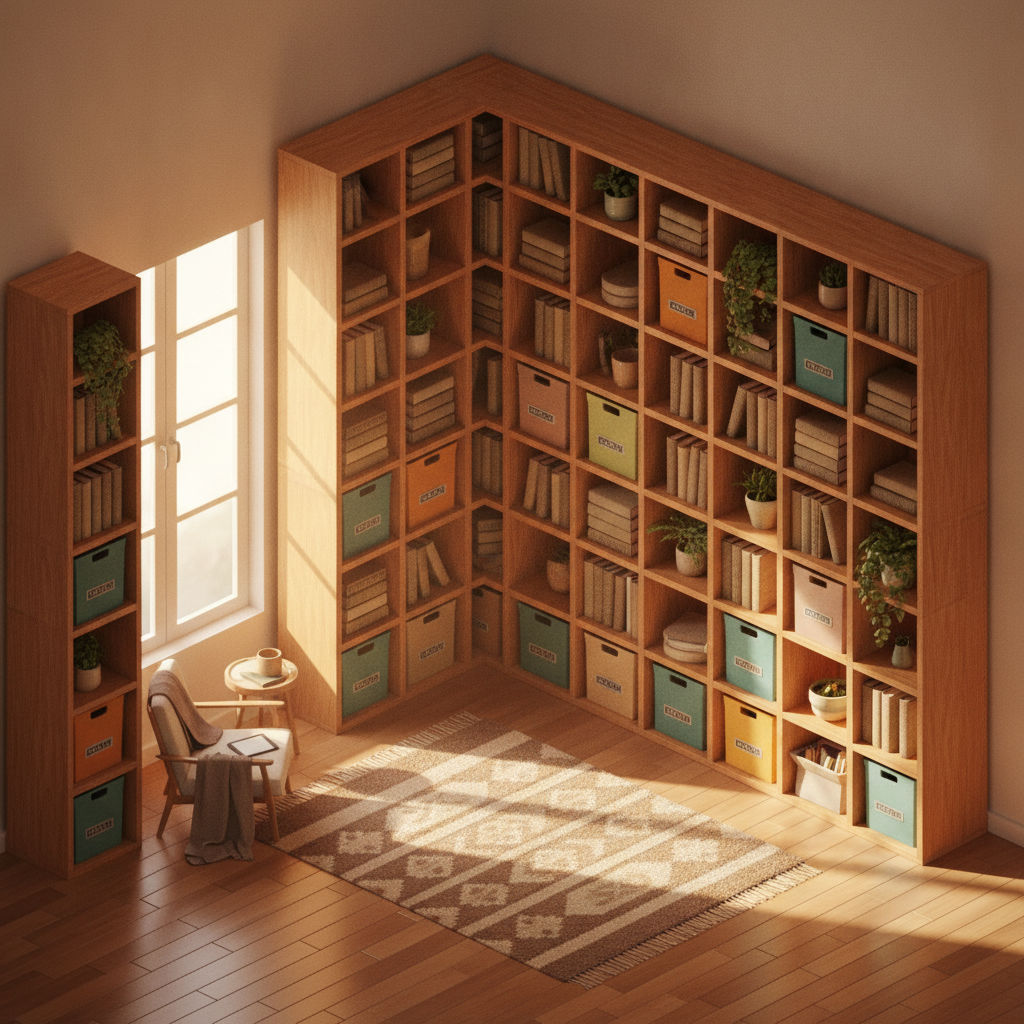
You know that feeling when everything finally finds its perfect, exact place? If you are desperately hunting for games like unpacking, I completely get the obsession. You finish pulling that very last item out of the cardboard box, set it perfectly on the digital shelf, and suddenly, silence. The credits roll, and you are left with a weird, empty void. You need more of that specific, highly structured peace.
Just last winter here in Kyiv, while the snow was piling up outside our windows and the local power grid was doing its entirely unpredictable dance of rolling blackouts, I found myself huddled under three heavy woolen blankets with my fully charged Nintendo Switch. The outside reality was loud and completely out of my hands. I desperately needed something low-stakes. Sorting virtual books and organizing tiny pixelated spatulas became my personal therapy session. It gave me a tiny pocket of control.
We crave these aesthetic puzzle experiences not just for the visual neatness, but for the silent storytelling and profound calm they instantly inject into our chaotic lives. I am going to walk you through exactly why these specific spatial puzzles click so perfectly with our human brains, and show you exactly what to play next to chase that feeling. No fluff, no filler, just the absolute best recommendations to keep your hands busy and your mind wonderfully quiet.
The Core Mechanics of Digital Tidying
So, why do we actually love these sorting mechanics? It sounds like a chore on paper. Who wants to do laundry and put away dishes after doing actual laundry and putting away actual dishes? But it is wildly different when there is an invisible grid, a satisfying audio cue, and zero actual physical exertion required. You are getting all the psychological rewards of a clean room without ever having to stand up.
- Total Micro-Control: You dictate where every single tiny eraser, sock, and potted plant goes. If you want all the blue books together, you make it happen.
- Environmental Storytelling: You learn about a character’s entire life just by seeing what they keep, what they throw away, and what gets worn out over the years.
- Low-Stakes Dopamine: There are no fail states. No timers counting down to your doom. Just a gentle push toward completion at your own highly personalized pace.
Let’s look at the heavy hitters that capture this exact same magic. These are the titles that absolutely nail the cozy value proposition of giving you a mess and letting you fix it.
| Game Title | Core Vibe & Aesthetic | Main Organizing Mechanic |
|---|---|---|
| A Little to the Left | Cozy, pastel, mildly mischievous | Sorting household items by color, size, and pattern while a cat tries to ruin it. |
| Assemble with Care | Sun-drenched nostalgic storytelling | Taking apart broken retro electronics, fixing the wires, and packing them neatly back together. |
| Wilmot’s Warehouse | Minimalist, geometric, intensely satisfying | Categorizing hundreds of vague icons in a massive grid based entirely on your own weird logic. |
Take A Little to the Left, for example. It asks you to stack papers, align pencils by height, or arrange sticky notes. It perfectly replicates that urge to just straighten up the coffee table. Then there is Assemble with Care, which gives you the tactile joy of repairing old cameras and cassette players, slotting batteries into place with a satisfying click. Both give you that exact hit of organized bliss.
The Pixelated Origins of Organization
To really understand where this genre came from, we have to look way back. The desire to organize things on a screen isn’t new. Think about the classic inventory management screens from the late 90s and early 2000s. People spent literal hours just rearranging their attaché cases in survival horror games, trying to perfectly fit herbs next to ammunition boxes. It was basically a high-stress version of Tetris. Developers slowly realized that players were enjoying the actual sorting process just as much, if not more, than the core gameplay loop.
The Evolution of Cozy Mechanics
Fast forward a decade, and we saw the massive boom of flash-based room decoration titles and hidden object adventures. You would click around cluttered Victorian mansions looking for specific umbrellas and teacups. Animal Crossing took it a step further, giving us complete control over our tiny houses, dictating exactly where the regal sofa should sit relative to the customized wallpaper. But the focus was still split between socializing, farming, or solving mysteries. The organizing was just a fun side gig.
The Modern State of Zen Gaming
Now, as we navigate through the gaming landscape of 2026, the ‘cozy puzzle’ tag has absolutely exploded into its own highly respected, standalone genre. Developers finally stripped away the unnecessary fluff. No more farming, no more fighting, no more timers. Just pure, unadulterated spatial reasoning. Games now tell deeply emotional, sprawling narratives entirely through the objects a protagonist carries with them across different stages of their life. The medium has matured beautifully.
The Psychology of Digital Sorting
There is actual, hard science backing up why placing a digital mug on a digital coaster feels so incredibly good. When our physical environments are chaotic, our brains expend passive energy trying to process the visual noise. Digital spaces offer a completely sterile, highly controlled environment where the rules of physics and logic are absolute.
Understanding the Zeigarnik Effect and Dopamine Loops
Psychologists talk about the Zeigarnik effect—the principle that human beings remember uncompleted or interrupted tasks better than completed ones. An unorganized digital room is basically a massive, glaring unfinished task that your brain is itching to close the loop on.
- Cognitive Load Reduction: Moving items onto a grid requires very little active brainpower, allowing your default mode network to engage and process background stress.
- Targeted Dopamine Release: Every time you hear that little ‘chime’ when an object locks into its designated spot, your brain releases a tiny micro-dose of dopamine.
- Cortisol Lowering: The lack of a timer or enemy threat completely eliminates the fight-or-flight response, physically lowering your heart rate and cortisol levels.
- ASMR Audio Triggers: The sound design—the crinkle of paper, the thud of a heavy book—acts as auditory sensory meridian response triggers for many players.
Your 7-Day Cozy Detox Plan
If you are burned out and need a structured path back to peace, I have mapped out an entire week of specific gaming experiences for you. Follow this exact menu.
Day 1: Start Small with A Little to the Left
Begin your week by just fixing minor annoyances. Spend an hour aligning picture frames, sorting keys by their jagged edges, and stacking sticky notes. It is the perfect palate cleanser to get your brain used to looking for patterns again.
Day 2: Repair and Restore in Assemble with Care
Now that your eyes are adjusted to details, switch to repairing objects. You will take apart a broken watch, replace the gears, and put the glass dome back on. It is incredibly tactile and reminds you that broken things can be put back together neatly.
Day 3: Manage the Chaos in Wilmot’s Warehouse
Time to scale up. You are handed a massive blank warehouse and hundreds of boxes. You have to invent your own categorization system. Do you group things by color? By use? By shape? You make the rules, and you execute them flawlessly.
Day 4: Build a Sticker Empire in Sticky Business
Shift gears to running a tiny, stress-free shop. You will arrange cute digital stickers on a virtual printing bed, trying to maximize space without overlapping them. Then, you pack the boxes perfectly with tissue paper and candy. It is pure organizational bliss.
Day 5: Fit the Felines in Cats Organized Neatly
A purely spatial puzzle day. You have a grid, and you have a bunch of weirdly shaped cats. You have to rotate and snap them together until they all fit perfectly into the designated area. It is basically fluffy Tetris without the falling anxiety.
Day 6: Route the Rails in Station to Station
Take your organizing skills outdoors. You will be laying down pristine, perfectly curved railroad tracks across beautiful voxel-art landscapes, connecting little farms to little cities. Watching the trains run perfectly on the paths you neatly laid out is magic.
Day 7: Decorate the Road in Camper Van: Make it Home
Finish your week by organizing a mobile living space. You will drag and drop cushions, string lights, and tiny camping stoves into a highly constrained van interior. It brings you right back to that intimate, personal feeling of making a space entirely your own.
Myths & Reality About Sorting Games
Myth: These titles are just boring chores disguised as overpriced entertainment.
Reality: They are structured relaxation tools. They remove all the physical fatigue, dust, and heavy lifting of actual cleaning, leaving only the pure psychological reward of turning chaos into order.
Myth: You need to be an obsessive neat freak in real life to enjoy them.
Reality: Interestingly, even the absolute messiest people love the guided structure these mechanics provide. It offers an easy win when real-life cleaning feels too overwhelming.
Myth: They have zero replay value once you know where everything goes.
Reality: The community for these games is massive. With daily puzzle variations, community-created mods, and alternate puzzle solutions, the ecosystem stays fresh for literally years.
Frequently Asked Questions
Are there any free alternatives available right now?
Yes, many indie developers post fantastic, bite-sized organizing prototypes on platforms like Itch.io for free. Searching the ‘cozy puzzle’ tag there will give you dozens of browser-based options to play immediately.
Can I play these on my smartphone?
Absolutely. The touch-screen interface is actually the perfect match for dragging and dropping items. Titles like A Little to the Left and Assemble with Care have excellent, highly responsive mobile ports.
What makes the sound design so crucial here?
Without the tactile feedback of actually holding an object, the audio does all the heavy lifting. The specific, crisp ‘thunk’ of a wooden block or the rustle of paper tricks your brain into feeling physical satisfaction.
Is there a multiplayer equivalent for this genre?
It is rare, as the appeal is usually solitary focus, but some upcoming 2026 indie releases are experimenting with asynchronous co-op, where one player unpacks a room and the other player organizes a connected garden.
Why do these specific mechanics help with anxiety?
They force your brain to focus entirely on the present moment and immediate spatial relationships, acting as a grounding technique that successfully interrupts spiraling anxious thoughts.
Will we see virtual reality versions soon?
We already are! Hand-tracking technology has advanced enough that sorting virtual objects in a completely 3D space is becoming incredibly popular in the cozy VR space.
How do developers create that perfect snapping sound?
Audio engineers often spend weeks recording hundreds of real-life objects dropping onto different surfaces—wood, glass, carpet—and then layer those sounds with slight bass boosts to make them feel unnaturally satisfying.
Can kids benefit from playing these?
Definitely. They are fantastic tools for developing spatial awareness, shape recognition, and basic categorization logic without any of the stress associated with traditional educational software.
Do these games require a high-end PC?
Not at all. Because they rely on simple physics and minimalist art styles, you can run almost all of them on older laptops or standard mobile devices without any stuttering.
Where can I find communities that discuss these?
Reddit and Discord have massive, highly active cozy gaming communities. They constantly share aesthetic screenshots of their perfectly arranged virtual rooms and recommend obscure new releases.
So, there you have it. If you need to quiet the noise in your head, just pick one of these titles, make yourself a hot cup of tea, and start putting things exactly where they belong. Go download A Little to the Left right now and claim back your peace of mind!





Leave a Reply