
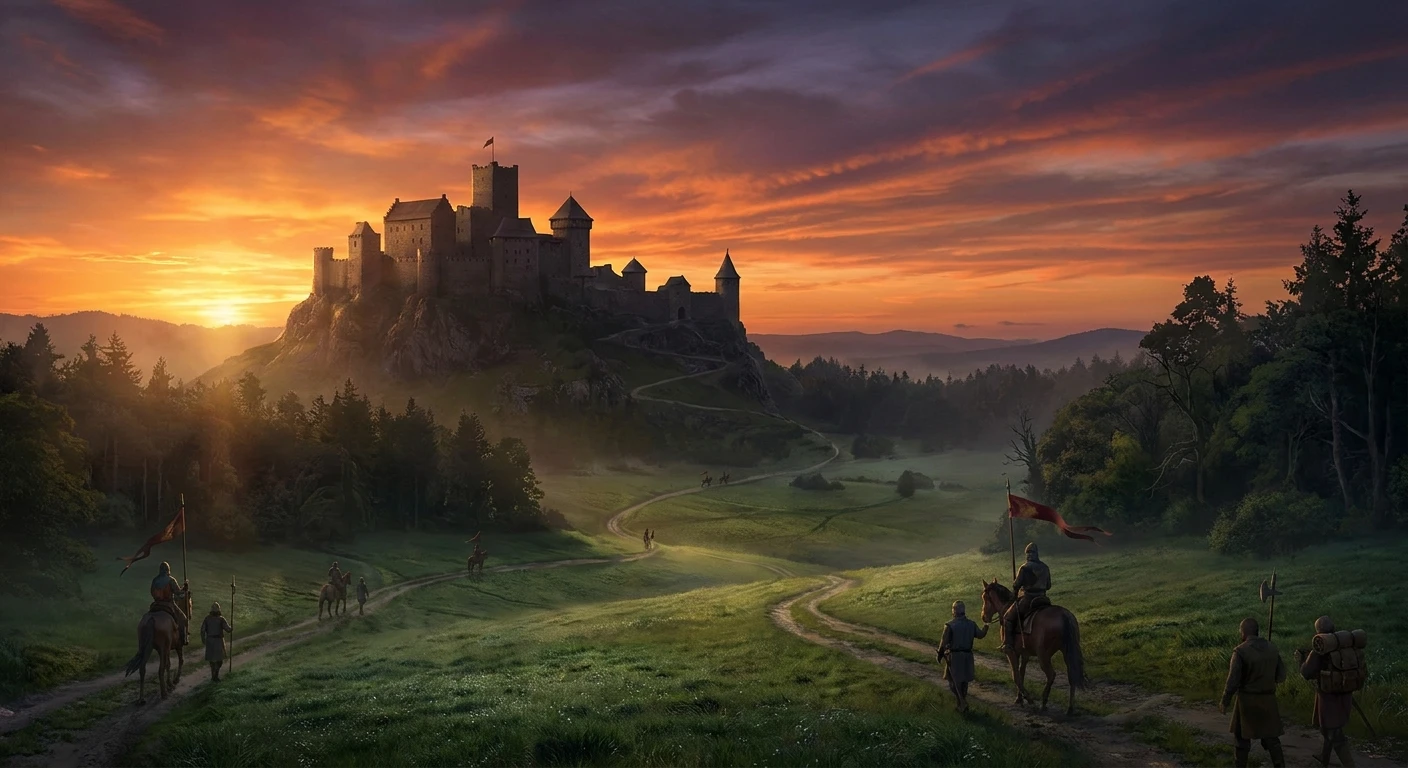
Kingdom Come Deliverance 2 Review: Entering 15th Century Bohemia
Any comprehensive Kingdom Come Deliverance 2 review reveals exactly how Warhorse Studios has managed to expand its breathtaking medieval simulation into something truly monumental. If you appreciate historical accuracy, complex mechanics, and an engaging narrative devoid of standard fantasy tropes, this heavily anticipated sequel is a fascinating case study in modern game design. Picking up right where the first installment left off, Henry of Skalitz continues his tumultuous journey against the backdrop of a brewing civil war in early 15th-century Bohemia. The stakes are much higher, the environments are vastly more detailed, and the scope of the adventure has effectively doubled.
This deep dive assesses how the developers have transitioned from the rural landscapes of the original title to the sprawling, cosmopolitan streets of Kuttenberg, one of the wealthiest silver mining cities in Europe at the time. We examine the refined first-person directional combat, the introduction of rudimentary early firearms and crossbows, and the significantly enhanced artificial intelligence that breathes life into thousands of non-player characters. From managing your reputation among different factions to surviving the harsh realities of medieval survival mechanics, the sequel promises to test your strategic planning and reflexes. Expect a factual, detailed breakdown of the features that make this release a standout title for the role-playing genre.
Read also: Top games coming out in 2026 to Play; The Best Elden Ring Interactive Map Guide.
The Core Mechanics: Why the Sequel Stands Out
When analyzing the core gameplay loop, the value proposition of this sequel becomes immediately clear. Warhorse Studios has successfully maintained the hardcore, uncompromising realism of the first game while aggressively smoothing out the friction points that frustrated casual players. For example, the save system has been recalibrated to respect your time without entirely removing the tension of failure, and the lockpicking minigame—notorious in the previous iteration—has been redesigned to be much more intuitive on both mouse and controller inputs. These adjustments ensure that the challenge comes from the tactical depth of the game rather than clunky interfaces.
Below is a breakdown of how key mechanics have evolved:
| Gameplay Feature | Original Implementation | Sequel Upgrades |
|---|---|---|
| Melee Combat | Five-point directional striking with rigid lock-on. | Fluid multi-target switching and improved animation blending. |
| Ranged Weaponry | Basic longbows with high stamina drain and no reticle. | Addition of deadly crossbows and early hand cannons. |
| Crime and Disguise | Basic line-of-sight and simplified clothing stats. | Complex social stealth; NPCs recognize stolen armor sets. |
Beyond these specific mechanical tweaks, the sequel delivers three massive benefits for returning and new players alike:
- Streamlined User Interface: Inventory management, quest tracking, and the alchemy interface require far fewer clicks, allowing you to spend more time exploring and less time staring at menus.
- Expanded Dialogue Systems: The persuasion mechanics now take real-time environmental factors into account. Your blood-stained clothing or drawn weapon heavily alters NPC reactions.
- Dynamic World Events: The roads of Bohemia are no longer static. You will encounter shifting merchant caravans, dynamic skirmishes between bandits and guards, and traveling knights offering unique duels.
Origins of the Medieval RPG Genre
To fully appreciate the scope of this sequel, one must understand the origins of the historical role-playing genre. For decades, the RPG market was entirely dominated by high fantasy—dragons, magic, and chosen-one narratives. Grounded, historically accurate games were largely relegated to the grand strategy genre. It was highly unusual for a massive open-world game to completely reject magical elements in favor of authentic medieval life. The initial concept for a realistic, first-person medieval simulator faced intense skepticism from publishers who believed that players would find a non-magical setting too boring to sustain a massive open-world adventure.
Evolution of Warhorse Studios’ Vision
Warhorse Studios fundamentally changed the industry trajectory with their highly successful Kickstarter campaign for the first game. The evolution of their vision has been a testament to community support. Starting as a small, independent studio fighting to prove the viability of a grounded historical setting, they eventually secured deep publisher backing. With this sequel, their ambition is fully unleashed. They are no longer restricted by a tight indie budget. The studio has expanded significantly, allowing them to record a script that is twice the size of the original, compose a soaring symphonic soundtrack led by Jan Valta, and capture hundreds of hours of high-fidelity motion capture data to ensure cutscenes look like a big-budget cinema production.
The Modern State of Immersive Sims
In the current gaming landscape, players demand unprecedented levels of interactivity. The modern state of the immersive sim dictates that if a player sees an object, they should be able to interact with it, and the world should react logically. The sequel pushes these boundaries. Characters have complex daily routines; they sleep, eat, work, and go to the tavern. If you steal a blacksmith’s tools in the dead of night, he will not simply spawn new ones the next day—he will complain to the town guards, his shop will close, and the local economy will slightly shift. This dedication to cause-and-effect places the game at the very pinnacle of modern immersive simulations.
CryEngine Enhancements and Rendering
Under the hood, the technical foundation of the game is staggering. Warhorse has utilized a heavily modified version of the CryEngine to render the dense forests, rolling hills, and incredibly detailed urban centers of the 15th century. One of the most significant technical leaps is the implementation of advanced Global Illumination. Lighting now bounces realistically off diverse materials, meaning the reflection of sunlight off a polished suit of plate armor will softly illuminate the stone walls of a narrow alleyway. The rendering engine also handles an immense draw distance without relying on aggressive fog, allowing players to spot enemy encampments or distant landmarks from miles away with perfect clarity.
Artificial Intelligence and NPC Routines
The complexity of the artificial intelligence is perhaps the most computationally expensive aspect of the game. Processing the behavioral trees of hundreds of independent NPCs simultaneously requires heavy multi-threading on modern CPUs. The AI governs everything from basic pathfinding to complex combat tactics, such as enemies attempting to flank Henry or retreating when their morale breaks. The technical specifications of the simulation include:
- Seamless transitioning between high-fidelity indoor and sprawling outdoor environments without loading screens.
- Dynamic weather rendering that directly impacts gameplay (e.g., rain masking the sound of your footsteps and lowering visibility).
- Real-time cloth physics computing multiple layers of medieval garments—gambesons, chainmail, and tabards—preventing visual clipping.
- Advanced memory management techniques to stream the massive urban environments of Kuttenberg efficiently on solid-state drives.
Your Actionable 7-Step Plan for the Early Game
Starting an RPG of this magnitude can be incredibly overwhelming. The mechanics are deep, the world is unforgiving, and early mistakes can cost you dearly. To ensure you hit the ground running, follow this precise, step-by-step methodology to master the early hours of the game.
Step 1: Mastering the Revamped UI
Before leaving the starting area, spend time familiarizing yourself with the updated menu systems. The character sheet, inventory, and quest logs have been redesigned. Bind your quick-use items, such as bandages and savior schnapps, to easily accessible hotkeys to prevent panic during sudden ambushes on the road.
Step 2: Customizing Your Early Build
Determine your preferred playstyle early. While Henry can eventually become a jack-of-all-trades, specializing in either heavy weaponry, agility-based stealth, or charismatic speech will significantly smooth out your early progression. Allocate your initial skill points to align with the type of armor and weapons you plan to carry.
Step 3: Navigating the Streets of Kuttenberg
When you arrive in the massive city of Kuttenberg, do not immediately sprint through the main quests. Take time to learn the layout of the city. Identify the locations of the local blacksmith, the apothecary, and the baths. Establishing these mental landmarks is crucial because relying solely on the map can lead to getting lost in the winding, vertical alleyways.
Step 4: Engaging in Social Stealth
Remember that appearance is everything in this era. Keep a clean, expensive set of clothes in your saddlebags for city encounters. Speaking to nobles while covered in mud and blood will drastically lower your persuasion stats. Always visit the bathhouse to wash up and mend your garments before attempting crucial dialogue checks.
Step 5: Understanding Dynamic Weather Effects
Do not ignore the environment. If a heavy thunderstorm rolls in, use it to your advantage. The rain degrades the bow strings of your enemies, making archery less effective, and heavily obscures vision. This is the perfect time to infiltrate bandit camps or travel through dangerous territory unseen.
Step 6: Managing Henry’s Needs and Stamina
Hunger and exhaustion will passively drain your maximum stamina if left unchecked. Stamina is essentially your health shield in combat; running out means you take direct physical damage. Always carry dried meats or salted foods that do not spoil quickly, and ensure you find a proper bed to maintain your energy levels.
Step 7: Preparing for Large-Scale Sieges
The sequel features massive, multi-stage castle sieges. Before initiating these story missions, stock up on arrows, repair kits, and healing potions. Your equipment will degrade rapidly during extended combat scenarios, and finding a moment to repair your primary sword mid-battle can be the difference between victory and defeat.
Myths & Reality
Myth: The game is far too difficult for casual players to enjoy.
Reality: While the mechanics are grounded, the developers have introduced highly detailed, accessible tutorials and training arenas. If you take the time to practice with the combat instructors, the difficulty curve scales fairly, making it highly rewarding rather than purely punishing.
Myth: You must play the first game to understand the story.
Reality: The sequel provides a comprehensive, cinematic recap of Henry’s previous adventures. Furthermore, the narrative arc in Kuttenberg is designed as a standalone epic, meaning newcomers can easily grasp the political stakes and character motivations without any prior knowledge.
Myth: The directional combat is exactly the same clunky system as before.
Reality: The rigid lock-on system has been entirely overhauled. The new animation blending allows for seamless transitions between targets, making group fights feel much more dynamic, responsive, and fair compared to the original mechanics.
Myth: It is strictly an action-focused combat game now.
Reality: Despite the addition of firearms and larger battles, the deep narrative focus, branching dialogue trees, and non-violent quest resolutions remain a massive pillar of the core gameplay experience.
Frequently Asked Questions & Conclusion
Is there a fast travel system?
Yes, fast travel returns, but it functions realistically. Your character physically moves across the map, meaning you can still be intercepted by random encounters or ambushes along the roads.
Can you play in third-person?
No, the game is built entirely around a highly immersive, strictly first-person perspective to maintain realism during combat, dialogue, and exploration.
Are there official modding tools?
The developers have stated that official modding tools are a priority and are expected to roll out shortly after the initial launch period to support community creations.
How big is the map?
The playable area is roughly twice the size of the original game, split across two distinct, massive maps featuring varied topographies and dense urban environments.
Is there any form of multiplayer?
No, this remains a strictly single-player, narrative-driven experience. There are no co-op or competitive multiplayer modes included.
What engine does the game use?
It runs on a heavily customized version of the CryEngine, heavily optimized to handle complex AI routines and dense environmental rendering.
Can you pet the dog?
Yes, animal companions make a return, and you can interact with, feed, and praise your loyal hound, who also assists you in hunting and combat.
Does armor actually matter?
Absolutely. Plate armor will deflect glancing blows and minor cuts entirely, forcing opponents to use blunt weapons like maces to deal concussive damage through the metal.
In conclusion, stepping into this meticulously crafted 15th-century world offers an unparalleled role-playing experience. The mechanical depth, combined with an emotionally charged narrative and jaw-dropping visual fidelity, solidifies its place as a landmark title. Whether you are eager to master the nuanced combat, explore the sprawling streets of Kuttenberg, or simply live out the daily life of a medieval blacksmith, this game delivers on all fronts. If you found this breakdown helpful, share it with your fellow RPG enthusiasts and prepare your hardware for the ultimate medieval journey.




Leave a Reply