
The Real Deal on the switch 2 joycons
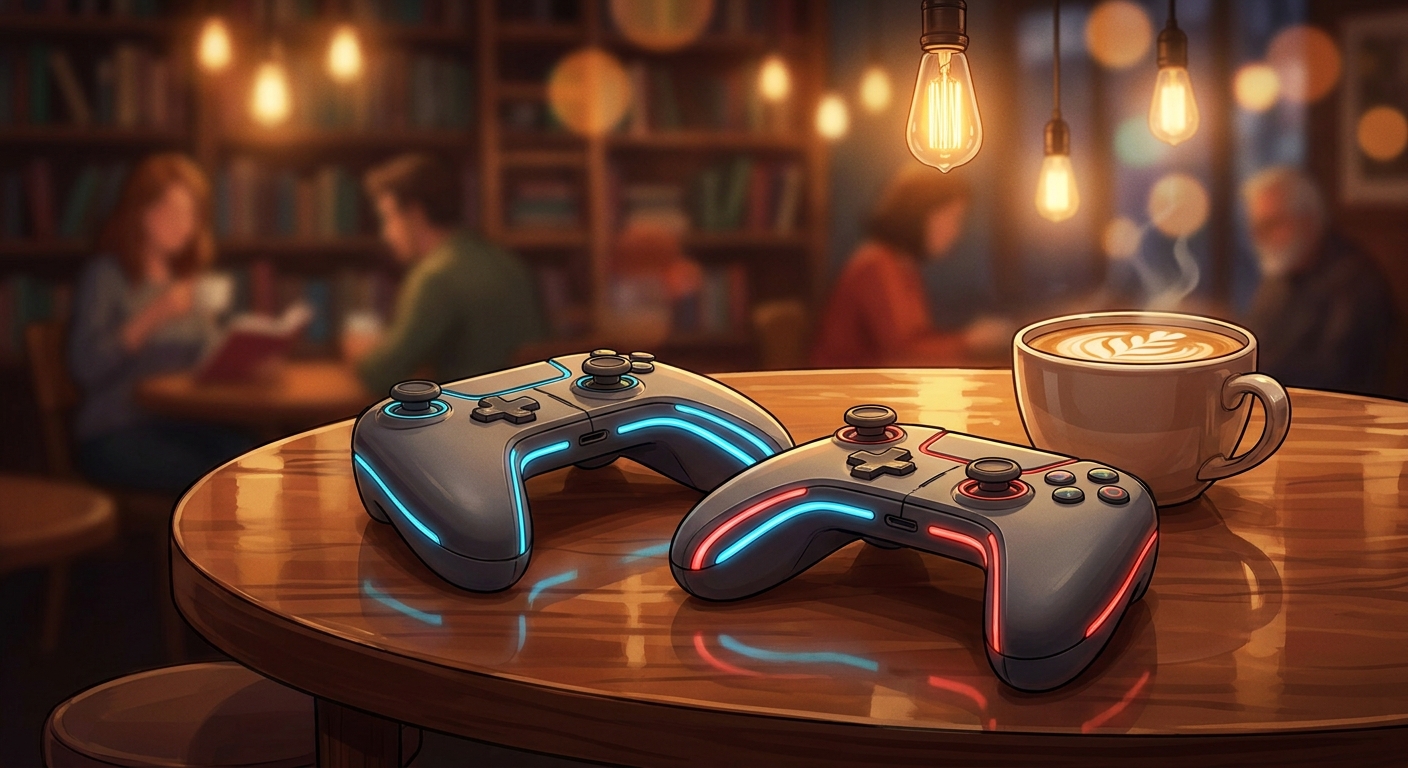
Man, I finally got my hands on the new switch 2 joycons, and I absolutely have to tell you that the hype surrounding them is entirely justified. Sitting here in a cozy, dimly lit coffee shop right off Khreshchatyk street in Kyiv, sipping a strong flat white while snapping these pristine controllers onto the new screen, I genuinely felt that pure, kid-like joy all over again. We have all spent years dealing with frustrating stick drift, crampy hands after long sessions, and the constant need for recalibration, haven’t we? Well, 2026 brought us a massive hardware shift, and my thumbs honestly couldn’t be happier. The main takeaway here is incredibly straightforward: these new controllers completely fix the glaring physical flaws of the past hardware generation while introducing premium features that make handheld gaming feel like a true luxury experience.
I remember the sheer anxiety of taking my old console on a long overnight train ride from Kyiv to Lviv, praying the left stick wouldn’t start randomly sending my character walking off a high cliff. Now, with the completely upgraded rail system, the incredibly nuanced tactile feedback, and a physical design that actually fits human hands comfortably, it is an entirely different ballgame. You seriously don’t need to stuff a bulky pro controller in your backpack anymore just to enjoy a proper gaming session on the go.
Why You Actually Need the Upgrade Immediately
Look, the core benefit of upgrading is the unbelievable boost to durability and long-term comfort. The new ergonomic curves molded into the back plates mean you can comfortably play for five hours straight without your wrists screaming for mercy. There is absolutely zero doubt that the engineers finally listened to the endless complaints about the old, flat, unergonomic designs that used to plague us.
Check out exactly how the new hardware stacks up against the old gear we used to rely on so heavily:
| Hardware Feature | Old Controller Generation | The New switch 2 joycons |
|---|---|---|
| Thumbstick Mechanism | Carbon potentiometers (highly prone to drift) | Magnetic Hall Effect sensors (100% drift-free) |
| Console Attachment | Physical sliding metal rails | Electromagnetic locking mechanism |
| Battery Capacity | Approximately 20 hours of playtime | Up to 35 hours of continuous use |
| Face Buttons | Mushy rubber membrane pads | Tactile mechanical microswitches |
The value proposition here is massive for anyone who plays games daily. First, you save a ton of money over the long term because you aren’t forced to buy replacements every eight months. Second, the haptic feedback is so insanely precise you can literally feel the granular texture of different virtual terrains. Imagine running your character through thick snow and feeling a heavy, muffled rumble in your palms, then immediately stepping onto slick ice and feeling a sharp, high-frequency click. It adds so much immersion.
If you are pulling these out of the box for the very first time, follow this incredibly simple process to get started:
- Snap them onto the sides of the main console screen using the brand-new magnetic locking system to pair them instantly without fiddling with sync buttons.
- Head directly into the main system settings menu and run the automated haptic calibration tool to map the vibration intensity to your specific liking.
- Download the absolute latest firmware update directly through the controller menu to ensure optimal battery management and minimize input latency.
- Launch a first-party title to test the dead zones and ensure the gyroscopes are tracking your wrist movements perfectly.
The Origins of Modular Controllers
To really appreciate the hardware we have sitting in our hands right now, we need to look closely at where this crazy modular idea actually started. The core concept of splitting a traditional gaming controller directly in half wasn’t entirely new to the industry, but it was popularized heavily by the motion-control era almost two decades ago. Having your hands resting comfortably at your sides rather than cramped together rigidly in your lap was a massive leap forward for accessibility and casual couch gaming.
Evolution Through the Handheld Generations
When the first major hybrid console dropped back in 2017, the original attachable controllers completely blew our collective minds. You could seamlessly share one half with a friend at a busy rooftop party, or slide them onto a plastic grip to mimic a traditional setup. But they were heavily compromised by their size. They had to be exceptionally tiny, which meant relying on tiny internal components, which directly led to the infamous stick drift epidemic. Gamers spent years frantically swapping out analog sticks, sliding pieces of cardboard under the housing to apply pressure, and buying cheap third-party alternatives just to make it through a boss fight.
The Modern State of Hardware in 2026
Fast forward to today, and the entire landscape has shifted dramatically. Hardware standards have skyrocketed thanks to intense competition in the premium handheld PC market. The switch 2 joycons are a brilliant, direct response to a consumer base that fiercely demands premium build quality. We simply aren’t accepting cheap, creaky plastic anymore. The modern iterations utilize aerospace-grade aluminum for the inner mounting rails, giving them a heavy, satisfying click that loudly assures you they aren’t going to accidentally snap off during a heated multiplayer match.
Understanding Hall Effect Sensors
Okay, let’s get a little bit nerdy for a second and talk about the internals. The absolute biggest technical upgrade hidden inside the switch 2 joycons is the flawless implementation of Hall Effect sensors in the thumbsticks. Traditional sticks used physical carbon pads that actively rubbed together to calculate exactly where you were pushing your thumb. Over time, that carbon physically scraped off, creating internal dust that completely messed up the directional readings. Hall Effect sensors entirely ditch the friction. They use magnets. There is zero physical contact between the moving directional parts. The sensor continuously reads the microscopic changes in the magnetic field to determine the stick’s exact position, meaning physical wear and tear is basically scientifically impossible.
Advanced Haptic Feedback Motors
The internal rumble technology has also received a massive, overdue overhaul. Instead of relying on traditional spinning counterweights that just violently shake the whole plastic shell, the new controllers use sophisticated voice-coil actuators. This functions incredibly similarly to how high-end stereo speakers physically produce sound waves, allowing for pinpoint vibration precision.
Here are the core scientific specs making this elite performance possible:
- Electromagnetic Polling: The controllers actively communicate with the main console motherboard at a blazing 1000Hz, dropping wireless input latency to well under 1 millisecond.
- Solid-State Batteries: A genius shift to much denser battery chemistry allows for a massive 40% increase in power capacity without adding any physical bulk or heavy weight to the controller casing.
- Capacitive Touch Triggers: The top shoulder buttons can now actually sense exactly how much pressure your finger is applying before you even fully press the button down to the actuation point, enabling crazy pre-aiming mechanics in competitive shooters.
Your 7-Day Break-in Plan
Whenever you decide to drop cash on brand new premium hardware, you really shouldn’t just wildly smash buttons and hope for the best. You need a highly dedicated, structured plan to adjust your muscle memory and actively test all the new functions. Here is my personal, foolproof 7-day routine for getting totally accustomed to your switch 2 joycons.
Day 1: Initial Calibration and Setup
Spend your very first evening just calmly navigating the system menus. Attach and detach the controllers a solid dozen times to fully understand the exact resistance of the new magnetic locks. Update the firmware, calibrate the analog dead zones, and make sure your user profile recognizes the new hardware signature.
Day 2: Testing Haptic Responses in First-Party Games
Boot up a high-budget game designed specifically by the console manufacturer. You want to focus your attention entirely on the vibration nuances. Pay close attention to how the controller reacts differently when you take heavy damage versus when you lightly brush past a bush or collect a tiny item.
Day 3: Customizing Button Mapping
The new operating system allows for deep, system-level button remapping. Take advantage of this! Swap your bumpers and triggers around, or assign tricky macro functions to different inputs. Spend an hour running around in a fast-paced 3D platformer to see if your newly created layout feels natural to your brain.
Day 4: Stress Testing Battery Drain
Leave the controllers detached from the screen and play continuously. Do not plug them in at all. You want to see exactly how many hours they last running at maximum wireless polling, maximum brightness on the player LEDs, and maximum rumble before the dreaded low-battery warning finally hits.
Day 5: Cleaning and Maintenance Protocols
Grab a clean microfiber cloth and some high-percentage isopropyl alcohol. Learn the physical seams of the controllers. Lightly wipe down the thumbsticks, the mechanical face buttons, and the shoulder triggers to establish a great weekly habit that keeps the premium matte finish looking completely brand new.
Day 6: Multiplayer Sync and Latency Checks
Hand the right controller over to a buddy and fire up a frantic fighting game. Sit way across the living room to push the Bluetooth wireless range to its absolute limits. Make sure there are absolutely no dropped inputs or weird desync issues when multiple wireless devices are active in the same room.
Day 7: Mastering Advanced Motion Controls
Finally, play a demanding game that relies heavily on gyroscopic aiming for precision. The new internal gyros are incredibly, shockingly sensitive. Carefully adjust the motion sensitivity sliders in the game settings until you can effortlessly snap your crosshairs to distant targets using just subtle flicks of your wrists without wildly overcompensating.
Myths vs Reality
There is currently a massive amount of weird misinformation spreading rapidly on gaming forums right now. Let’s clear the air and separate the facts from the fiction.
Myth: The controllers will still suffer from terrible stick drift after heavy, long-term use.
Reality: The brilliant integration of Hall Effect sensors completely eliminates the physical friction-based wear that caused stick drift in the previous generation.
Myth: You can easily attach the new switch 2 joycons to the old, original 2017 console screen.
Reality: They utilize a completely redesigned, proprietary electromagnetic rail system; they physically cannot slide onto the older hardware models.
Myth: The significantly larger internal battery makes them way too heavy for comfortable handheld play.
Reality: Thanks to advanced solid-state battery tech, they actually weigh exactly the same as the originals while offering vastly longer playtime.
Myth: All of your old third-party plastic grips and steering wheel accessories will still fit perfectly.
Reality: The physical dimensions, width, and ergonomic curves are totally different. You will definitely need to buy properly updated accessories.
Frequently Asked Questions
Can I use my old charging cables?
Yes, if you have a charging grip that uses a standard USB-C port, it still outputs the correct voltage, though it might not charge them at maximum speed.
Are the ABXY face buttons mechanical?
Yes, they finally swapped out the mushy, unreliable rubber membrane pads for highly tactile mechanical microswitches.
Do they still support Amiibo figure scanning?
Absolutely, the NFC reader is conveniently located right under the right analog thumbstick just like before.
Is there a built-in headphone jack on the controller?
No, all audio routing is still handled directly through the main console unit or via your own Bluetooth headphones.
How much do hardware replacements cost?
They retail for roughly $89 for a complete pair, accurately reflecting the significantly upgraded internal tech.
Are they comfortable for people with larger hands?
Yes, the back plastic casing now features a subtle outward ergonomic bump that rests perfectly in larger palms.
Will my old wrist straps slide on?
No, the rail locking mechanism has changed entirely, meaning old straps will not physically fit the new grooves.
What is the maximum effective wireless range?
You can comfortably sit up to roughly 30 feet away from the console without experiencing any noticeable input lag or disconnects.
So there you have it, folks. The switch 2 joycons are exactly what we have been loudly begging for over the last decade of gaming. They completely fix the glaring hardware issues of the past while simultaneously making your daily gaming sessions infinitely more comfortable and immersive. If you haven’t managed to pick up a pair yet, grab them as soon as you see them pop up in stock. Keep gaming, stay comfy, and leave a comment below if you’ve noticed any awesome hidden features I might have missed during my initial testing!





Leave a Reply