
Why gartic phone is the Ultimate Group Game
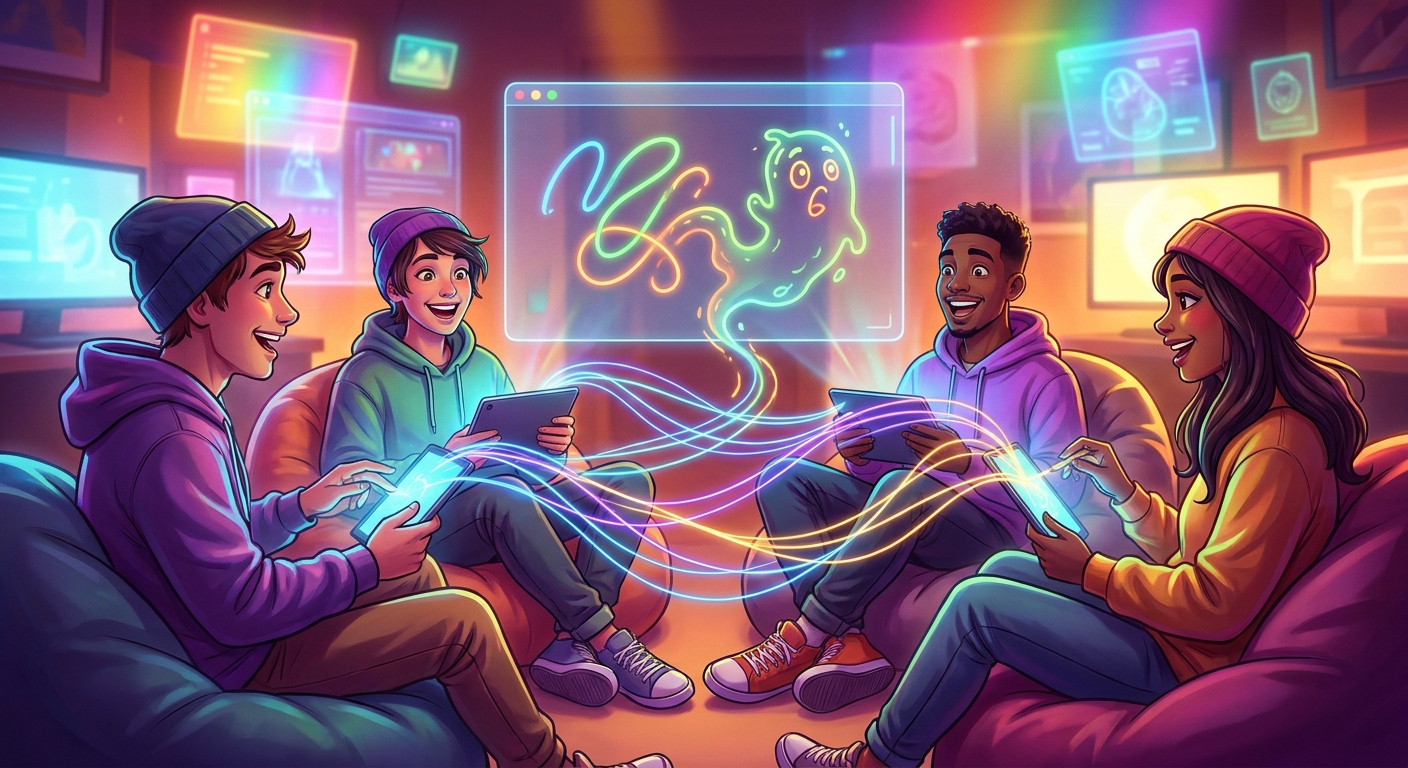
You’ve probably heard of gartic phone by now, especially if your group chats are as wonderfully chaotic as mine. Honestly, this browser-based party game has completely taken over our late-night hangouts, combining the classic game of telephone with timed drawing, leading to absolute, tear-inducing hilarity.
I remember last winter here in Kyiv, during one of the scheduled rolling blackouts. My friends and I were huddled around a single glowing laptop screen running off a massive power bank, using a spotty mobile hotspot connection. Even under those stressful conditions, we were crying from laughter because someone completely butchered a drawing of a ‘muscular pigeon eating local borscht.’ Even without stable electricity or high-end gaming PCs, this simple browser platform kept our spirits incredibly high.
The beauty of this platform is that you do not need a fancy graphics card or a huge hard drive. Anyone with a smartphone or an ancient potato PC can join instantly. It is 2026 now, and honestly, we are all exhausted from downloading 150GB updates just to hang out with friends. We want instant, frictionless connection. You just share a quick lobby link, pick a ridiculous starter prompt, and watch your friends panic as they try to sketch a ‘moonwalking cat’ in less than thirty seconds. There is zero hassle involved, just pure, unfiltered fun. I want to talk about exactly how you can dominate your next session and make your group absolutely lose their minds over your terrible—or surprisingly amazing—artistic skills.
The Core Mechanics: Beauty in the Breakdown
So, how does the whole thing actually operate under the hood? The premise is basically traditional telephone, but highly visual. You write a quirky, weird sentence. The next person in the rotation has to draw it. The third person looks at that drawing and guesses what it is. The fourth person draws that new guess. It keeps cycling until the sequence finally ends, and then everyone reviews the wild evolution of the original prompt together. The true value proposition here is pure unpredictability.
For instance, let us say you start with a prompt like ‘Batman shopping for fresh groceries.’ By the time it passes through four of your friends, it somehow devolves into ‘a sad vampire stealing cabbages.’ Or, you type ‘crying potato,’ and by the end of the round, the final guess is ‘depressed bald man in a basement.’ The sheer breakdown of human communication is the main feature of the experience, not a technical bug.
Here are three reasons why this specific loop is completely unmatched:
- Endless replayability: Every single round feels entirely fresh because the content relies strictly on your friends’ weird imaginations and varying drawing skills.
- Extremely low barrier to entry: Absolutely no installation is required anywhere, meaning your non-gamer friends can easily jump right in directly from their mobile web browsers.
- Multiple distinct game modes: From the classic setup to full-blown animation sequences, the platform constantly offers fresh ways to test your creative limits.
| Game Mode | Difficulty Level | Best Used For |
|---|---|---|
| Classic Normal | Easy | First-time players and casual warm-ups |
| Knock-Off | Medium | Fast-paced, panic-inducing scribbles |
| Animation | Hard | Artistic groups wanting fluid motion |
| Secret | Medium | Hiding your inputs until the very end |
When you put all these elements together, you get an environment designed specifically to make you fail creatively in the funniest way possible.
Origins of the Digital Telephone
Before we had perfectly synced browser lobbies, the core concept was just an old parlor game known simply as ‘Telephone.’ People would sit in a physical circle and whisper a phrase into the ear of the person next to them. By the time it reached the end, the phrase was usually completely corrupted. Fast forward to the early internet days, and brilliant indie developers realized that combining this exact psychological phenomenon with clunky MS Paint-style tools would be absolute gold.
Evolution Through the Remote Era
While the concept itself isn’t totally brand new, the massive, explosive surge in popularity happened when millions of people were suddenly stuck inside their homes a few years ago. Content creators and major streamers desperately needed collaborative, low-latency games to play with their massive audiences. The development team scaled their backend servers incredibly fast to meet this demand. They smartly added tight Twitch integration, allowing thousands of chat viewers to submit prompts directly into the streamer’s private lobby. This specific feature was a massive turning point that put the game on the global map permanently.
The Modern State of the Experience
Now that we are deep into 2026, the platform has matured beautifully. It handles massive thirty-player lobbies without breaking a single sweat or dropping connections. We now have optional voice integration features, custom color palettes that you can tweak endlessly, and even mobile-specific UI improvements that make drawing on a touchscreen with your index finger way less painful than it used to be. The developers continuously listen to the community, dropping seasonal updates that introduce wacky new modifiers, ensuring the community always has a reason to come back for game night.
Server Architecture and Real-Time Sync
How does a very simple browser tab keep a massive group of thirty people perfectly synced without generating massive lag spikes? The secret lies in WebSocket technology. Unlike traditional HTTP web requests where your browser has to constantly pester the server asking ‘hey, did the timer end yet?’, WebSockets create a persistent, super-fast two-way street. The server can automatically push the countdown timer updates directly to your screen in real-time. This robust system ensures that when the thirty-second drawing phase finally ends, absolutely everybody’s canvas locks at the exact same millisecond, preventing anyone from getting an unfair extra second to finish their masterpiece.
The Psychology of Miscommunication
There is actually a fascinating psychological layer to why this specific loop is so hilarious. Our human brains rely heavily on heuristics—which are basically mental shortcuts—to process messy, incomplete visual data.
- Pareidolia: This is the psychological phenomenon where we automatically see familiar patterns, like a human face, in completely random squiggles. This neatly explains why a poorly drawn circle becomes ‘a happy ghost’ to the next player.
- Semantic Drift: This refers to the gradual change in the core meaning of a concept as it gets passed along a chain, accelerated heavily by the strict time pressure and complete lack of context.
- Cognitive Overload: Having only fifteen to thirty seconds to draw forces your brain to aggressively abandon small details and focus purely on abstract symbols. These symbols often completely fail to communicate the original complex message.
Because the web packets are incredibly tiny—sending only vector coordinate data rather than massive, heavy image files until the final render—the game exploits these psychological traits flawlessly without technical hiccups getting in the way.
Step 1: Gather Your Creative Crew
First things first, drop a quick message in your main group chat. You technically need at least four people to start a session, but the absolute sweet spot is around six to eight participants. This specific number ensures maximum narrative distortion without making the final reveal take an hour.
Step 2: Calibrate the Lobby Settings
One person steps up to click host. You need to tweak the lobby settings immediately. I highly recommend keeping the time limit setting on ‘fast.’ Fast timers force sheer panic, and as we all know, panic equals pure comedy. If you give people too much time, the drawings actually look good, which ruins the joke.
Step 3: Craft Truly Unhinged Prompts
Do not write boring, plain stuff like ‘a happy dog.’ You need to write things like ‘a dog desperately trying to file his taxes but the IRS agent is a giant cat.’ Extreme specificity always breeds the most beautiful, hilarious disasters when the timer starts ticking.
Step 4: Master the Drawing Phase
When it is your turn to draw, focus strictly on the biggest, boldest shapes first. Do not waste your precious few seconds drawing highly detailed eyeballs or shoelaces if you haven’t even drawn the main character’s torso yet. Block out the colors quickly and aggressively.
Step 5: The Art of the Guess
When you inevitably receive a bizarre, messy drawing, just type the very first ridiculous thing that pops into your head. Trying to be perfectly logical and accurate completely ruins the chain. Embrace the weirdness and guess something wild.
Step 6: Execute the Big Reveal
Once all the rounds are officially over, someone absolutely needs to stream their screen over voice chat, or you can just let the auto-player run on everyone’s individual screen. Unmute your microphones for this specific part; the spontaneous audio reactions are arguably the best part of the entire night.
Step 7: Export and Memorialize the Memes
Do not just close the tab when you finish! Save the absolute best visual sequences as animated GIFs using the built-in export button. Pin them in your community server. Trust me on this, looking back at a legendary drawing chain months later is absolutely priceless.
Debunking Common Platform Myths
Myth: You need to be a highly talented artist to actually enjoy playing this.
Reality: Terrible artists actually make the whole experience way better. Perfect, beautiful drawings do not mutate. Bad stick figures and messy blobs are what cause the hilarious misunderstandings that make the game famous.
Myth: You absolutely need to buy an expensive drawing tablet to play properly.
Reality: A cheap five-dollar office mouse or just dragging your thumb on a cracked smartphone screen works perfectly fine, and honestly, the resulting jankiness adds to the charming aesthetic.
Myth: This type of game is only fun for young kids and teenagers.
Reality: Adults absolutely dominate these virtual lobbies late at night. The prompts just get significantly weirder, darker, and vastly more unhinged when grown-ups start playing after a few drinks.
Is it completely free to play?
Yes, it is entirely free with absolutely no hidden paywalls or premium subscription tiers blocking the fun.
How many players can join a lobby?
You can cram up to thirty players in certain specific modes, though a standard group of four to fourteen is much more common.
Can I easily play on my phone?
Absolutely, the mobile web interface is optimized perfectly and runs super smoothly on almost any device.
Do I need to create an account?
Nope, you literally just type in a fun nickname, pick a little avatar, and hit go.
Are there custom word lists available?
Yes, you can totally import your own inside jokes or custom themes directly into the lobby settings.
Is there voice chat directly built-in?
Yes, there is native voice support now, but honestly, many friend groups still prefer just using external VoIP apps alongside it.
Can you save the drawings afterward?
You can quickly and easily export full digital albums and animated GIFs at the end of every match.
The true magic of this platform is the pure, unfiltered chaos it injects into any virtual hangout. Next time you are bored on a Friday night, just grab that link, invite your squad, and see what kind of madness happens. Share your absolute funniest outcomes with us online!

Leave a Reply